
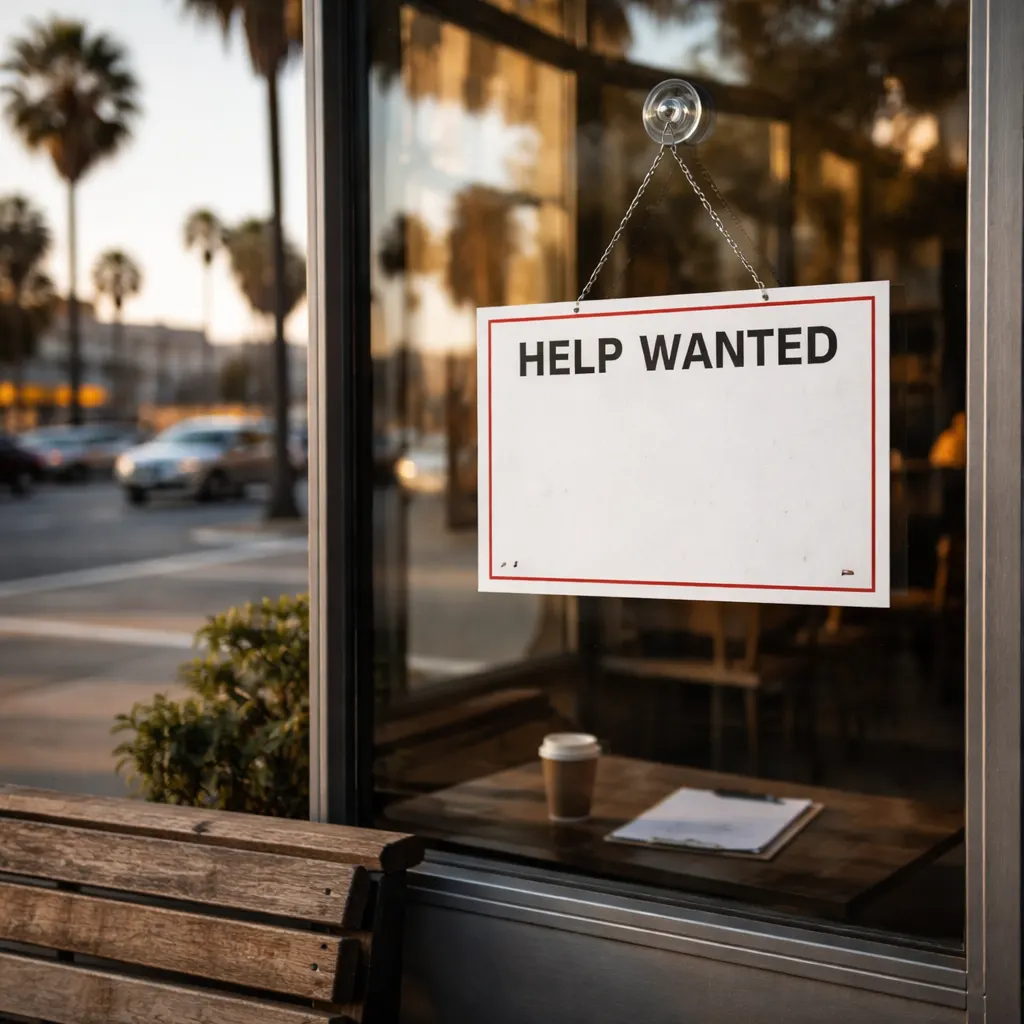
California's job growth since the COVID-19 pandemic has fallen to less than half the national rate, while the state's income advantage has been wiped out by high living costs, according to a new study released today by the Pacific Research Institute. The report, titled "California at a Crossroads: How Bad Policy Cost California Its Economic Edge – and How to Win It Back," uses federal government data to document what the authors call a troubling shift in the state's economic trajectory. The findings mark a sharp reversal from prior decades when California consistently outperformed the nation.
From February 2020 to December 2025, California's non-farm job growth reached just 2 percent compared to 4.3 percent in the rest of the United States. The gap is even starker in the private sector outside health care and social assistance industries, where California jobs declined by 2.7 percent during the period while the rest of the nation saw 3.4 percent growth. The state lost nearly 52,000 tech jobs in 2024 alone, while manufacturing jobs fell by 38,000 between 2010 and 2025, and total finance sector employment declined 10.3 percent between 2019 and 2025. While California's median household income sits roughly 20 percent higher than the national average, that advantage disappears once taxes, housing, and energy costs are factored in—leaving the typical California household with 35 percent less disposable income than the national median. The state continues to experience long-term population outflow, with hundreds of thousands more people leaving each year than arriving from other states, based on annual U.S. Census data.
"The data shows that California's economic challenges are no longer theoretical—they are measurable and worsening," said Dr. Wayne Winegarden, one of the report's authors. According to the study, California's slowdown is particularly acute in the private sector, which the authors identify as the key driver of innovation and long-term prosperity. The report finds that the number of private sector jobs outside health care is lower today than before the COVID-19 recession. Co-author Kerry Jackson stated that "California stands at a policy crossroads," with policymakers facing a choice between continuing down the current path or embracing reforms that restore opportunity and affordability.
The study argues that California's economic underperformance stems from high taxes, costly housing, expensive energy, and an overly burdensome regulatory environment that discourages business investment and job creation. These factors combine to create what the authors describe as a growing affordability crisis that erases the state's traditional income advantages. The report points to the loss of jobs in core industries that historically powered the state's economy—technology, manufacturing, and finance—as evidence that the problems extend beyond temporary pandemic disruptions. The authors contend that without meaningful policy reforms, the gap between California and the rest of the country will continue to widen, with businesses and residents increasingly choosing to locate elsewhere.
Winegarden warned that "the state's weak job growth and shrinking private sector signal that California is at a crossroads," adding that the direction policymakers choose will determine whether the state regains its economic leadership or continues to fall behind. The study frames the current moment as a decision point: continue with high costs and slow growth, or embrace reforms that restore the state's economic dynamism. The data suggests that California's decades-long advantage as an economic powerhouse is no longer guaranteed.