
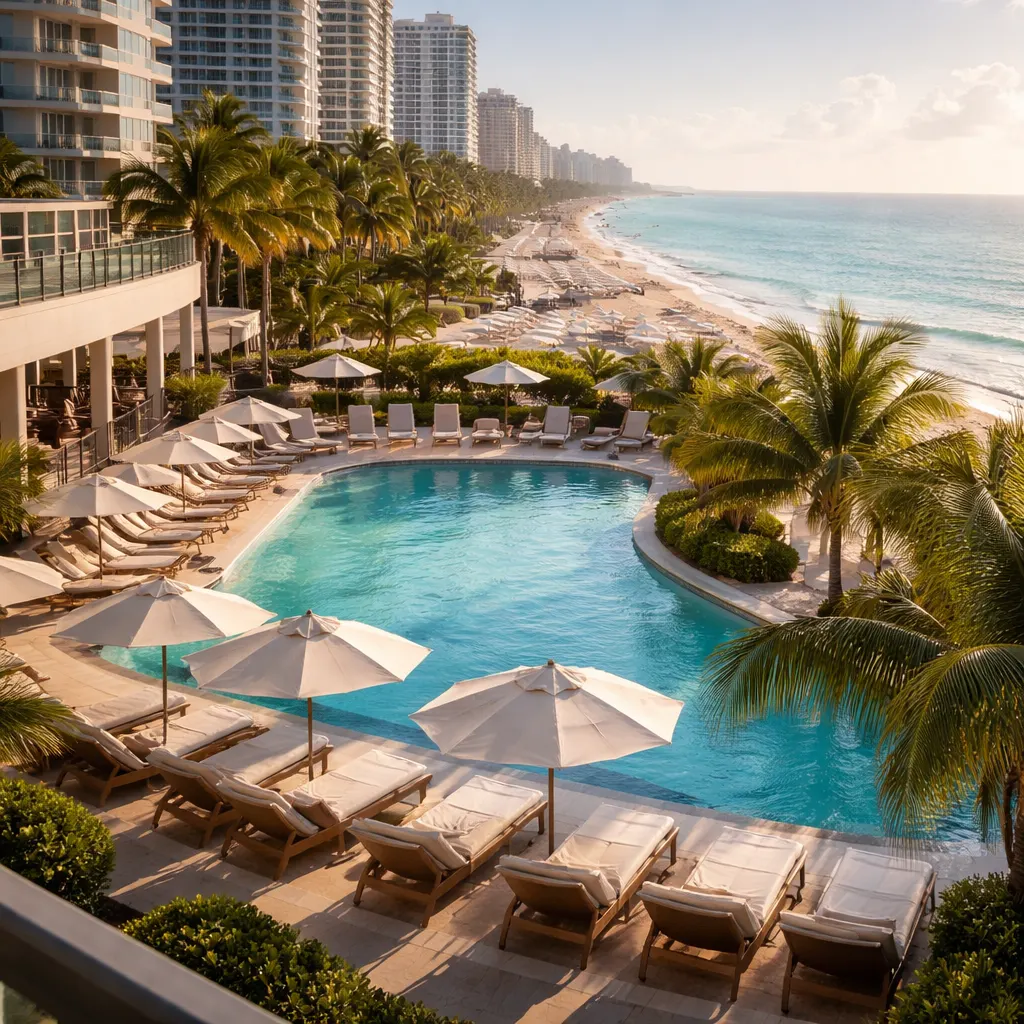
Tensions over trade policy between the United States and Canada have led to a noticeable decline in Canadian visitors to South Florida, according to a report published October 1, 2026 by KASU. The drop has hit local hotels and motels hard, particularly those catering to seasonal travelers known as snowbirds. While the United States has long been the top travel destination for Canadians, the trade war that began last year brought a wave of cancellations at properties that depend on visitors from the north.
The data shows the decline across multiple measures. Nonstop flights between Canada and Fort Lauderdale-Hollywood International Airport fell roughly 7% in the year starting April 2025, then dropped nearly 9% in the first half of 2026, according to Visit Lauderdale. A survey by Snowbird Advisor of about 4,000 members found a 12-percentage-point decline in those planning to spend the 2025-2026 winter season in the United States. At the Curtis Inn & Suites in Hollywood, Florida, owner Jay Gandhi said Canadian guests typically numbered 60 to 70 during snowbird season, which runs from October through April. Last year that fell to 50, and this year he expects around 30. Richard Clavet, who owns Richard's Motel nearby, said the trade war brought "a flurry of cancellations" starting last year, with some callers canceling outright rather than forfeit deposits.
Stephen Fine, president of Snowbird Advisor, said he has observed growth in travel to alternative destinations. "We're seeing an increasing number of snowbirds going to Central America," Fine stated. "We're also seeing growth in the Caribbean." One guest at Richard's Motel told Clavet bluntly that politics drove the decision to cancel, saying "No, I'm not going in the U.S. anymore," even after being reminded of a $1,000 deposit already paid. The report notes that for now, the United States remains the top destination for Canadian snowbirds despite the downturn.
The drop stems from multiple factors beyond the trade dispute itself. A weak Canadian dollar made U.S. travel more expensive, while new screening and identification requirements at the border added friction for crossings. The political tensions appear to have tipped some travelers away from their usual southern destination, particularly in communities like Hollywood that market heavily to French Canadians. Clavet, a Quebec native who calls his property "Little Quebec," responded by hosting free parties and bingo games to create buzz, then flooding social media with images of Canadians enjoying the events. That strategy appears to have worked for his property, with strong bookings reported for October 2026.
The shift suggests Canadian travelers are diversifying their winter destinations after decades of gravitating primarily to U.S. locations. Fine's observation of growth in Central America and the Caribbean points to a potential long-term reordering of travel patterns, though the United States still holds the top spot. For South Florida hotel owners who built their business model around Canadian snowbirds, the challenge now is whether political and economic headwinds will ease or whether they'll need to court new markets. As one motel owner put it after his promotional push succeeded, "This year I've got a lot of them coming in October — I'm, like, a little freaking out — it's too many."