
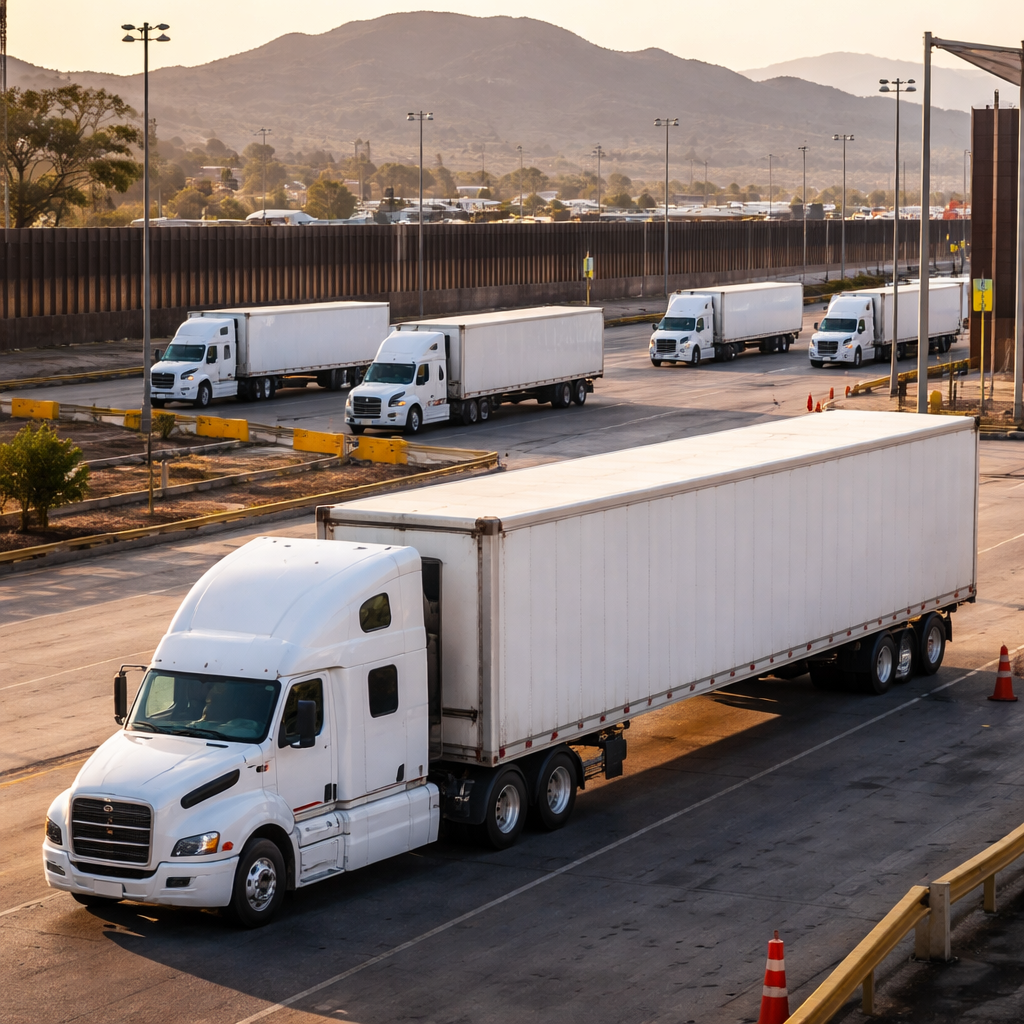
Uber Freight says cross-border freight rates between Mexico and the U.S. have climbed 8% to 15% across the market since February, with some major corridors seeing increases approaching 30% in just two months. The findings come from Uber Freight's Q2 Market Update & Outlook report released Thursday, which concluded that market pressures expected later in 2026 are already impacting freight networks across North America. The report warns that "peak season appears to be arriving earlier and behaving differently than normal," driven by surging produce volumes, fuel costs and tightening driver capacity.
The report shows Mexico produce exports are hitting record levels, with March shipments of citrus, fruits and nuts up more than 36% compared to the same period in 2025, while total exports moving through Laredo increased 8% year over year. Uber Freight said Fresno-to-Chicago reefer spot rates jumped 43% in a single month, while produce transportation rates from California to Chicago increased nearly 25% in recent weeks. The national average diesel price reached $5.64 per gallon in May, up from $3.72 per gallon in February, driven largely by geopolitical disruptions in the Middle East and reduced oil flows through the Strait of Hormuz. Nationwide, van spot rates increased 24.8% year over year in April, reefer rates rose 26.3%, and flatbed spot rates climbed 23.7%, while spot market volumes were up 44% year over year. First-tender acceptance rates slipped to 82%, while route-guide compliance fell to 86%.
The report forecasts truckload spot rates will remain 20% to 25% above 2025 levels for the remainder of the year, while contract rates could rise 5% to 10%. Uber Freight listed declining availability of B-1 commercial drivers among the primary factors tightening Mexico-U.S. freight networks. The company noted that fuel surcharges are becoming a growing issue in cross-border transportation because many Mexico freight lanes don't have standardized fuel surcharge programs, advising shippers to review fuel surcharge agreements, shorten surcharge adjustment cycles and add fuel accessorials where necessary. According to the report, carriers have increasingly shifted equipment to take advantage of stronger reefer rates, creating capacity shortages for dry van shippers and contributing to broader market tightening.
The surge in agricultural freight has pulled trucking capacity toward key cross-border corridors and produce-growing regions, creating a ripple effect across the entire North American freight network. Fuel inflation, produce demand and driver shortages are combining to create upward pressure on transportation costs at a time when many shippers expected softer seasonal conditions. The report also pointed to regulatory changes adding to capacity constraints, estimating the Federal Motor Carrier Safety Administration's non-domiciled CDL rule could remove roughly 40,000 drivers annually over the next five years. Global schedule reliability remains near 63%, while companies continue diversifying sourcing away from China and adjusting supply chains in response to changing trade policies.
For shippers relying on U.S.-Mexico supply chains, Uber Freight's message is clear: conditions that many expected to emerge during peak season are already here. The company advised shippers to tender freight four to five days in advance on cross-border lanes and secure reefer capacity early before summer demand peaks. "The window to get ahead of these conditions is narrowing," the report said, urging shippers to closely monitor tender acceptance rates and develop contingency plans for critical domestic and cross-border lanes.