
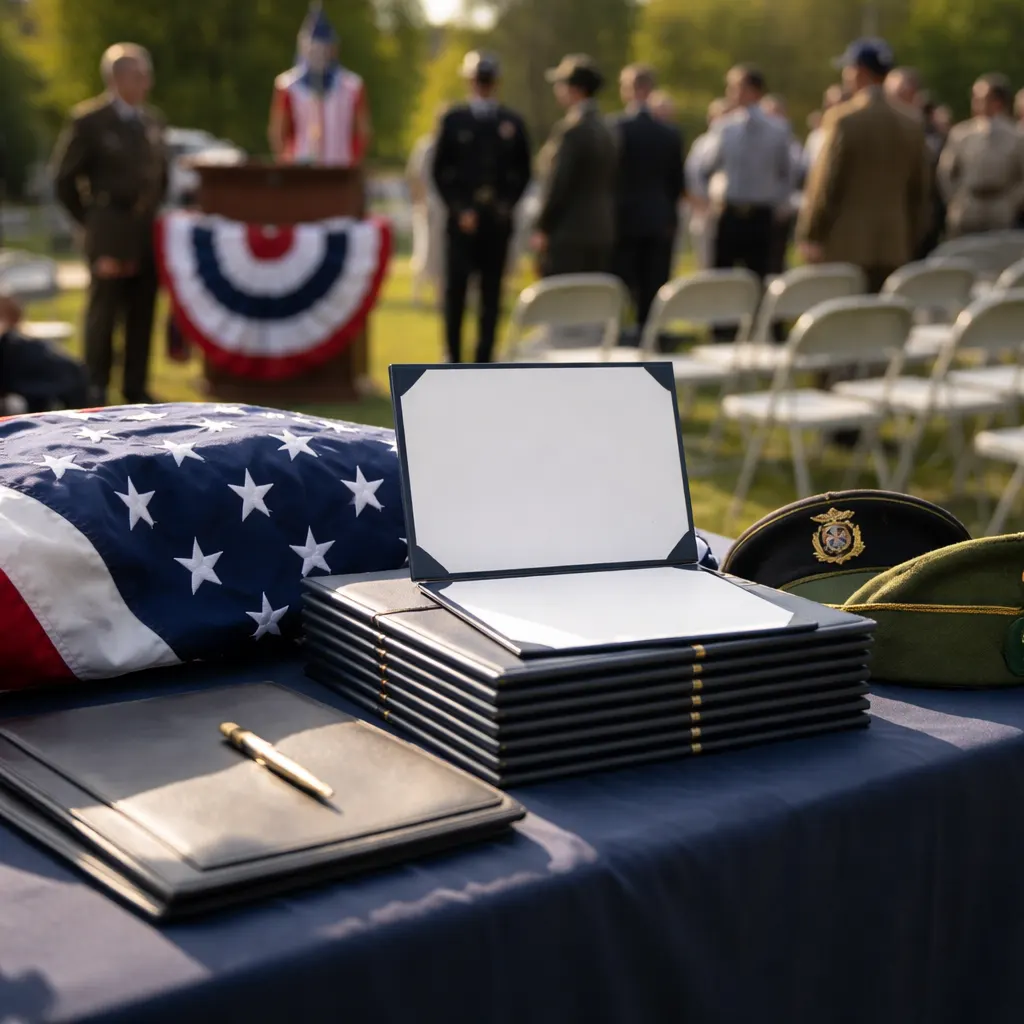
Starting August 1, Minnesota veterans who left high school to serve in the Korean or Vietnam wars can request honorary diplomas under a new state law, according to a report published by the Center of the American Experiment. The measure recognizes service members who sacrificed their education to answer the nation's call, allowing either veterans themselves or family members to request diplomas on behalf of deceased service members. The certificates are granted based on knowledge and experience gained during military service or other relevant life experience.
The law, sponsored by Rep. Patricia Mueller and Sen. Steve Cwodzinski, passed both chambers unanimously during the 2026 legislative session and was included in a larger education bill signed by Gov. Tim Walz on May 27. School districts and charter schools may ask veterans or their representatives to show proof that the veteran attended a Minnesota public school or currently lives in the state. The diploma can be requested by a veteran directly or by a family member seeking posthumous recognition. Unlike earlier voluntary programs, Minnesota's 2026 law requires districts and charter schools to issue the diploma when requested, rather than leaving participation optional.
The idea originated with Sen. Jordan Rasmusson after he visited the Fergus Falls Veterans Home, where residents told him they'd left school behind to serve during the Vietnam War and asked whether they could ever receive their high school diplomas. The report notes that similar programs aren't new nationwide—Massachusetts launched "Operation Recognition" in 1999 with a ceremony at Gardner High School that awarded diplomas to 39 World War II veterans, nine posthumously, and roughly 70 more communities in the state adopted it soon after. According to the report, a 2001 Michigan legislative analysis cited Minnesota among more than 20 states that had already passed or were pursuing some version of Operation Recognition.
The measure fills a gap that has existed for decades, the report explains, by making diploma awards mandatory rather than discretionary. Schools across the country have used Operation Recognition as both an educational tool for current students and a way to honor local heroes, the report states. The Minnesota House of Representatives Public Information Services characterized the law as "better late than never," reflecting the long-overdue nature of the recognition. For veterans who traded classroom seats for combat zones, the diploma represents formal acknowledgment that their service carried costs beyond the battlefield—and that the state hasn't forgotten what they gave up to serve.