
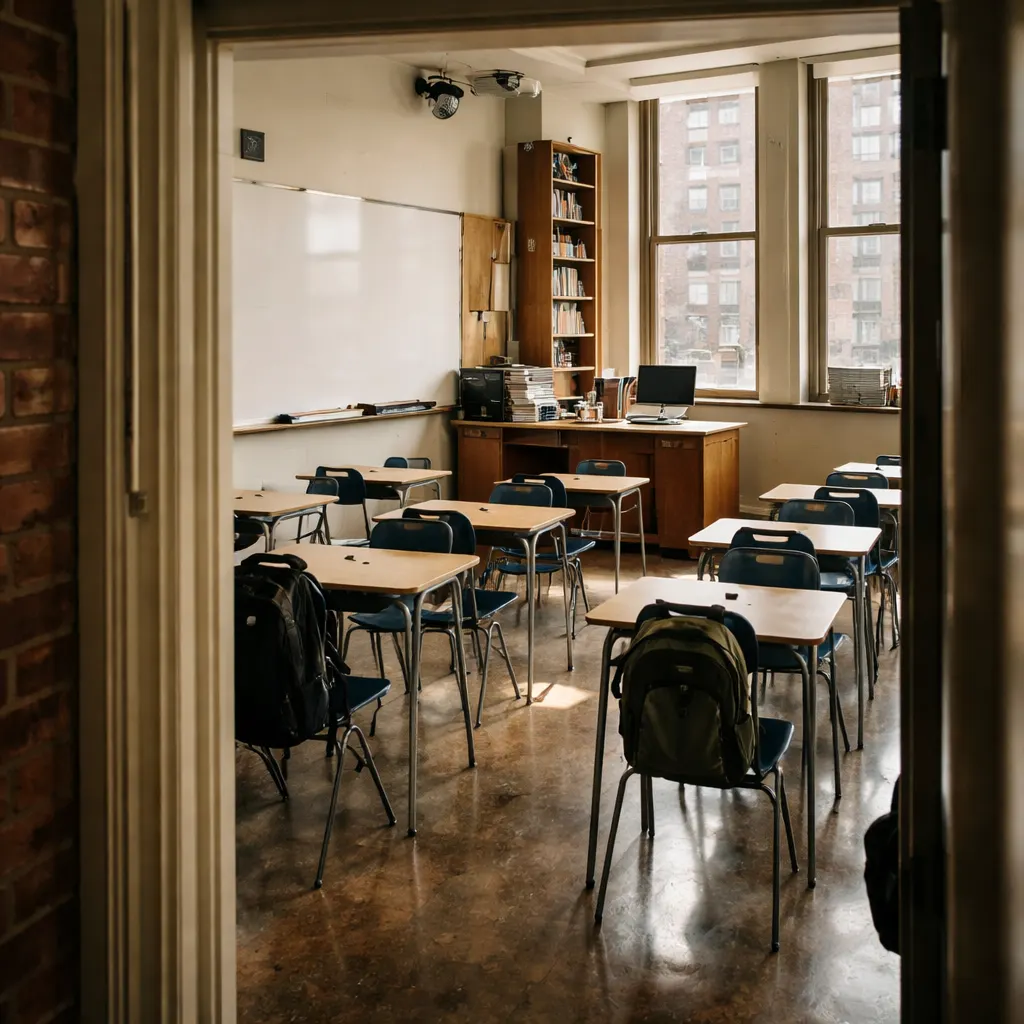
Murry Bergtraum High School for Business Careers, once a thriving institution with 3,000 students, now enrolls roughly 90 students and has become New York City's smallest traditional high school, according to a September 2026 investigation by Chalkbeat. The report finds the school sits at the bottom 1% of city high schools for four-year graduation rates and attendance, yet city officials have allowed it to stay open for two decades despite repeated internal acknowledgements it should close. The investigation paints a portrait of institutional paralysis: a school locked in decline while administrators watched, and vulnerable students paid the price.
The numbers tell a story of extreme dysfunction. Murry Bergtraum received more than $46,000 per student last year, roughly double the citywide average, while another high school in the same building serving similar students received $19,000 per student. The school offered just 23 different courses last year, compared to between 42 and 52 at each of the three competing schools housed in the same building. Three-quarters of students missed at least 18 days during the 2024-25 school year. Only 39 eighth graders applied to attend last year. Citywide, 33 high schools now enroll fewer than 150 students, and 113 have fewer than 250 — an eightfold jump from 25 years ago. Nine in 10 Murry Bergtraum students live in poverty, and 20% experienced homelessness last year.
The school's sole math teacher can't teach every class students need each semester, forcing some to attend night school on other campuses, the investigation found. Students see the disparity: one recent graduate told reporters that when you look at the other schools in the building, "it's mad people, mad opportunities," but at Murry Bergtraum, "really nothing." Former Manhattan high schools superintendent Vivian Orlen, who oversaw the school between 2018 and 2022, said she raised the idea of closing or merging it every year with Education Department leaders, but encountered "no appetite" for the proposal. Reflecting on the situation, Orlen stated: "It is institutional failure."
The report traces the school's collapse to Mayor Michael Bloomberg's early 2000s push to shut down large, struggling high schools and replace them with smaller ones. Murry Bergtraum stayed open but became a dumping ground for students displaced by closures who couldn't secure seats elsewhere, bringing new academic and behavioral challenges without additional support. As the school's reputation cratered through a series of scandals between 2010 and 2014, enrollment plummeted below 1,000 by 2014. Instead of creating a turnaround plan, the Education Department opened three competing schools in the same building starting in 2013, making recovery nearly impossible as citywide enrollment also fell. Under three different mayors, various crises — a new chancellor in 2018, the COVID pandemic in 2020, and a focus on opening new schools under Eric Adams — repeatedly pushed hard decisions to another day.
Schools Chancellor Kamar Samuels has acknowledged the city has too many small schools and begun conversations about underenrollment in some districts, but the current administration hasn't announced a citywide plan to address the issue or improve conditions at Murry Bergtraum specifically. The school advertises no extracurricular activities beyond shared sports programs, and some students told investigators they enrolled by accident, confusing it with other schools in the building. One student called Murry Bergtraum "a last line type of school," saying administrators "give all the necessities to the other schools" while leaving theirs behind. Eight years after Orlen began pushing for closure, the school remains open, spending twice the average per student while offering a fraction of what neighboring schools provide.