
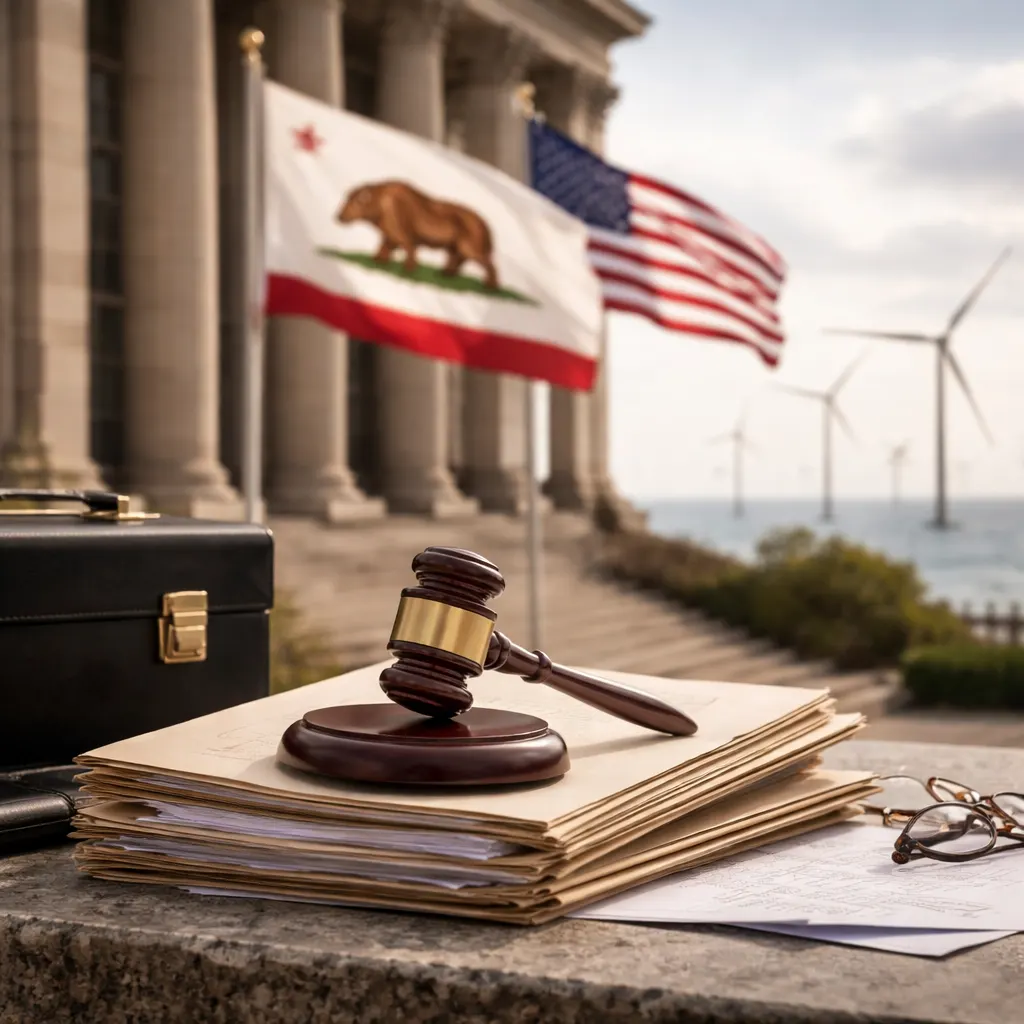
California Attorney General Rob Bonta and the California Energy Commission filed a lawsuit Friday against the Trump administration over its agreement to buy back an offshore wind lease from Golden State Wind off the state's central coast. The complaint alleges the administration "abuses its authority" by reducing the value of offshore wind leases before making what the state calls an "unrefusable offer" to developers. The legal action targets a deal in which the federal government agreed to pay $120 million to cancel a lease that developers had purchased for $150.3 million.
The challenged lease area in Morro Bay, designated OCS-P 0564, had an estimated capacity of 2 GW. Canada Pension Funds Investment Board and Ocean Winds, a joint venture between Engie and EDP Renewables, submitted the winning bid of $150.3 million for that lease. In April, those developers reached an agreement with the Trump administration to receive $120 million in return for cancelling the lease. The Trump administration struck a similar deal in March with TotalEnergies, a French energy company, paying $928 million for the company to give up two offshore wind leases off North Carolina and New York with combined capacity of 4.2 GW. The administration also reached an agreement with Invenergy to cancel its 1.5-GW-capacity Morro Bay lease.
California's lawsuit describes the arrangement as operating "with the cynical logic of an extortion racket," according to the filing. The complaint states the administration "first abuses its authority to make the offshore wind energy leases worth significantly less than what the developer paid at auction; then, offering the original bid amount in exchange for lease cancellation works as the proverbial unrefusable offer given these companies' fiduciary responsibilities to their investors." The lawsuit also criticizes provisions requiring lease proceeds to be reinvested into other energy generation forms—TotalEnergies agreed to invest its $928 million into U.S. oil, natural gas, and liquefied natural gas production. California said it invested over $100 million to support anticipated wind projects, "including creating a statewide offshore wind strategic plan and developing its ports and transmission facilities to support offshore wind."
The state argues the buyback deals disregard California's significant investments made with support from Congress, the Department of the Interior, and state voters to build its offshore wind industry. California expected those investments would deliver economic growth, new jobs, substantial progress toward clean energy and climate goals, and a powerful clean energy source to diversify its grid, according to the lawsuit. Critics beyond California have raised concerns about the administration's approach. Liz Klein, former director of the Bureau of Ocean Energy Management, warned in April the deals create a troubling precedent by potentially allowing companies to purchase leases for anti-competitive purposes, do nothing with them, then return them for refunds.
The lawsuit challenges what California characterizes as a pattern: the administration diminishes lease value through regulatory actions, then offers developers their original bid amount to walk away—effectively forcing their hand while redirecting clean energy investment toward fossil fuels. The case seeks to block the Golden State Wind buyback and establish that such agreements violate federal law. If California prevails, it could halt similar deals and protect the state's offshore wind development plans, preserving both its $100 million investment and its pathway to grid diversification through renewable energy.