
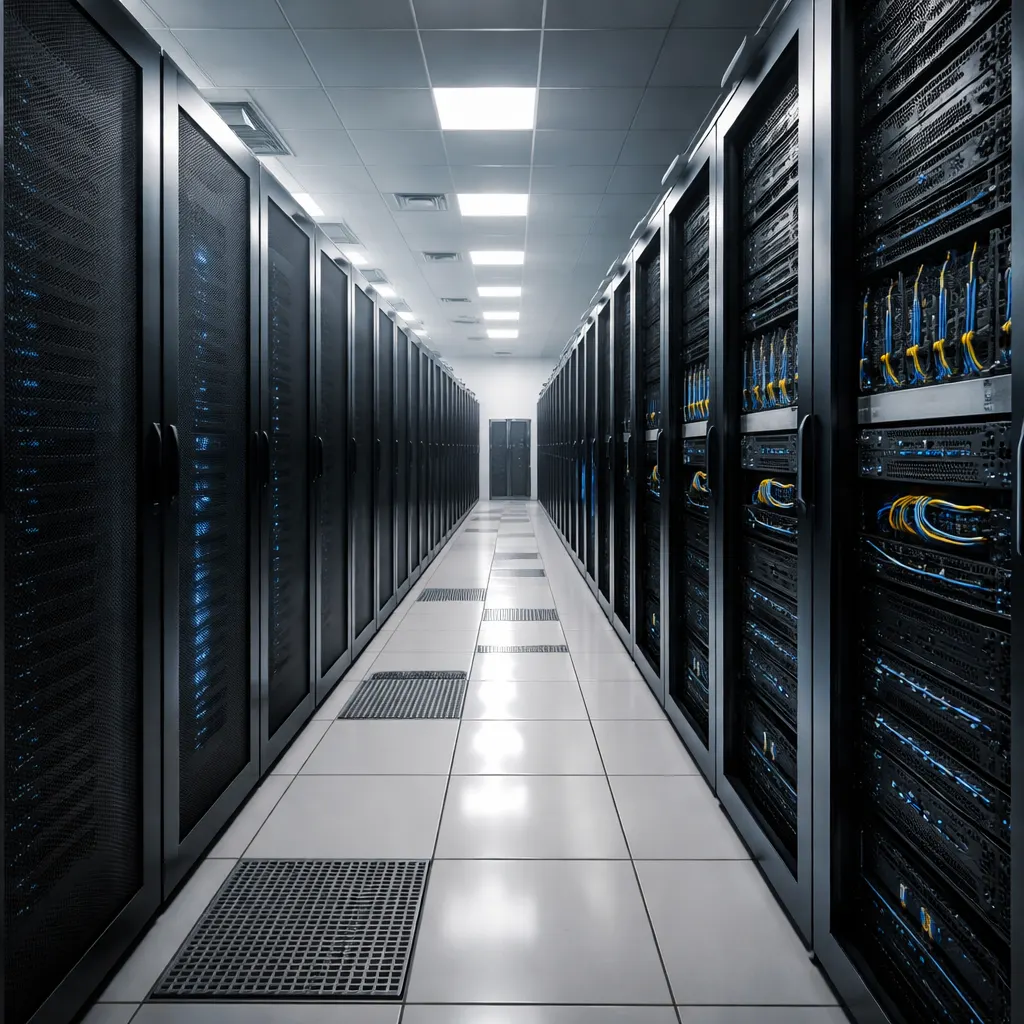
Data centers consumed 788 terawatt-hours of electricity worldwide in 2025, representing just 2.4 percent of total global electricity production, according to a recent analysis by Richard Evans, an economist with the Abundance Institute, published by the California Policy Center. The report concludes that while artificial intelligence has sparked concerns about massive energy and water demands from new data centers, those worries may be overstated, particularly when it comes to water consumption, which new technologies have reduced to nearly zero.
The water picture shows dramatic improvement through recycling innovations. Modern closed-loop cooling technologies use just 0.12 liters per kilowatt-hour, down from as high as 2.5 liters with traditional evaporative cooling. At that rate, worldwide data center electricity consumption of 485 terawatt-hours would equal only 47,202 acre feet of water annually, less than one-eighth of one percent of municipal water consumption globally. For comparison, annual worldwide water withdrawals total 2.6 billion acre feet for agriculture, 746 million acre feet for industry, and 373 million acre feet for municipal use. On energy, the Statistical Review of Global Energy reported U.S. data centers used 313 terawatt-hours in 2025, or 6.6 percent of America's 4,772 terawatt-hours of total electricity production. China's data centers consumed 206 terawatt-hours, representing 1.9 percent of that country's 10,575 terawatt-hours generated. Both the International Energy Agency and Gartner project data center electricity consumption will roughly double by 2030, reaching between 950 and 980 terawatt-hours.
The report highlights that Microsoft's newest liquid-cooled AI data centers use "direct-to-chip closed loops with zero water evaporation," while Oracle says the same about facilities it's building in New Mexico, Michigan, Texas, and Wisconsin. According to Evans, these cooling systems are "initially filled and subsequently has essentially no evaporation, blowdown, or continuous makeup-water requirement." The analysis also notes that computational power measured in floating point operations per second is projected to improve by 34 percent annually until at least 2030. Current benchmark efficiency sits at 12.5 octillion FLOPs per terawatt-hour, expected to jump to 54.2 octillion FLOPs per terawatt-hour by 2030, representing 4.3 times greater efficiency than today.
The report explains that if electrical input doubles while efficiency improves 4.3-fold, data center capacity in 2030 will be 8.6 times greater than current levels. This efficiency gain matters because data centers sit at the center of a broader electrification push that includes converting homes to heat pumps, vehicles to EVs, large-scale desalination, and deploying millions of robots, all of which will require tens of thousands of additional terawatt-hours. The report emphasizes that the more society electrifies and automates, the more data center infrastructure it'll need. Per capita, Americans used 13.8 megawatt-hours per person in 2025 compared to China's 7.5, making the U.S. share devoted to data centers less burdensome than raw percentages suggest.
The analysis frames data centers as an opportunity rather than a threat, particularly for California. The report argues that smart regulations can empower the industry to thrive and set a positive example globally, or restrictive policies can drive it to more welcoming states and nations. Data centers are coming whether built domestically or abroad, the report concludes, and their need should be beyond serious debate despite potential perils that could rival their enormous upside.