
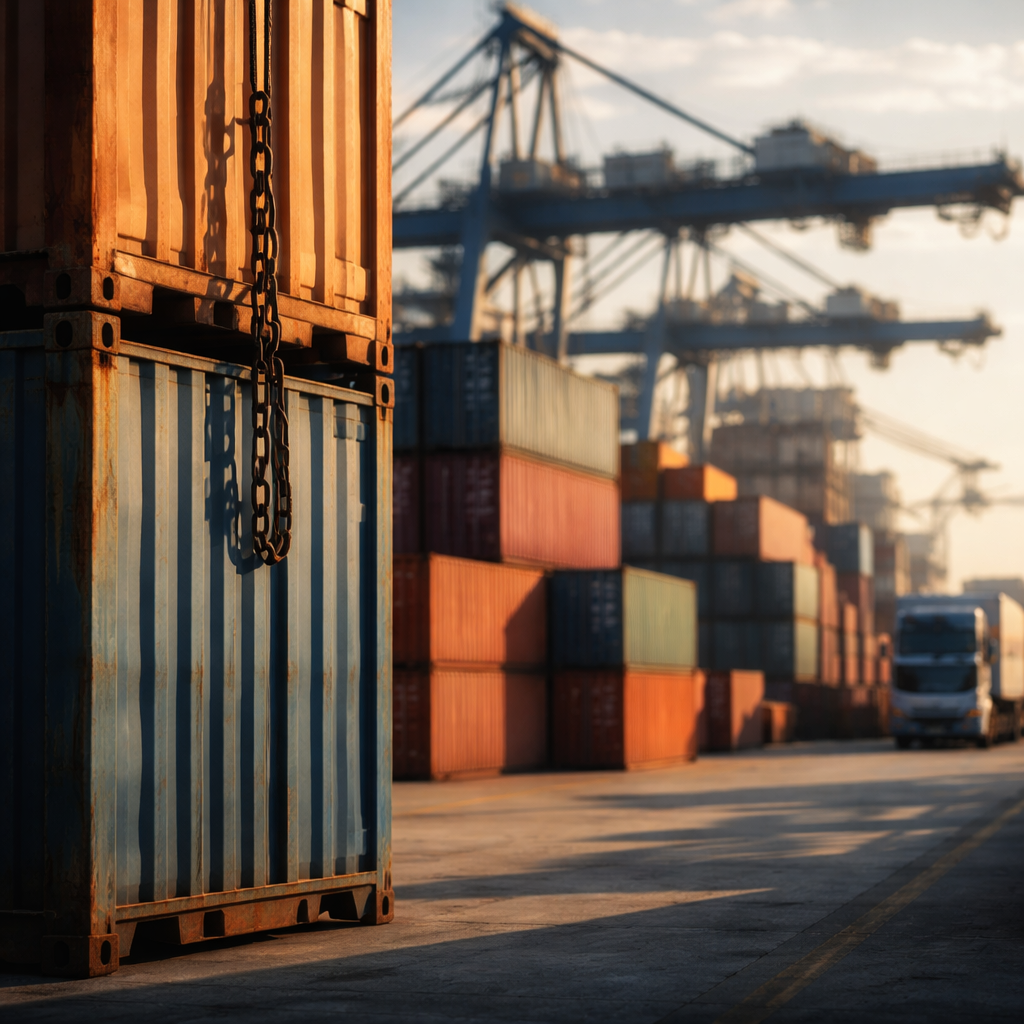
American heavy industry stands to lose $231 million this year alone to the European Union's new carbon tariff, according to a report published June 17, 2026, by the Niskanen Center. The Carbon Border Adjustment Mechanism (CBAM), which took effect January 1, 2026, charges imports of steel, aluminum, cement, fertilizer, and hydrogen based on the emissions released during manufacturing—but only when those emissions haven't already been priced in the country of origin. Because the United States has no federal carbon price, every dollar Brussels collects is revenue Washington could have captured first.
The numbers escalate quickly. By 2028, with the EU's planned mark-ups and the phase-out of free allowances, annual costs will climb to roughly $271 million, bringing the three-year cumulative bill to more than $752 million. That assumes U.S. trade volumes and carbon policy hold steady through the next presidential election. The Niskanen Center's U.S. CBAM Exposure Calculator, which tracks Europe's revenue at American expense sector by sector and month by month, uses the official first-quarter 2026 carbon price of €75.4 ($88 USD) per metric ton of CO₂e. Early 2026 trade data already shows retreat: iron and steel shipments to the EU are running 85 percent below the 2022–2025 monthly average, and aluminum is down 63 percent. Whether exporters are dodging the tariff or simply losing market share, both outcomes represent economic losses.
The report notes that the headline figures are best read as an upper bound. Default emissions values assigned by the EU are intentionally conservative and include a 10 percent to 30 percent mark-up designed to push companies toward submitting verified, installation-level data. For U.S. steel and aluminum producers running cleaner facilities than the EU baseline, verified reporting could meaningfully cut exposure. The calculator also assumes CBAM is paid by the importer but passed back to the U.S. exporter, a transfer that depends on whether EU buyers can absorb the cost or shift to other suppliers. The report authors write that the calculator "reports the chip value for bargaining, not the net impact that lands on U.S. firms' balance sheets."
CBAM works by requiring European importers to purchase emission permits—called CBAM certificates—at the same price European producers pay under the EU's Emission Trading System. The charge tracks the emissions embedded in each shipment, calculated per metric ton of product. A deduction mirrors the free allowances EU producers still receive, but that deduction shrinks each year as free allowances are phased out through 2034. The first payment, covering goods imported in 2026, is due September 30, 2027. The EU is also considering an expansion of CBAM to downstream products like home appliances and vehicle components, and at least four other countries are designing similar policies. The report lays out two ways for Washington to protect both revenue and industry: a domestic carbon price that zeroes out the CBAM bill and keeps the revenue at home, or a lighter-touch monitoring and verification system that helps exporters avoid punitive default values without imposing a federal fee.
The policy gap isn't just about lost revenue—it's about leverage. According to the report, the European Commission is still finalizing the rules for CBAM deductions and carbon accounting, but "without concrete data or a solid carbon price, the United States lacks a credible position at the bilateral negotiation table." Sen. Sheldon Whitehouse has reintroduced his Clean Competition Act, a sector-specific border-adjusted carbon fee with import charges and export rebates, but it's the only bill aimed at stopping the revenue bleed to Brussels. As more jurisdictions design carbon border adjustments, the question facing U.S. policymakers is whether the country will keep ceding policy leverage and revenue to trade partners, or design an instrument that captures the same economic value here. The cost of arriving late, the report concludes, will be paid either through tariffs or lost market share—but there will be a price.