
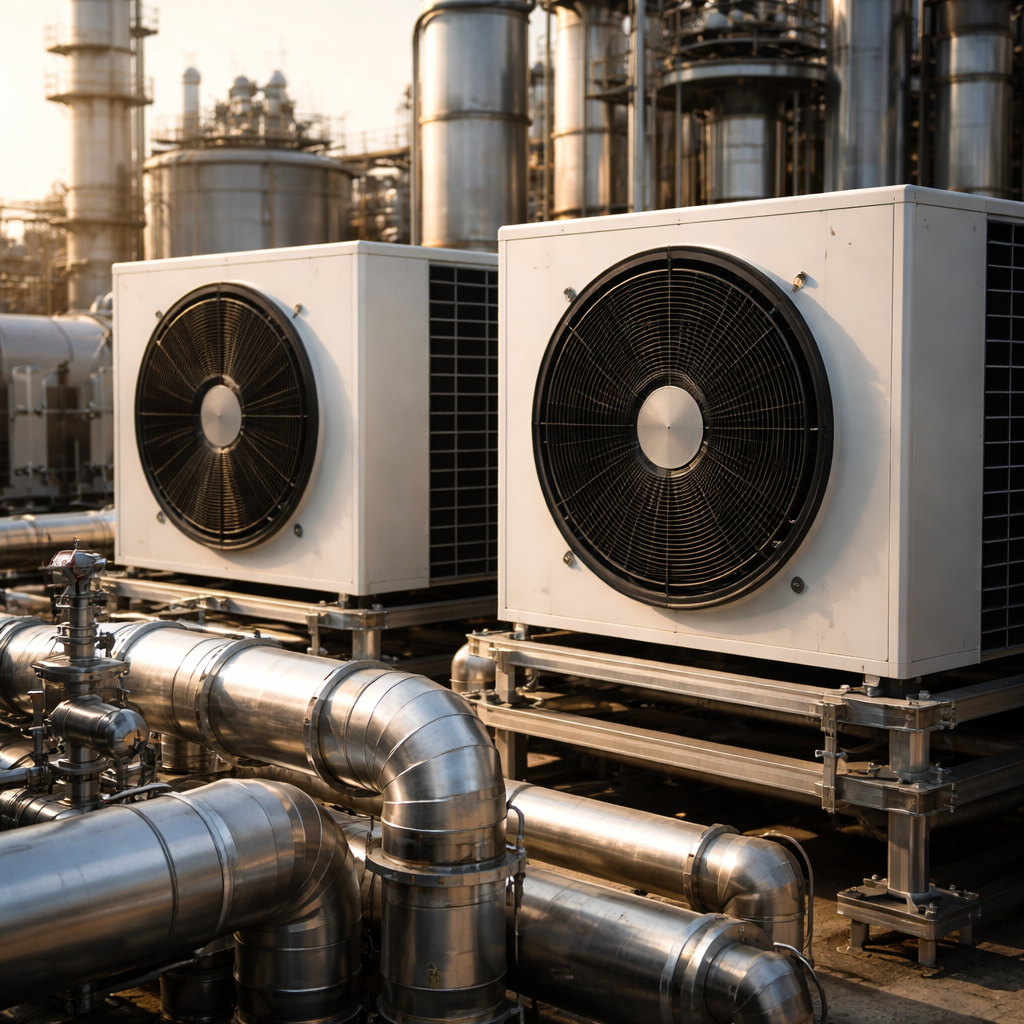
Heat pumps are now cheaper than gas boilers for 40% of low-temperature industrial heat demand across the European Union, with another 35% of the market within 5% of cost parity, according to a new commentary published by the International Energy Agency on June 9, 2026. The analysis, led by IEA energy modellers Nicholas Salmon, Oskaras Alšauskas, Sangitha Harmsen, and Stéphanie Bouckaert, argues that the recent closure of the Strait of Hormuz has made the case for EU electrification even stronger by highlighting risks of dependence on imported fuels. Today, around 70% of EU electricity comes from domestic, low-emissions sources, yet end-users source less than one quarter of their energy consumption from electricity, with two-thirds still relying on fossil fuels—more than 80% of which the EU imports.
The report reveals stark differences in electrification competitiveness across EU member states based on 2025 prices. For residential heating, heat pumps have lower lifetime costs than gas boilers in 16 countries representing about one-third of the EU's residential space heating demand, with cost savings of 15-30% in countries like the Netherlands, Portugal, and Bulgaria. In transportation, electric vehicles achieve payback periods of less than eight years in 11 out of 27 EU countries without subsidies, with the gap narrowing to three to five years in major markets like Germany and France when financial support of around €4,000 is included. Countries with lower electricity-to-gas price ratios typically see higher rates of electrification and per capita electricity demand, though the report notes that Japan achieved higher electrification than any EU country despite having a less favorable price ratio than ten EU nations, demonstrating that price parity alone isn't enough.
The commentary finds that electric vehicles sold today use four to five times less energy per kilometre than new internal combustion engines, while heat pumps are three to five times more efficient than conventional heating technologies. According to the authors, the current energy crisis is already improving the competitiveness of electric technologies: in April 2026, cost savings from driving an EV in the EU grew 35% compared to 2025. The report states that electric car sales in the region increased by around 30% during the first four months of 2026, while residential heat pump sales across 11 key European markets were up 17% in the first quarter of 2026. For industrial heat, the report emphasizes that low-temperature heat represents about 15% of industrial energy demand and could be served almost exclusively by heat pumps.
The authors explain that achieving cost parity doesn't automatically drive adoption because high upfront costs remain a major barrier. Gas boilers cost several thousand euros less than heat pumps, and heating systems typically break down during winter when disruption is most harmful, pressuring consumers toward quick replacement with familiar technology rather than long-term planning. The report identifies several non-financial obstacles: buildings and industries may need modifications to accommodate heat pumps, new infrastructure like grids and EV chargers must be rolled out, and long grid connection queues for medium-sized industrial users can delay uptake even where financial incentives exist. The average price gap between battery electric cars and ICE cars in the EU stands at around €10,000, though around 10 affordable EV models with starting prices of €25,000 became available in 2025.
The IEA commentary draws parallels to historic energy shocks that transformed energy systems: between 1975 and 1985, the EU added 80 GW of nuclear power generation following the oil crises, and the efficiency of a new vehicle sold in France increased by 20%. The report concludes that supporting electrification of end-use demand represents an opportunity to protect consumers from the long tail of the current energy crisis while making energy systems more resilient to future shocks—positioning the EU to remove all Russian gas from its energy system by 2027.