
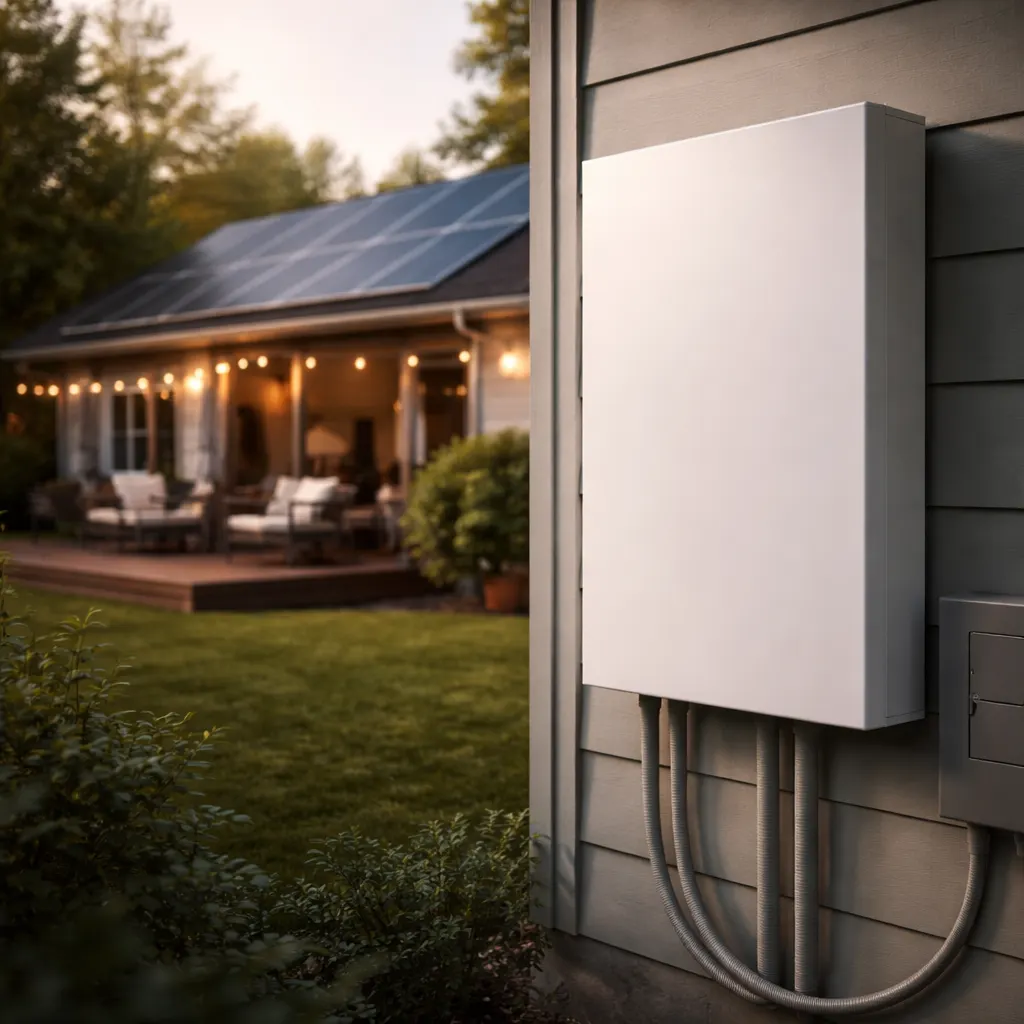
New Jersey regulators are seeking up to 150 MW of residential and small commercial battery storage that can dispatch power during grid stress events, offering participants as much as $200 per kilowatt annually over a decade. The New Jersey Board of Public Utilities published a straw proposal on August 19, 2026, marking the first capacity block of the second phase of the Garden State Energy Storage Program. The initiative aims to reduce peak demand on the state's electric distribution system through coordinated battery discharge while providing temporary support for a virtual power plant program set to launch next year.
Customers of four utilities—Atlantic City Electric, Jersey Central Power & Light, Public Service Electric & Gas, and Rockland Electric—would qualify for the annual payments over a 10-year term in exchange for dispatching energy stored in small-scale batteries when grid conditions demand it. Each distribution company will manage capacity enrolled within its service territory and call dispatch events to address local congestion, thermal constraints on distribution lines, and other abnormal grid conditions. The procurement represents Distributed Storage Capacity Block 1, which will serve as the only incentive framework available for new residential storage once enrollment opens, though participants can access additional compensation mechanisms through a future tariff. The BPU plans to host a virtual stakeholder meeting on September 3 to gather feedback.
The relatively modest maximum yearly incentive reflects what state regulators describe as "the private resilience value of residential energy storage systems." According to the BPU's straw proposal, the agency examined similar programs in other states and performed its own gap analysis to determine the $200/kW figure. The proposal states this choice mirrors staff's judgment that many consumers show some willingness to pay for resilience and therefore don't need an incentive large enough to make the net cost of battery backup power zero. BPU President Ben Hertz-Shargel connected the proposal to an executive order signed by Democratic Governor Mikie Sherrill on January 20, saying the storage program "advances Governor Sherrill's Executive Order No. 2 by growing energy storage deployments in-state to meet growing energy demand while improving affordability and resilience."
The procurement fits into New Jersey's statutory requirement to deploy 2 GW of bulk and distributed energy storage by 2030 under the Garden State Energy Storage Program. The BPU has reached the halfway mark toward that target after securing a combined 1 GW of transmission-connected storage through the program's two-block first phase earlier this year. Block 1 will supply a temporary incentive and near-term capacity to support a transitional virtual power plant program that runs for two years starting in 2027 before converting into a market-based, open-access VPP tariff in 2029. Regulators said last month that residential and small commercial batteries would be eligible for the temporary, technology-neutral VPP program. The coordinated discharge from enrolled batteries is expected to help avoid future capacity obligations and system costs, creating savings for all residential customers.
The BPU frames Block 1 as a large-scale test that could inform future blocks of distributed storage capacity, which may differ in compensation design, eligible resources, and operational frameworks based on market evolution and lessons learned from implementation. Governor Sherrill's executive order, issued shortly after she took office, directed the board to issue solicitations for new solar and storage capacity and to begin developing a virtual power plant program open to third-party energy suppliers. The proposal positions New Jersey's behind-the-meter storage initiative as both a tool for grid reliability and a proving ground for integrating distributed energy resources into the state's evolving electricity system.