
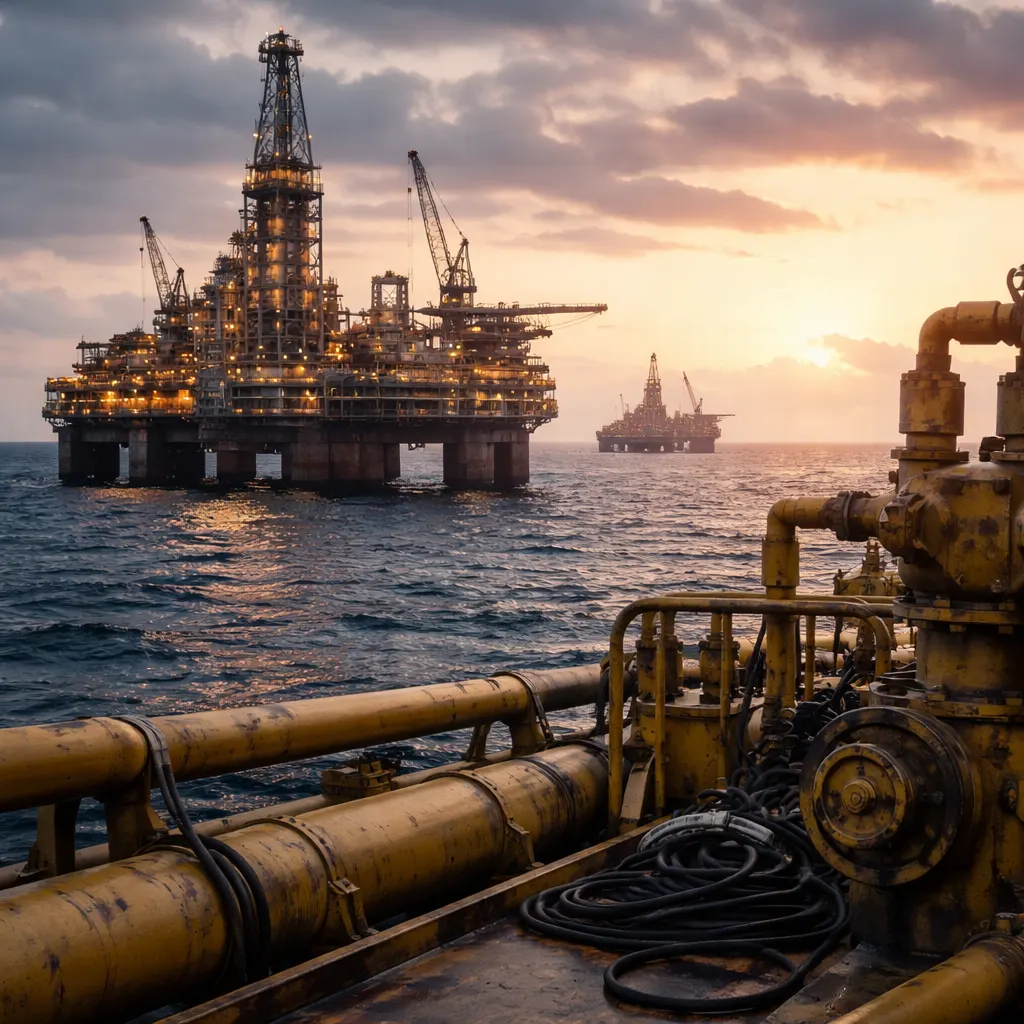
Nigeria's deepwater oil sector could add 700,000 barrels per day of liquids and 950 million cubic feet per day of gas at peak if several major projects move forward, according to a new analysis from Wood Mackenzie. The consultancy's team participated in last week's Nigeria Oil and Gas conference in Abuja and reports that the country's deepwater sector, dormant for over a decade, may be entering a new era of growth. Nigeria remains Africa's largest liquids producer but has struggled as deepwater output collapsed from around 800,000 barrels per day in 2016 to below 500,000 barrels per day a decade later.
The resurgence centers on nine key projects operated by Shell, ExxonMobil, Eni, and TotalEnergies: Bonga Southwest-Aparo, Owowo, Zabazaba, Etan, Preowei, Nnwa-Doro, Bosi, Bonga North, and Usan. These four greenfield projects combined could commercialize more than 2 billion barrels of oil equivalent of resources, the report states. The sector went more than a decade without major new investment before Bonga North reached final investment decision in late 2024. Last week, ExxonMobil approved the $1 billion Usan Infill Project as part of a pledge to invest $10 billion to develop its Nigerian deepwater assets. Acquisitions have also increased, with TotalEnergies recently agreeing to acquire ConOil's 50% stake in the Egina South discovery and Shell acquiring 10% of TotalEnergies' stake in OML 118 to accelerate its Bonga Southwest-Aparo project.
The report finds that Nigeria's investment landscape is improving after years of stagnation, driven by policy and regulatory reform and fiscal incentives under President Bola Ahmed Tinubu's government. According to Wood Mackenzie, the government is motivated by ambitious production targets of 3 million barrels per day and 12 billion cubic feet per day of gas by 2030. The 2024 incentives offer the most attractive tax credits for fields that reach final investment decision before 2029, which "have renewed IOC focus on large-scale offshore projects that could deliver material post-2030 growth," the analysis states. The report notes that deepwater Nigeria is "Big Oil territory, presenting exactly the type of opportunities that align with the Majors' post-2030 portfolio priorities."
These incentives came after six legacy contracts between state-owned NNPCL and international oil companies were extended in 2022, creating the foundation for renewed interest. Shell's 2024 final investment decision on Bonga North—twenty years after discovery—marked the turning point for Nigerian deepwater development, according to the report. Shell, ExxonMobil, Eni, and TotalEnergies have high-graded their Nigerian portfolios to focus on developing deepwater resources that proved economically unattractive under earlier fiscal terms. The new tax structure makes large-scale projects viable again, reversing more than a decade of underinvestment that saw Nigeria's deepwater output crater by nearly 40% from its 2016 peak.
Wood Mackenzie warns that project execution remains the key risk, along with partner alignment, capital competition, unitization, regulatory approvals, gas sales agreements, and offshore supply-chain constraints. Spare capacity on existing floating production storage and offloading vessels offers a lower-cost, lower-risk tie-back opportunity, but the report cautions that "creaky infrastructure will test this." Projects requiring new-build FPSOs will face higher costs, longer timelines, and greater execution risk. All eyes are now on whether Bonga Southwest-Aparo, Zabazaba, and Preowei move toward final investment decision within the next 18 months—if these projects get over the line, the report concludes, Nigeria's deepwater resurgence will prove it has real bite.