
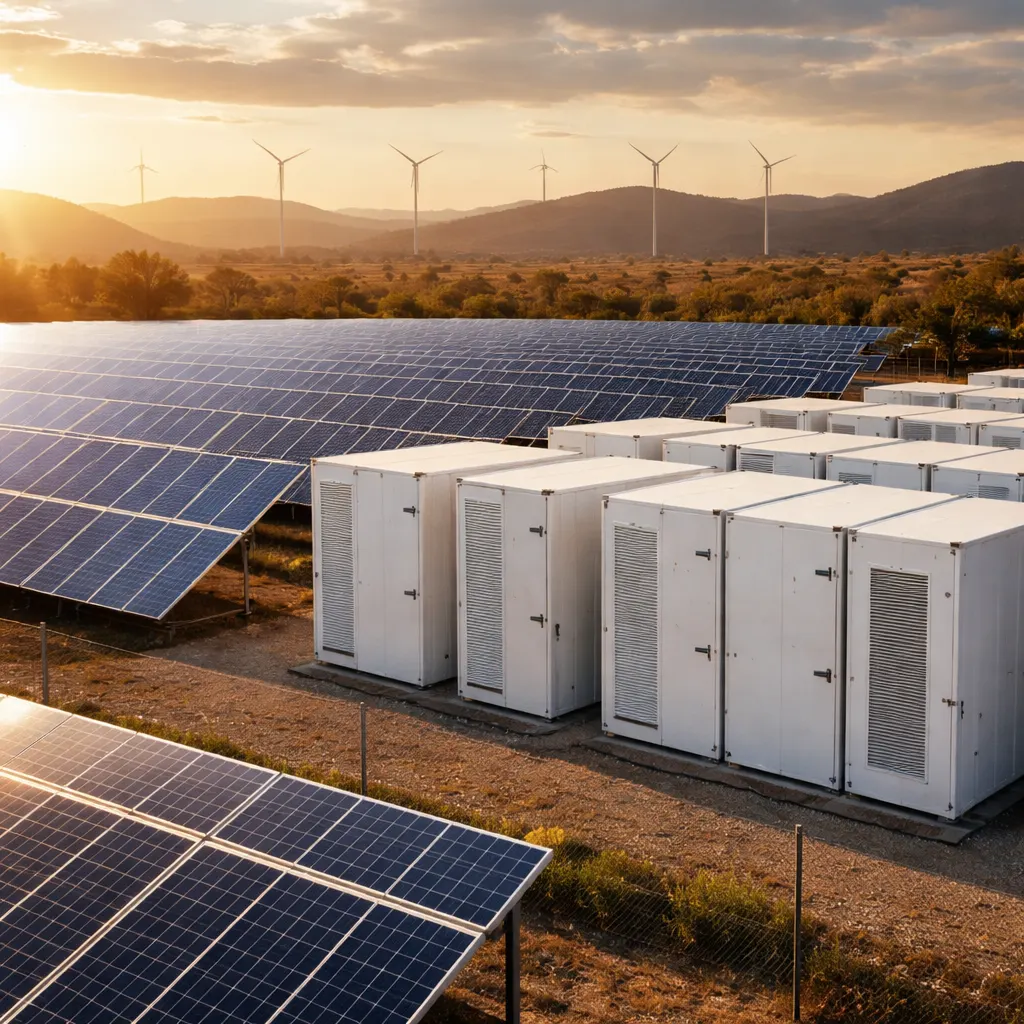
Front-of-meter solar and storage systems could handle roughly 17.5 gigawatts of summer peak load at distribution substations run by California's three major investor-owned utilities, according to an August study commissioned by the Coalition for Community Solar Access and carried out by Kevala, a grid analytics firm. These installations could cover about 32% of demand during the 4 p.m. to 9 p.m. window from June through September, when the state typically hits its highest net power consumption of the year. Clean energy proponents say the findings chart a course for PG&E, SDG&E, and Southern California Edison to strengthen reliability and keep costs manageable for customers without expensive transmission system overhauls.
The analysis found that substations operated by the three utilities could easily accommodate 3,112 installations of 5-megawatt solar-and-storage projects, meeting 15,560 MW of local demand. Smaller systems under 5 MW could supply another 1,976 MW of local load. Southern California Edison's network showed the largest absolute effect, with 1,657 5-MW projects serving 9,188 MW of non-coincident summer peak load—37% of the projected summer peak in the California Energy Commission's mid-case 2025 forecast for the 2032 season. The relative impact was strongest on SDG&E's smaller distribution network, where 326 5-MW installations could satisfy 1,788 MW of non-coincident summer peak load, representing 39% of the CEC's mid-case 2032 forecast. For PG&E, the state's biggest electric utility, 1,129 5-MW installations could handle 6,560 MW of non-coincident summer peak load, equal to 26% of the CEC's 2032 estimate.
Kevala stressed that its work wasn't meant as a development forecast but rather as "an estimate of the technical potential of the amount of distribution-connected load that can be supplied by front-of-the-meter systems without back-feeding onto the transmission system," noting that an actual forecast would need to account for other limitations like land availability. Stephanie Doyle, California state affairs director for the Solar Energy Industries Association, called the Kevala analysis a roadmap for the state's investor-owned utilities to ease pressure on the strained transmission grid. Pete Skala, Kevala's vice president of professional and advisory services, said the results show "a substantial share of California's energy demand during the most expensive hours of the year could be met directly by locally sited front-of-the-meter distributed resources."
California's three investor-owned utilities are pursuing aggressive capital spending programs to fortify their grids against wildfire danger and connect more clean energy at the transmission level as the state works toward a 2045 target to eliminate greenhouse gas emissions. PG&E and SCE alone expect to spend over $110 billion in the next five years, the companies told investors this year. The report suggests that front-of-meter batteries would charge fully from a combination of co-located solar and grid power during off-peak hours, with host substations set up to redirect backflow to other feeders instead of higher-voltage lines. PG&E and its counterparts can accommodate climbing peak demand from electrified transport, advanced manufacturing, data centers, and other load sources by expanding the availability of dispatchable distributed energy resources on summer evenings, which would cut the amount of additional generation required on the bulk grid.
The Coalition for Community Solar Access wants the CEC and the California Public Utilities Commission to collaborate on studying how front-of-meter distributed energy resources modify load, pinpoint the features that maximize their grid value, and update state planning and procurement programs to reflect those advantages. Both chambers of California's legislature have approved legislation requiring the CPUC to create a community solar-and-storage program that compensates assets at avoided generation cost, with the bill now awaiting the signature of outgoing Governor Gavin Newsom. State policymakers face a chance to bridge the divide between the grid value these distributed resources can deliver and how they're currently assessed in state planning frameworks.