
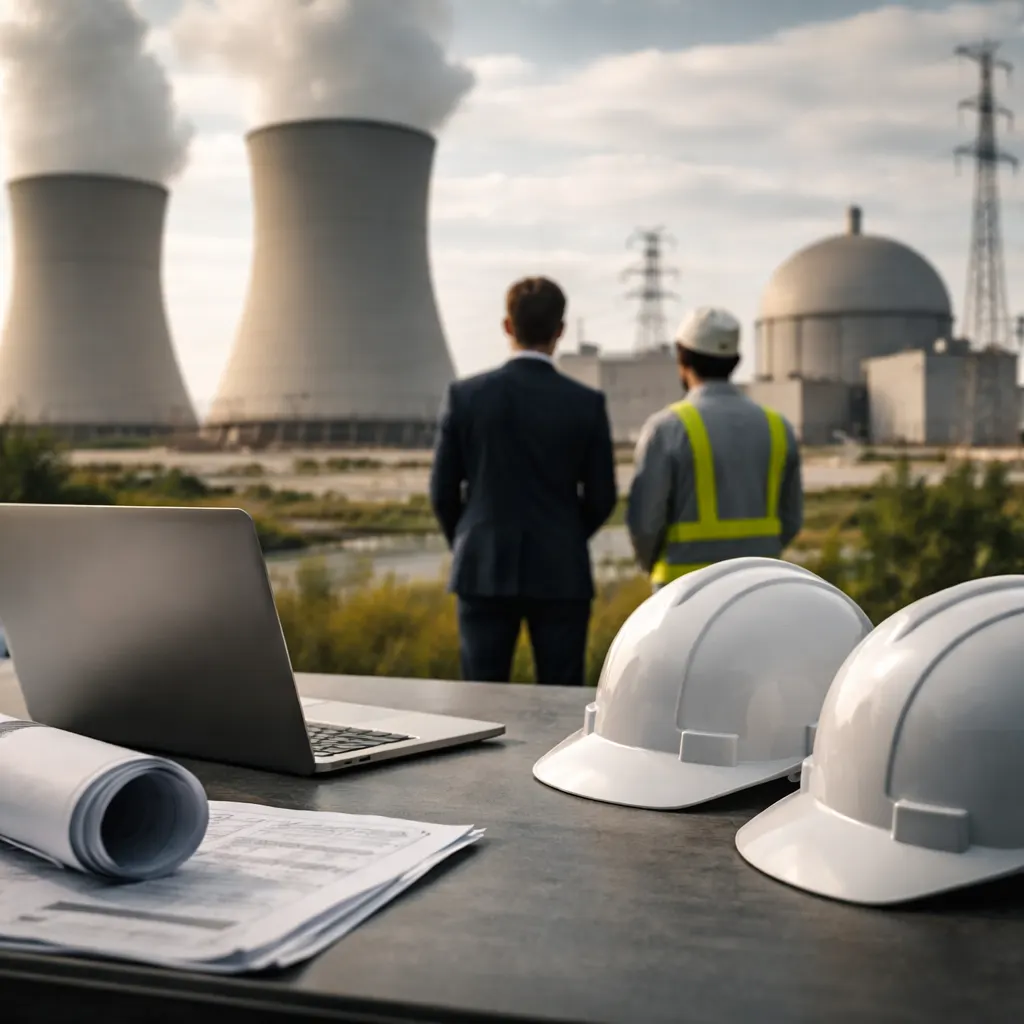
Advanced nuclear developers are pushing small modular reactors and microreactors as reliable, low-carbon power sources, but the first commercial projects aren't being financed by traditional utilities. Instead, tech giants like Google, Amazon, and Microsoft are bankrolling early deployments through agreements that let utilities integrate the power without owning first-of-a-kind reactors, according to a report from Utility Dive covering the inaugural Los Alamos Nuclear Forum held August 25. The arrangements create a three-party model where developers build, large customers provide demand and absorb risk, and utilities handle grid connection.
Kairos Power's 2024 deal with Google targets as much as 500 MW of nuclear capacity by 2035, structured as an "order book" rather than a single plant to enable standardized design and cost reductions across multiple units. Los Alamos County Department of Public Utilities is evaluating microreactors between 5 MW and 20 MW paired with long-duration storage to serve the national laboratory and federal facilities, while Antares Nuclear is aiming for Joint Base San Antonio as its first commercial site after a recent criticality milestone. Kit Carson Electric Cooperative is looking at localized generation and microgrids as transmission constraints make new lines difficult and slow to build, despite many members being "anti-nuclear, pro-solar."
Candice Yu, director of business development at Kairos Power, told the forum that utilities who benefit most will be those "willing to find innovative contracting solutions" and able to work quickly to identify suitable sites. Ben Olbrich, deputy utility manager for Los Alamos County's power supply, said in an interview that locally sited nuclear could deliver dependable power when solar isn't available and cut the need for new transmission lines. He added that even at $120 per megawatt-hour, small modular reactors would remain "comparable to what we're seeing now for natural gas units, if you can get them in the next few years." Matt Griffin, head of nuclear affairs at Antares Nuclear, said "the real bottleneck isn't the reactor — it's the supply chain: fuels, precision components and transport."
The report points to grid infrastructure as the primary obstacle slowing nuclear deployment. Lynn Mostoller, executive director of the New Mexico Renewable Energy Transmission Authority, warned that the West's fragmented power system and lengthy interconnection timelines could delay projects, noting that resources needed five years out are already in procurement and in the western U.S., "we're probably looking at the 2040 range" for adding more nuclear to large utility systems. The report explains that early reactor designs require blended public-private capital, national lab partnerships, and shared government risk to move from prototypes to commercial power generation. Fuel supply chains, precision manufacturing, and transportation networks must expand before developers can scale production beyond demonstration projects.
For utilities to seriously pursue nuclear projects, the report finds that state policy frameworks must change first. While the Nuclear Regulatory Commission oversees reactor safety at the federal level, state and local authorities approve utility resource plans and site selection. New Mexico's legislature rejected a 2026 proposal to classify nuclear as renewable under the state's portfolio standard, though Utah added nuclear to its clean-energy credit system in 2024. Kit Carson Electric's CEO Luis Reyes said the legislature and governor must acknowledge nuclear's role in reaching a low-carbon future and write it into statute before utilities can evaluate it as an option. The takeaway: without transmission upgrades and supportive state laws, even well-funded nuclear projects won't reach the grid for another decade or more.