
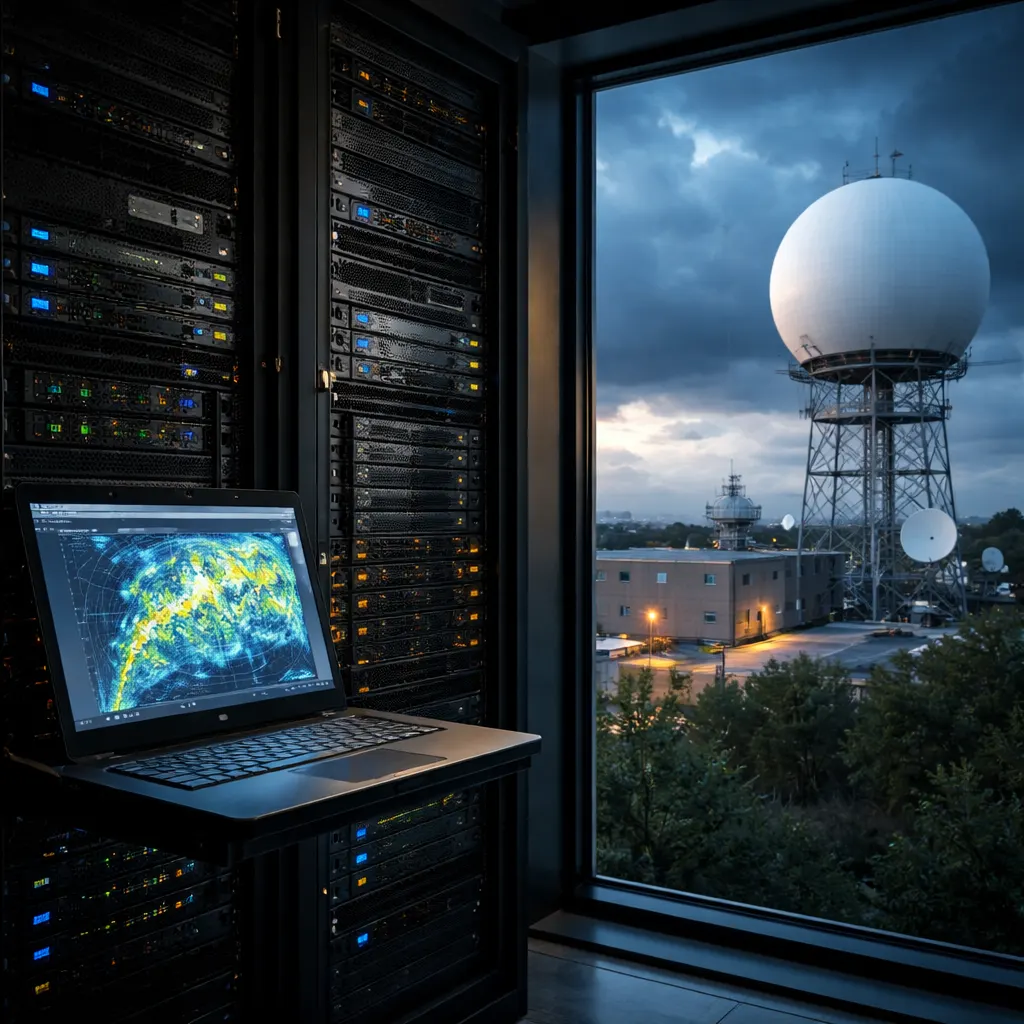
Climavision, a weather forecasting company serving utilities and power producers, opened its network of 31 radars across 15 states to data center operators starting Sept. 10, according to a Sept. 17 report from Utility Dive. The company's CEO Chris Goode said the firm operates weather radars in locations that publicly available federal forecast monitors don't cover with precision. The move reflects data centers' growing involvement in grid management as they connect increasingly large facilities to the power system.
Climavision's radar footprint spans 15 states, including four within the PJM Interconnection territory: Kentucky, North Carolina, Pennsylvania and Tennessee. Additional states covered include Louisiana, Georgia and Mississippi, where Meta, OpenAI and Amazon are pouring billions into data center investments. The government's NEXRAD weather monitors are set up so their beams recording atmospheric data can reach above 10,000 feet from ground level, Goode noted. The company combines its collected data with public datasets, commercial sources and customer sensors to produce high-resolution forecasts for individual wind farms, substations or campuses instead of regional averages.
According to Goode, a former U.S. Air Force forecaster, federal weather monitors miss "all of the weather that occurs from 10,000 feet to the ground, which is substantial." He said accurate forecasting can help data centers dodge curtailment during tight grid conditions caused by weather by turning on backup generation, storage, demand response or switching fuels. Goode explained that the company's solutions address "the sudden impacts of increased demand for energy, coupled with perhaps the chance that the wind doesn't blow, or that the sun doesn't shine," allowing operators to prevent strains that cause outages. The subscription-based service highlights how data centers are being asked to behave more like utilities by managing their own generation, storage and demand response.
Weather forecasting plays a critical role for both renewable and conventional power sources. Research from Lawrence Berkeley National Laboratory found that improved solar forecasts result in a 30% cut in the spare capacity utilities maintain to handle forecast errors. Winter Storm Uri demonstrated the vulnerability of non-renewable infrastructure in 2021 when it froze natural gas systems in Texas, while sudden temperature swings can drive fuel price spikes that leave unprepared customers exposed. Goode said Climavision has partnered with CenterPoint Energy since Uri to maintain power during severe weather events like Winter Storm Fern in January, with the company's early warnings giving utilities time to strengthen infrastructure and avoid lengthy blackouts.
As data centers grow larger and utilities push them to take on more grid management responsibilities, accurate weather data becomes essential for balancing power supply and demand. The ability to anticipate when renewable sources will underperform or when extreme weather threatens infrastructure helps both data centers and utilities avoid the kind of cascading failures that lead to widespread outages. With billions in data center construction underway in states now covered by Climavision's radar network, the expansion positions weather forecasting as a key tool for keeping the grid stable while accommodating massive new electricity loads.