
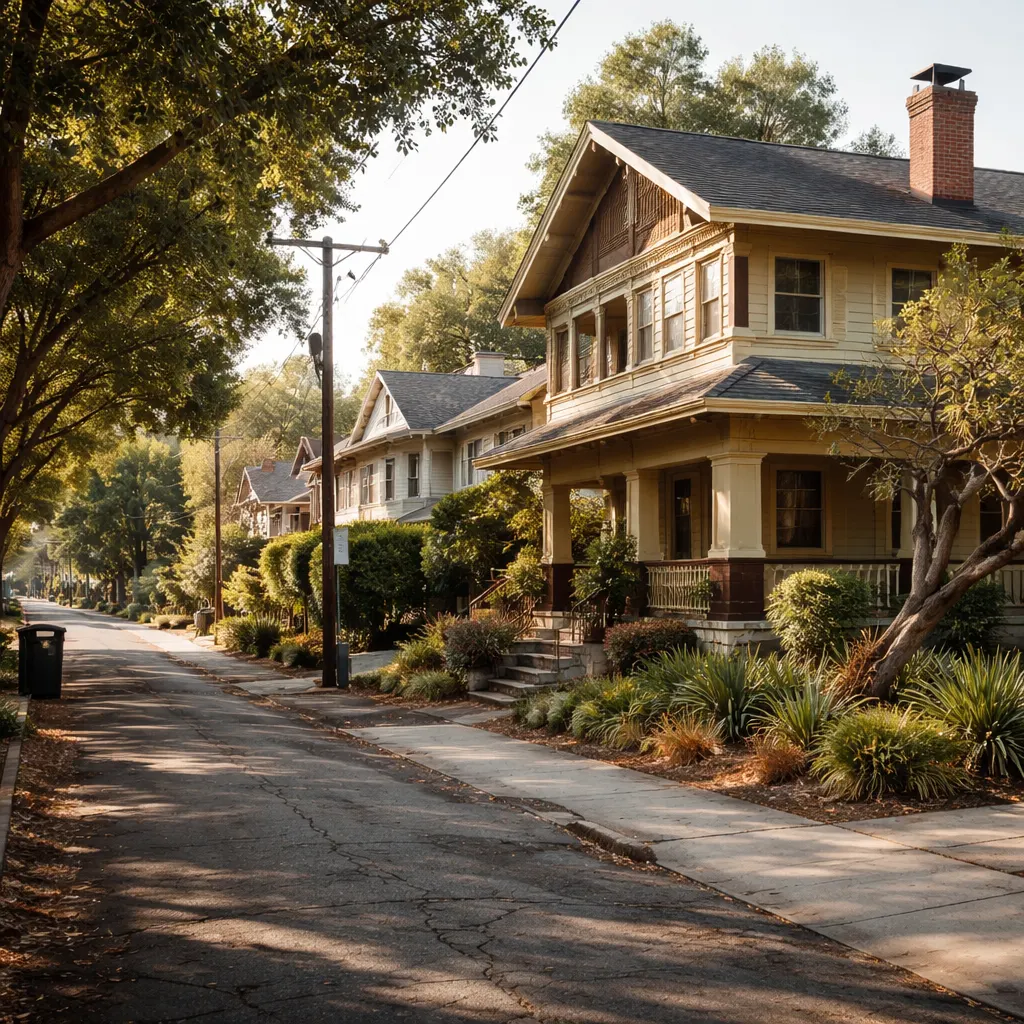
Berkeley's Landmarks Preservation Commission narrowly rejected a bid to grant historic status to a commercial strip in the Elmwood neighborhood this month, clearing the way for mid-rise apartment development in an area shaped by the city's 1916 single-family zoning code—one of the first such policies in the country. The 5-4 vote caps a contentious fight over upzoning in one of the city's wealthiest neighborhoods, according to a report by the Pacific Research Institute published this month. The report traces Berkeley's journey from exclusionary zoning pioneer to a city now working to legalize more housing and undo the damage of its past policies.
The numbers show Berkeley's housing liberalization is working. Since 2015, the city has more than tripled its average annual housing production and added over 2,200 units from 2022 to 2025, the report notes. That expansion helped drive down rents to 2018 levels last year. The city enacted a missing middle housing ordinance in 2023 to encourage duplexes, triplexes, fourplexes, and courtyard apartments across residential zones, setting a density cap of 70 units per acre while preserving height limits of 35 feet and keeping lot coverage at 60 percent. More than 20,000 of Berkeley's 29,000 rental units remain subject to rent control, according to the city's rent board.
The proposed historic designation would have shielded about three dozen buildings dating back to 1916 from normal development, requiring projects to go before the Landmarks Preservation Commission and City Council. Hundreds of people, including 17 commercial property owners, signed petitions supporting the designation, the report states. But Landmarks Commission member Theo Gordon warned that "it is a very expensive and long process" that "makes it even harder to build housing, and leads to abandoned projects." Some commissioners noted it was "inappropriate for Berkeley to honor how the Elmwood was shaped by the 1916 zoning code," given that the original policy was championed to provide "protection against the invasion of their district by flats, apartment houses and stores."
The report explains that Berkeley's 1916 single-family zoning made neighborhoods more exclusive because developers could charge more for single-family homes than for duplexes or cottage apartments. The zoning powers were soon used to target Chinese and Japanese-owned laundries and block a Black-owned dance hall from moving in. In 2021, Berkeley's City Council adopted a resolution acknowledging this history and vowed to end exclusionary zoning. The commission's decision allows individual properties to make their own case for landmark recognition rather than blocking development across the entire commercial strip, preserving the city's momentum toward meeting current and future housing demand.
The report concludes that Berkeley is "directionally doing the right things" by legalizing more housing and seeing it get built. Author Sal Rodriguez, opinion editor for the Southern California News Group and a senior fellow with the Pacific Research Institute, writes that the city is "righting the wrongs of the past" after more than a century. The rejection of historic status for an area born from exclusionary zoning marks another step in that direction, ensuring that housing policy moves forward rather than remaining frozen in a discriminatory past.