
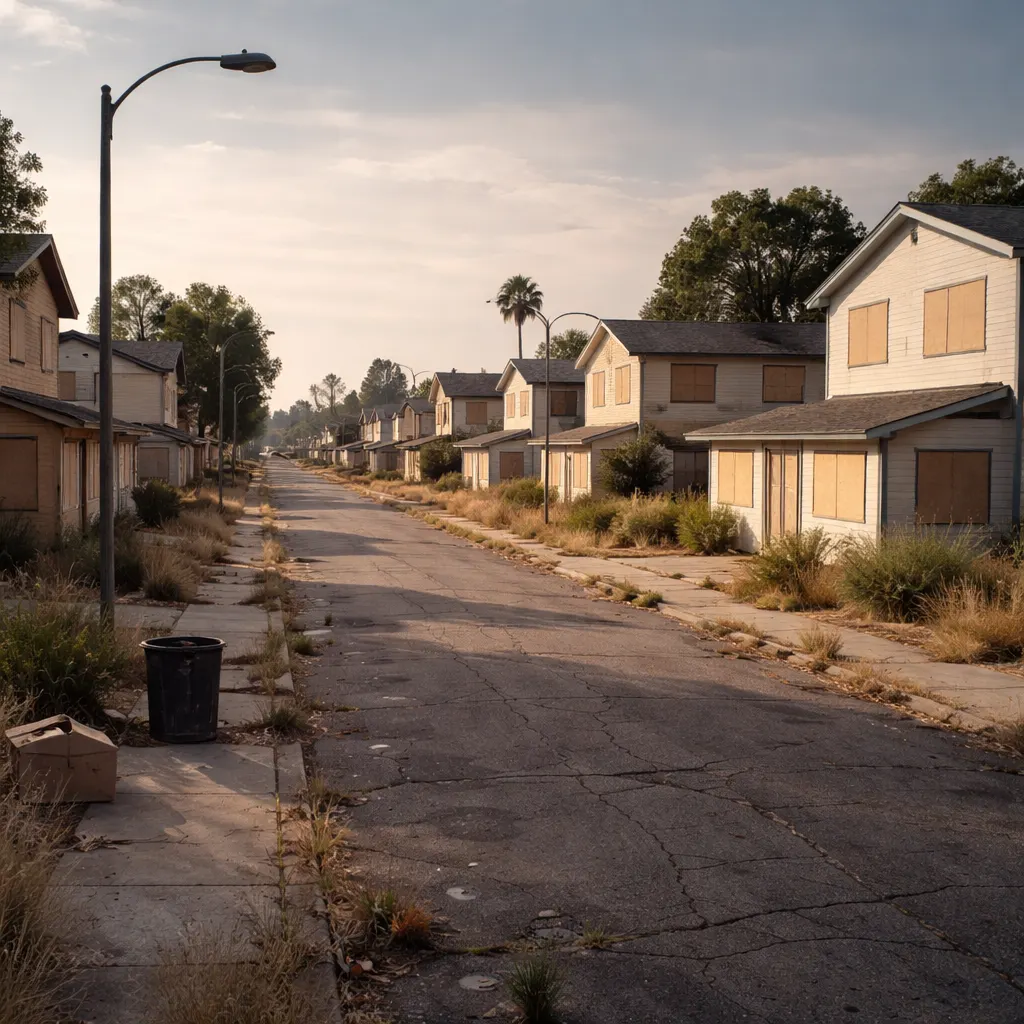
California's transportation agency acquired roughly 460 homes for a freeway extension that was never constructed, leaving hundreds of properties trapped in government ownership for decades during one of the nation's most severe housing shortages, according to a January 2025 commentary published by the Pacific Research Institute. Caltrans started purchasing properties along the proposed State Route 710 corridor in 1954 to connect the 710 Freeway in Alhambra to the 210 in Pasadena, but the extension was ultimately canceled. The report, written by communications specialist Anthony Velasquez, argues that the state produced "the worst possible outcome" by buying the homes, abandoning the freeway plan, and then failing for decades to return the properties to productive use.
A 2012 audit by California's State Auditor found that between July 2007 and December 2011, Caltrans missed out on approximately $22 million in rental income while collecting only $12.8 million in net rental income from the properties. During that same period, the agency spent $22.5 million on repairs from July 2008 through December 2011. The audit examined 404 properties valued at an estimated $279 million and discovered that Caltrans charged tenants little more than half of market rent for 345 of those properties. As of August 2023, Caltrans still owned about 120 vacant single-family homes and multifamily residential units along the 710 corridor, and by August 2024, only 45 property sales had been approved with 23 transactions completed.
According to the report's author, the auditor's legal counsel determined that renting the properties below market rates "constituted a prohibited gift of public funds" unless those rentals served a public purpose. The state's failure didn't just leave a mark on the landscape—it "cost taxpayers millions of dollars, kept hundreds of homes outside the normal housing market, and left neighborhoods dealing with the consequences of a government project that never reached the finish line," Velasquez writes. A new State Auditor inquiry has now opened to examine whether Caltrans followed the Roberti Act, the state law governing how the agency must sell surplus residential properties along the 710 corridor, including priority rules and when properties must be offered at reduced prices.
The report explains that property owners in the 1950s were told the state needed their land for a freeway through eminent domain, a power traditionally limited to public projects like freeways, parks, and schools. When the freeway died decades later, the homes remained under state control while communities that lost private property faced years of delay. The report frames this as a core question about government accountability: if government can seize your home for a public project, what happens when that project is abandoned? Meanwhile, the state spent millions on repairs yet failed to return many properties to productive use during California's worsening housing crisis.
The report calls for government to move these properties out of state control through a clear, lawful, and market-oriented sales process and to get Caltrans out of the housing business entirely. The broader lesson, Velasquez argues, is for government to avoid inappropriately using eminent domain to begin with. Taxpayers deserve responsible management of public assets, and neighborhoods deserve better than vacant or deteriorating homes stuck in government limbo for generations.