
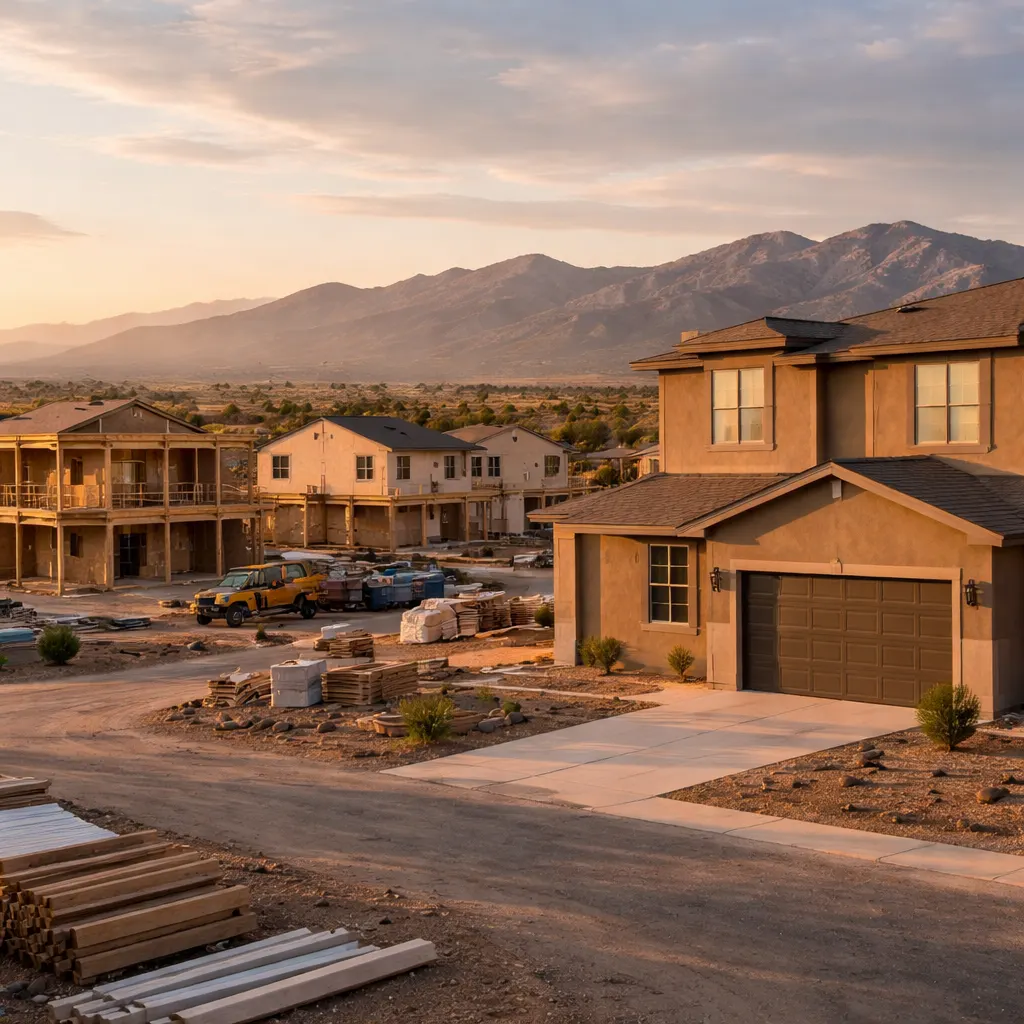
New Mexico faces a housing gap of at least 58,000 homes, with rents climbing 48 percent and home values surging 85 percent between 2015 and 2025, according to a policy brief published by the Mercatus Center at George Mason University in 2026. The report, authored by housing policy experts from Homewise and the Mercatus Center's Urbanity project, identifies bottlenecks in the state's housing approval and permitting systems as a major barrier to solving the shortage. Based on roughly 20 interviews with developers, planners, attorneys, and elected officials conducted in winter and spring 2026, the brief recommends a menu of reforms to streamline local permitting and remove statutory obstacles at the state level.
After the 2008 Great Recession, housing production in New Mexico fell to roughly 40 percent of pre-recession levels and has not recovered, the report finds. Demand for housing continued to climb even as population growth leveled off, driven by shrinking household sizes, constrained housing supply near major employment centers, and aging housing stock in rural communities. New Mexico is the only state in the Southwest that hasn't adopted legislative reforms in recent years to address housing permitting, leaving it lagging behind regional peers. The state's 138 municipal and county jurisdictions operate under three different permitting models—full-service, hybrid, and joint powers agreements—creating wide variability in approval timelines and red tape across the state.
The authors identify discretionary approval processes as a statewide obstacle that slows housing construction. Rather than allowing staff to approve projects that meet adopted standards, many jurisdictions require public hearings and case-by-case decisions for individual developments, which the report says favors "a small number of people who are unrepresentative of the wider community yet are most able to attend public hearings." One interviewee told the authors, "Even if you have accomplished zoning reform, it doesn't mean much if a permitted use is not a permissive use because you have created so many trip wires that allow a few folks to go beyond the written standards." State law currently mandates discretionary public hearings for any subdivision larger than two lots, creating delays for starter homes and townhomes. In northern New Mexico's tourism and laboratory economy, rigid requirements for plat reviews, rezonings that need approval from multiple bodies, and strict grandfathering rules for infill development routinely hinder new housing near jobs, pushing workers into distant communities with long commutes.
Lengthy and unpredictable permitting processes drive up development costs and worsen housing shortages, the report argues, because developers spend money without revenue until projects are completed. The brief highlights successful local reforms—Las Cruces updated its comprehensive plan and zoning code in 2020 and 2025 to allow multiunit dwellings across all neighborhood zones, while Farmington shifted all residential site plans to administrative approval, and Albuquerque reformed its appeals process to require a majority of nearby property owners or tenants to sign onto an appeal. The authors recommend jurisdictions adopt by-right approvals with objective standards, track permitting timelines with internal shot clocks, allow concurrent review of site plans and building permits, and elevate public input to the policy level rather than the project level. At the state level, the report calls for three legislative actions: capacity-building grants for local governments that adopt permitting best practices, creation of a permanent Division of Housing within a state agency to coordinate statewide efforts and track data, and modernization of zoning and subdivision statutes written in the 1950s and 1960s that restrict local innovation.
The report concludes that New Mexico's housing crisis developed over decades but can be reversed through partnerships between state and local governments. With renewed momentum from jurisdictions that have already made progress—including Las Cruces, Albuquerque, Rio Rancho, Farmington, and Artesia—the state has an opportunity to replicate those successes and provide housing for New Mexico's families. The brief's recommendations represent concrete steps policymakers can take immediately, from tracking permitting metrics and reforming appeals processes to funding infrastructure and removing outdated statutory barriers that prevent local governments from experimenting with faster approval systems.