
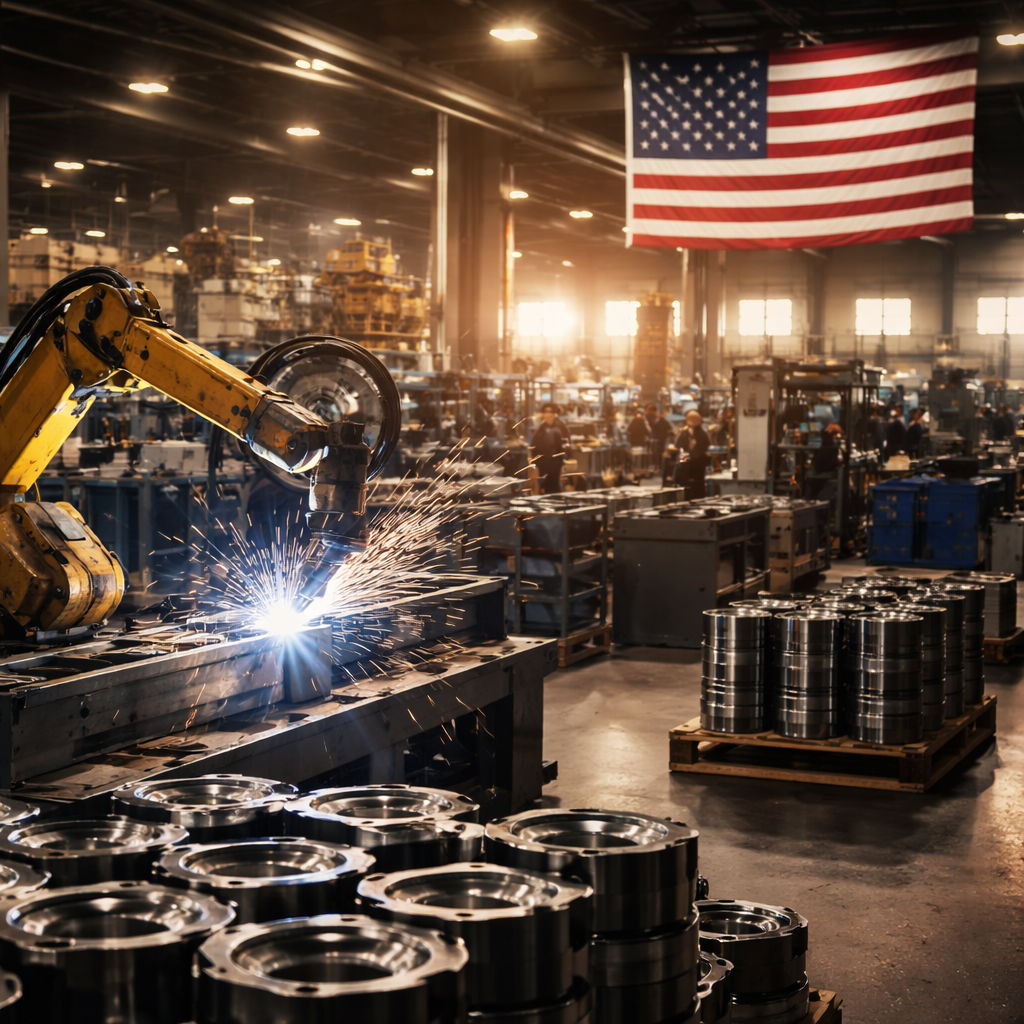
American manufacturing output is "near to, if not exceeding, historic highs" even as employment in the sector has plummeted from mid-20th century levels, according to Dave Hebert, senior research fellow at the American Institute for Economic Research, speaking on the Overton Window Podcast released June 12, 2026. Hebert disputes what he calls "misinformation" about American manufacturing being in decline or "hollowed out," arguing instead that the sector's future is "very bright" if government stays out of the way. His analysis challenges popular narratives about U.S. industrial power and offers a contrasting view of what ails struggling manufacturing communities.
The data paints a split picture: while manufacturing output has reached or exceeded all-time peaks, employment has collapsed from post-1950 levels to "relatively few" workers today. Hebert compares this trajectory to farming, which experienced a steep employment drop over the past century while productivity surged. Manufacturing employment in 1950 involved "a lot of people," but today's sector produces more with far fewer workers. This mirrors a broader shift away from traditional, frequently unionized factory floor jobs even as total manufactured goods produced continues climbing.
Hebert argues that "we hear things about how American manufacturers are in decline, how the manufacturing industry is being destroyed or hollowed out," but says examining the data reveals the opposite for output. He notes that political leaders make a mistake by "focusing on the collapse of manufacturing in certain regions" and comparing raw employment numbers with rival nations. According to Hebert, communities suffering real economic hardship typically "used very protectionist policies to try basically to shield their dominant industry from competition," which works short-term but erodes long-term economic resilience. He states: "We need to unleash American workers, not protect them."
The report explains the divergence through a comparison of Detroit and Pittsburgh. Detroit benefited from decades of state, local, and federal policies propping up the auto industry, but this "just led to less and less resiliency or economic diversity," causing the city to suffer through "the largest municipal bankruptcy in U.S. history" when the auto sector wobbled. Pittsburgh, by contrast, maintained diverse sectors including education, tech, healthcare, and industry independent of steel, so "when the steel industry there collapsed," workers and capital had alternative destinations. Hebert uses a metaphor: protectionist policies put a single industry "on a pedestal" while "the economic soil" beneath it erodes, making any eventual fall "devastating." The rise of highly specialized, high-end manufacturing for business customers—like medical equipment exported to hospitals worldwide—demonstrates America's engineering advantage, but policymakers often miss this shift because they focus on consumer goods coming from overseas.
Hebert considers it "tremendous" that the federal government is largely avoiding heavy industrial regulations and believes the manufacturing sector will thrive if this approach continues. He points to exports of sophisticated equipment like MRI machines as proof that American manufacturing dominance has shifted from mass consumer goods to technical expertise: "There are eight billion people in the world" who need advanced equipment. The bottom line: America's manufacturing crisis isn't about output or capability—it's about communities that bet everything on a single protected industry and lost when the ground beneath them gave way.