
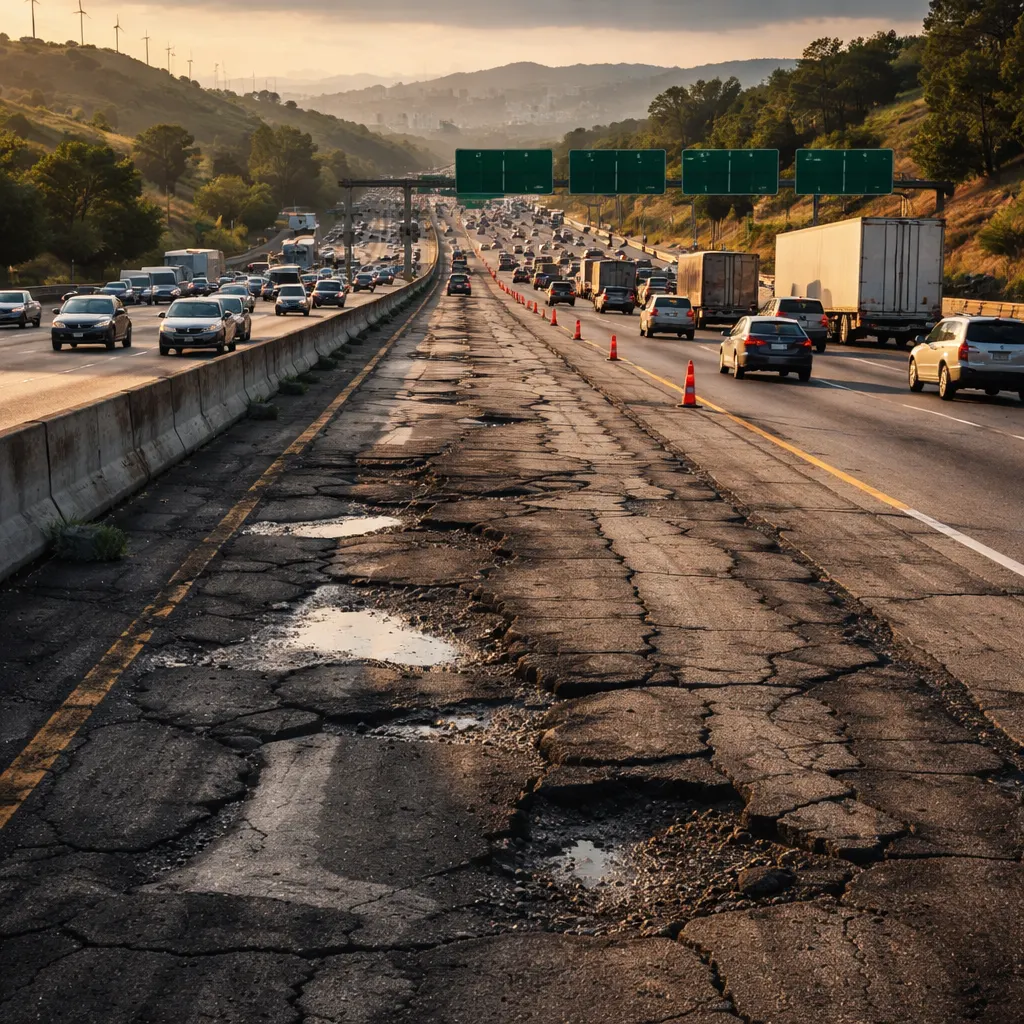
California ranks 49th out of 50 states in overall highway performance and cost-effectiveness despite collecting over $14 billion in transportation revenue during the 2023-2024 fiscal year, according to Reason Foundation's 29th Annual Highway Report published this week. The state spends nearly $50,000 per lane-mile on maintenance—63% more than expected for its urbanization level—yet delivers the nation's second-worst highway system, the analysis finds. Only Alaska, which confronts significant weather and geographic obstacles, performs worse.
The state collects roughly $1.15 in federal and state taxes on every gallon of fuel purchased, generating far more revenue than second-place Texas even though Texas operates a larger state highway network. California's state fuel tax climbed another 2.2 cents to 63.4 cents per gallon on July 1 under an annual inflation adjustment, giving Californians the nation's highest fuel tax. Despite being the sixth-highest spender on maintenance, California ranks dead last—50th—in urban arterial pavement condition, the local roads residents use to reach work, school, and grocery stores. Nearly a third of that mileage, 32%, sits in poor condition, compared with a 13% national average. The state's Interstate pavement fares little better, ranking 48th out of 50 in urban pavement conditions and 47th in rural pavement conditions. Drivers lose approximately 49 hours annually sitting in traffic congestion, worse than all but three other states.
The report finds that California's population and density aren't the problem, as the Annual Highway Report adjusts spending expectations for urbanization to allow like-for-like comparisons with other states nationwide. For comparison to similar states, the analysis notes that Florida ranks 14th and Texas 27th in overall highway condition and cost-effectiveness—both large, fast-growing states that deliver better road conditions for less money. The Federal Highway Administration criticized California's infrastructure project selection process for relying too heavily on politics and failing to properly consider quantitative criteria such as reducing congestion, reducing fatalities, and increasing economic activity.
The report explains that California's strict environmental review, high labor and union costs, expensive land, zoning laws, and not-in-my-backyard politics make building and expanding roads, highways, and bridges a challenge. The state's costs are driven up by the California Environmental Quality Act (CEQA), which has become more about process and checking boxes than about protecting the environment. Georgia offers a contrasting model: it has the country's second-best urban arterial road pavement conditions and third-best rural arterial road pavement conditions, yet only 12 states spend less on maintenance than Georgia does. California can learn from Georgia and other states on how to build and maintain higher-quality roads at lower prices.
The report recommends three reforms to give drivers better value for their gas taxes. First, California should conduct a benefit-cost analysis of all potential projects, rank them, and invest in building and expanding the ones with the highest scores while better prioritizing tangible improvements like fixing potholes and resurfacing roads. Second, the state should study how Georgia and similar states maintain their roads and bridges at lower costs. Third, California must reduce its costs by reforming CEQA and reducing labor costs in future union negotiations. Californians are paying for a first-rate highway system but aren't getting one—and every tax increase just further raises the price of a broken system.