
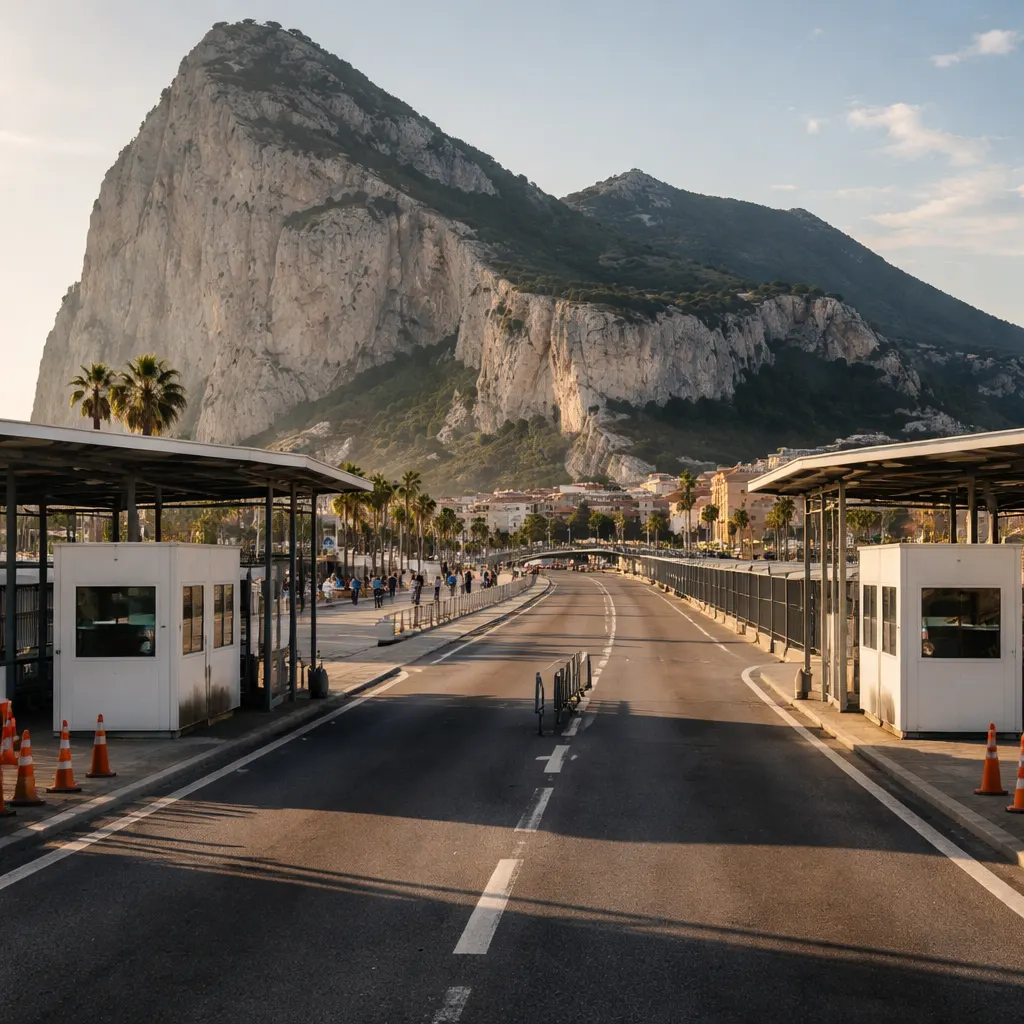
At midnight on July 15, the fence separating Gibraltar from Spain since 1908 was dismantled, ending more than a century of physical division. According to a new analysis published by the Foundation for Economic Education, the removal follows an agreement signed last June by Spain, the EU, Gibraltar, and the UK, creating a fluid frontier that incorporates the British Overseas Territory into Europe's borderless Schengen Zone. The change marks the conclusion of a decade of tense negotiations triggered by the 2016 Brexit referendum, in which 96% of Gibraltarians voted to remain in the EU even as 51% of Britons voted to leave.
The economic contrast between Gibraltar and neighboring La Línea de la Concepción is stark. The report notes that Gibraltar's GDP per capita stands at roughly $133,000, placing it alongside tax havens like Monaco and Luxembourg and well above the UK's $61,000. The Rock's unemployment rate sits at 1% and hasn't exceeded 3% since 2002, fueled by a 10% corporate tax rate that attracts online gaming and financial services firms. Just 50 meters across the former border, La Línea's unemployment rarely falls below 30%, while youth joblessness in the poorest neighborhoods reaches 80%. Around 15,000 workers cross from Spain into Gibraltar daily, 11,000 of them from La Línea itself. The border was located on a narrow strip called the isthmus, where Gibraltar's airport and military base sit. Spanish dictator Francisco Franco closed this frontier entirely in 1969, a blockade that wasn't fully lifted until 1985, ten years after his death.
Gibraltar's chief minister, Fabian Picardo, said "the frontier that has so often divided and constrained our region will now become a place of cooperation and shared opportunity." Spanish Prime Minister Pedro Sánchez called it the start of a "new era of coexistence and shared prosperity" between the Rock and the Campo de Gibraltar, the neighboring Andalucian region home to approximately 280,000 Spaniards. La Línea's mayor, Juan Franco, welcomed the fluid frontier but requested "differentiated treatment" from the rest of the Campo, seeking clarity on environmental issues, taxation, urban planning, and whether additional investment will arrive from the Andalucian government. The analysis describes the fence removal as "a triumph of compromise and practicality over historical partisanship," though the UK–Spain sovereignty dispute over Gibraltar continues in its third century.
The report explains that while the open border will ease daily life for commuters, it won't be enough to revive the Campo de Gibraltar's struggling areas or ensure residents share in Gibraltarian prosperity. Greater public and private investment is necessary, along with sustained action against smuggling gangs that plague the region. La Línea and the port city of Algeciras serve as major hubs on drug-running routes linking Europe with North Africa and the Americas. In late 2024, Spanish authorities seized 13 tons of cocaine in Algeciras—the country's largest-ever drug haul at the time, worth nearly €800 million. An estimated 3,000 of La Línea's 64,000 residents are involved with roughly 30 smuggling cartels, attracted by enormous paychecks and scarce alternatives. Lookouts earn €1,000 daily, while speedboat drivers can collect €60,000 per trip across the Strait of Gibraltar to Morocco, a journey under an hour with about ten crossings made each day. The analysis concludes that what's less clear is whether the disappearance of this physical barrier will truly transform the Campo de Gibraltar, a region that has lived in the shadow of the Rock.