
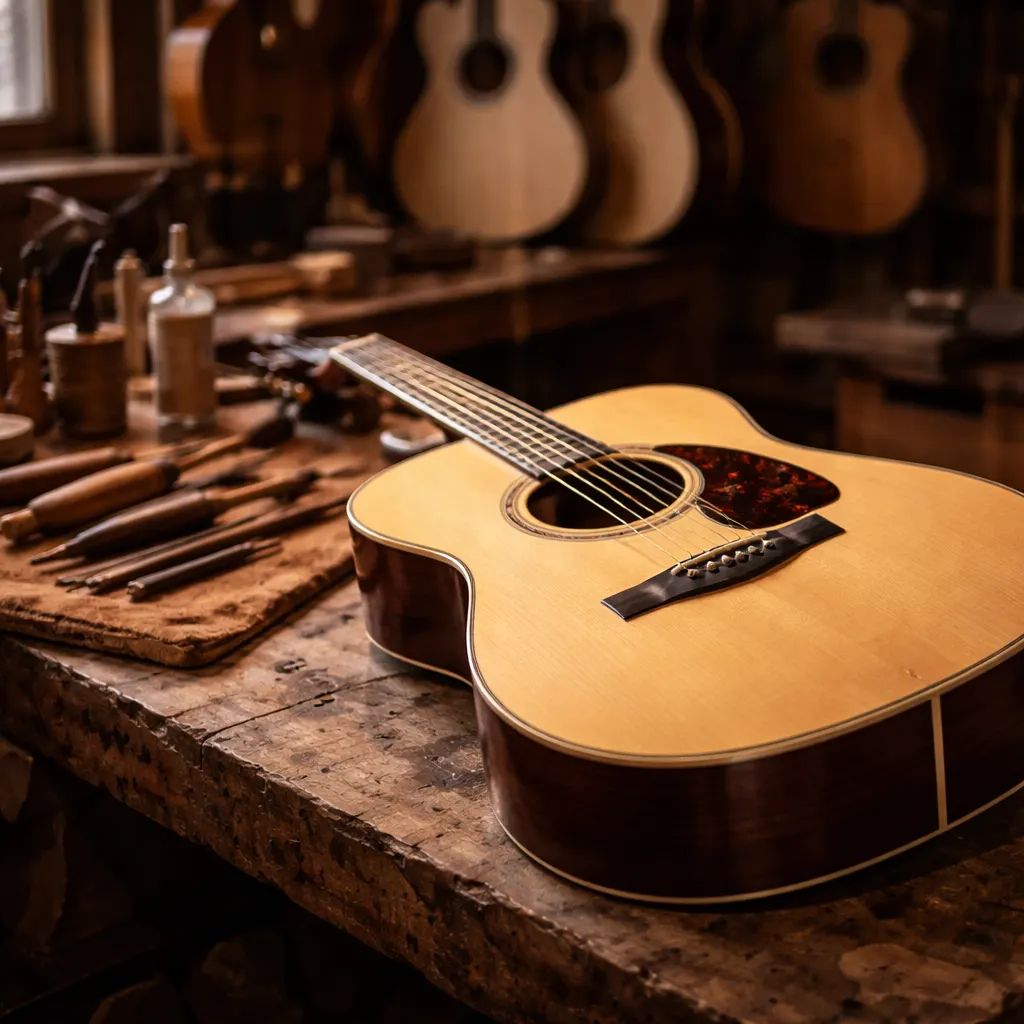
The Martin guitar that Eric Clapton played on his iconic 1992 "Unplugged" album—a performance that sold 26 million copies and became the best-selling live album of all time—wouldn't exist if an entrepreneur hadn't fled restrictive guild regulations nearly two centuries ago. That's according to a new analysis published by the Mackinac Center for Public Policy on June 9, 2026, which traces how C.F. Martin & Co. survived by escaping Europe's rigid licensing system. The piece argues that today's occupational licensing rules mirror the same protectionist mindset that nearly strangled the guitar industry in its infancy.
In the early 1800s, Christian Frederick Martin worked as a cabinet maker in Vienna under a strict guild system—the era's version of occupational licensing. As guitars grew popular in Europe, some cabinet makers began focusing on the instrument, which angered the powerful violin makers' guild. The violin guild argued it held exclusive rights to make musical instruments and filed a legal petition in 1826 targeting Martin and others, seeking to monopolize the guitar trade. Martin eventually tired of the regulatory battles and moved to New York City in 1833, where he started an instrument shop free from guild restrictions. The Martin family built a guitar empire that has supplied instruments to Elvis, Johnny Cash, Dolly Parton, and Ed Sheeran across generations.
The Martin guitar Clapton used—a 1939 Martin 000-42—came at a critical moment for the acoustic guitar industry. By the time of Clapton's performance, acoustic guitars were struggling: folk music had declined, Bob Dylan had gone electric, and disco and hair metal dominated. C.F. Martin & Co. nearly went bankrupt in the 1980s. But MTV's "Unplugged" series made acoustic guitars cool again, and Martin guitars enjoyed a fivefold increase in production by the end of the 1990s. Clapton's album won three Grammy Awards and the guitarist called the Martin 000-42 the finest Martin guitar he'd ever owned.
The analysis draws a direct line from Martin's 19th-century guild battles to today's licensing landscape. Michigan currently requires licenses for more than 160 occupations, the report notes, with training requirements that are often arbitrary: aspiring barbers need more training hours than it takes to complete law school, and funeral directors need more training than paramedics. The report argues these rules "stifle creativity, entrepreneurship and economic mobility" in the same way the violin guild's petition threatened Martin's livelihood. Just as established violin makers used regulations to lock out guitar-making competitors in 1826, the analysis suggests established firms today use licensing rules to block new entrants.
The Michigan Legislature is now considering bills to lift some occupational licensing rules, the report says. The analysis ends with a pointed example: without the proper teaching certificate, Eric Clapton himself wouldn't be allowed to teach music in a Michigan high school. The takeaway is clear—regulations designed to protect quality can instead protect incumbents, and the cost isn't just economic opportunity but cultural innovation we'll never know we lost.