
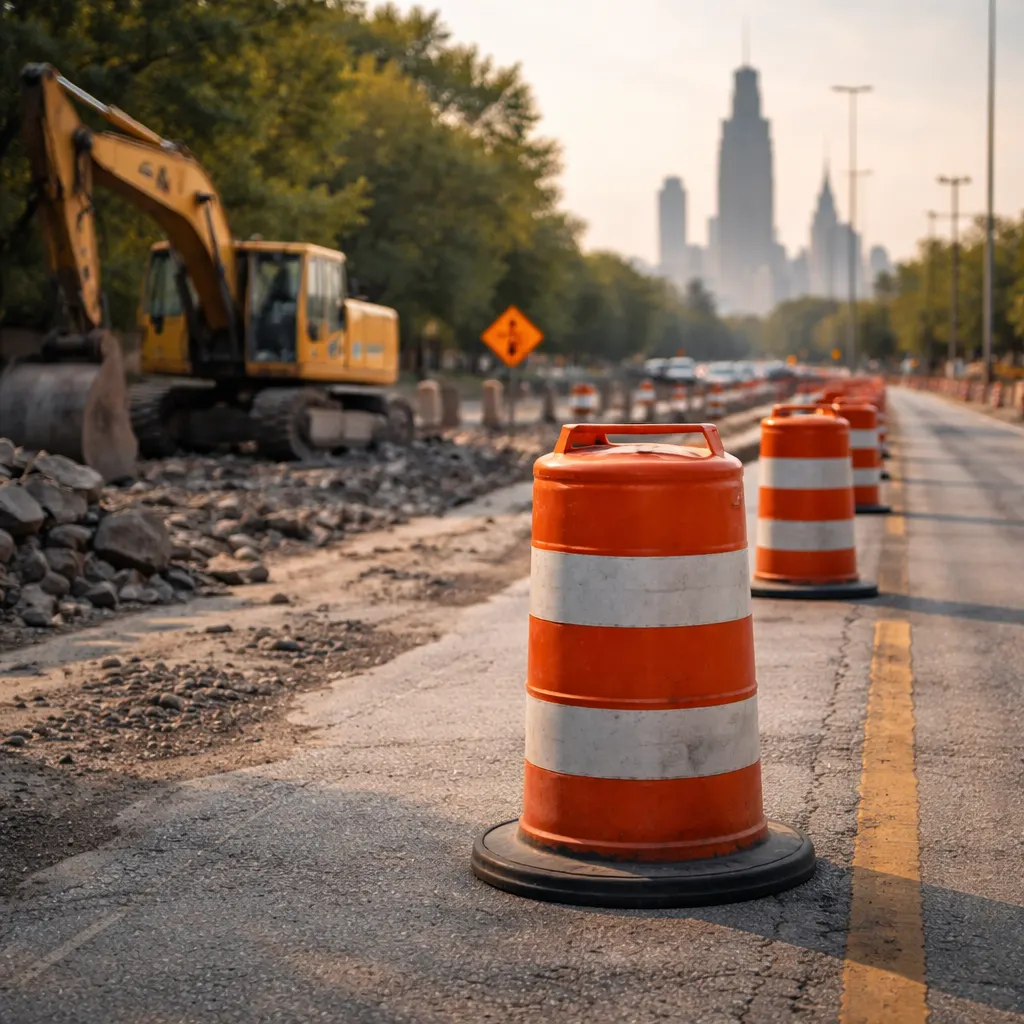
Illinois has collected billions of dollars in road taxes since 2019 but isn't spending the money on infrastructure improvements, according to a report published by the Illinois Policy Institute. The state's roads are in no better shape than when the Rebuild Illinois law took effect seven years ago, even as tax revenue has piled up faster than the state can spend it. The report finds that 20% of Illinois highways remain in below-acceptable condition in 2024, the same rate as when the law passed in 2019.
Road Fund revenue has grown an average of 14% per year under the bill, but fund expenditures grew by just 5% yearly, according to the report. Most of that increased spending happened in the first two years of the program. Since 2022, Road Fund outlays have increased just 1.3% per year on average, not even matching the rate of inflation. The imbalance has left the fund flush with cash, holding $3.7 billion at the end of fiscal 2025. Meanwhile, Gov. J.B. Pritzker doubled the state gas tax to 38 cents a gallon to fund the improvements, with automatic annual increases tied to inflation.
The report notes that a constitutional "lockbox" provision prevents Road Fund money from being diverted to non-transportation spending in theory, but lawmakers have found ways around it. Last year, lawmakers used more than $1 billion from the Road Fund to bail out the Regional Transportation Authority, a move that "made construction unions mad and arguably violated the spirit of Rebuild Illinois: to fix roads and bridges," the report states. The Illinois Department of Transportation did not respond to questions about why spending on state roads and bridges appears to have leveled off.
The report explains that the massive lump of cash sitting in the fund motivates lawmakers to find questionable ways around the lockbox, such as holding back revenues from gas sales in the first place. The law includes no obligation to pause tax increases when revenues exceed expenditures or when the Road Fund balance reaches a certain level. In fact, while tying increases to inflation, the law doesn't even permit a decrease in the unlikely event of deflation. The report argues that Rebuild Illinois "unfairly burdens the middle class with perpetual tax increases, forcing families to bear the cost of economic downturns twice: first through the effects of inflation and second through tax hikes directly caused by that inflation."
The report recommends that lawmakers pass a sunset amendment, forcing a vote every few years on whether the endless tax hikes should continue, short of repealing the taxes and fees entirely. The Illinois Tollway is now looking to tie toll hikes to inflation as well, which could double down on the same structure. The bottom line: the state has shown it can't effectively use the extra money it's already collecting from drivers.