
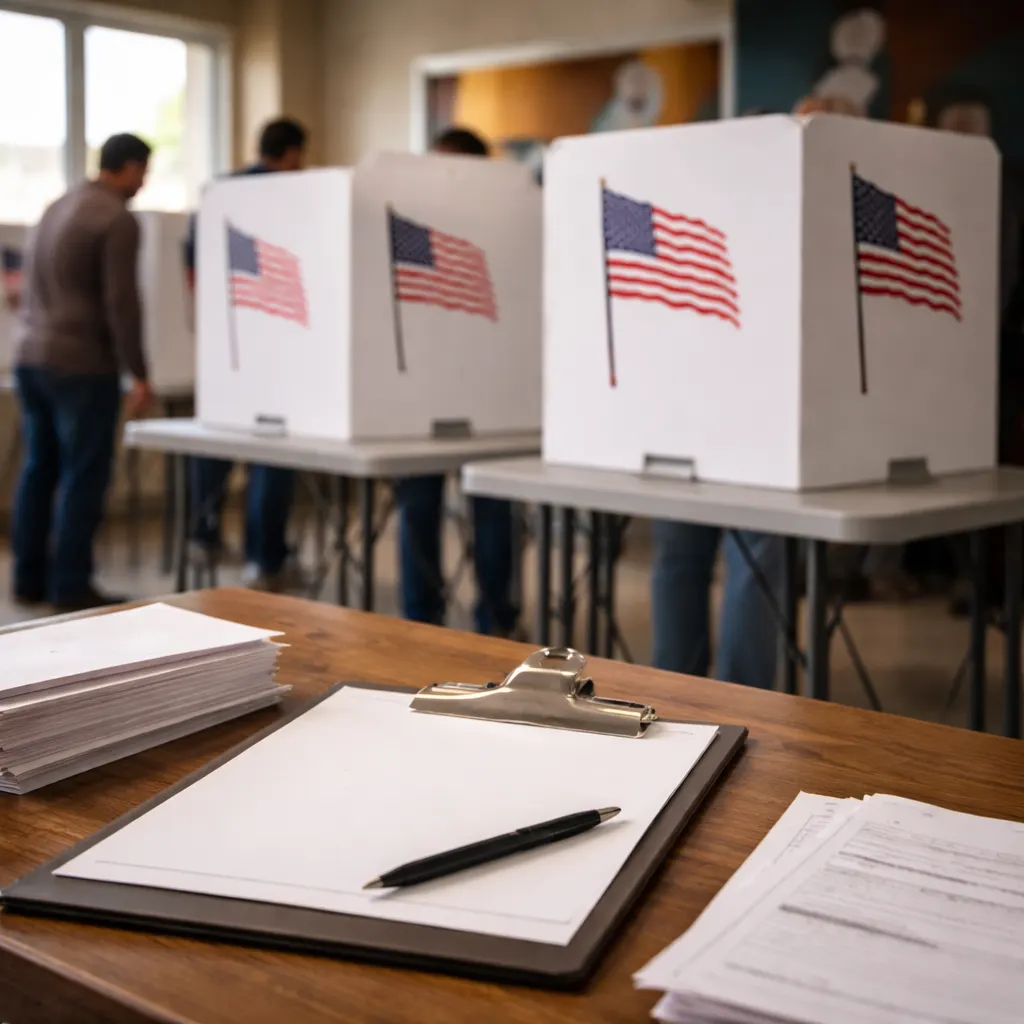
A Michigan nonprofit claiming tax-exempt charitable status targeted 256 zip codes with voter registration ads that overwhelmingly favored Democratic-leaning areas, according to an analysis published by Capital Research Center. The review of digital advertising data from Promote the Vote Fund Inc. found that fewer than two dozen of the targeted zip codes lean Republican, while at least 100 contained no precincts that favored Republicans in 2024. The group, which operates as a 501(c)(3) charity alongside a paired 501(c)(4) organization, raised more than $5.5 million in combined revenue in 2024 and spent it mostly on canvassing, litigation, advertising, consultants, and more than 400 volunteers.
The analysis compared Meta and Google advertising data to precinct-level election results and found a consistent pattern of excluding Republican-leaning communities. In the Detroit suburb of Garden City, which Trump won by nearly 9 percentage points in 2024, Promote the Vote Fund excluded the town from targeted advertising even though every single surrounding zip code was included. Other excluded areas near Detroit included Allen Park to Wyandotte, Rochester Hills, Fraser, Harrison Township—which Trump won by 30 percent—and three zip codes comprising St. Clair Shores. A diagonal stretch of affluent and reliably Democratic zip codes in Oakland County, from Hazel Park and Royal Oak to Birmingham and Orchard Lake Village, wasn't targeted. Statewide, the group's ads reached areas in and around Ann Arbor, Battle Creek, Bay City, Benton Harbor, Flint, Grand Rapids, Kalamazoo, Lansing, and other cities that appear as the darkest blue dots on the 2024 electoral results map. Near Grand Rapids, targeted zip codes looped around the deep red towns of Hudsonville and Jenison to reach Allendale, home to Grand Valley State University and a precinct Harris won by 33 percent.
The report notes that IRS rules explicitly forbid voter education or registration activities with evidence of bias that would "favor one candidate over another" or "have the effect of favoring a candidate or group of candidates." The analysis points to a 2020 internal memo from Mind The Gap, a Democratic super PAC, which claimed that "501(c)(3) voter registration" is the "single most effective tactic for ensuring Democratic victories" and is two to five times more cost-effective at netting additional Democratic votes than traditional campaign tactics. The report describes the correlation between Michigan's heaviest Democratic precincts and Promote the Vote targeting as "as strong as the link between smoking and lung cancer."
The analysis argues that offloading partisan work onto tax-exempt charities increases the value of each donation because it uses the charitable tax break to subsidize electoral objectives. Federal law permits 501(c)(3) organizations to conduct voter registration only if it's done without partisan bias, but the report suggests enforcement has been weak. It cites a 2024 controversy involving another nonprofit, the Voter Participation Center, which was caught using filters on Meta ads to exclude users interested in Republican-heavy topics like NASCAR, the PGA Tour, and Duck Dynasty. The report concludes by asking whether anyone with enforcement power will act on the rules, or whether Republicans should create their own partisan voter registration charities and start breaking the rules as well.