
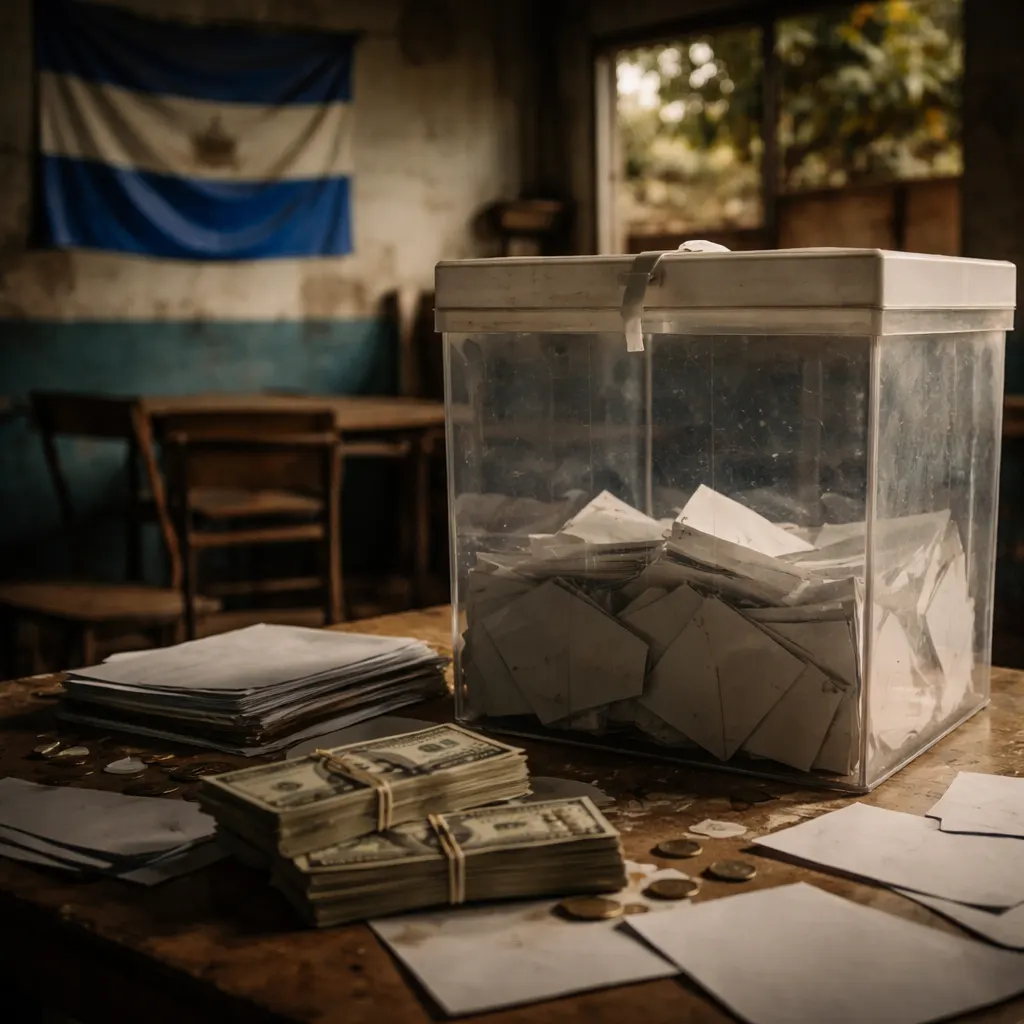
Daniel Ortega declared last week that Nicaragua will never hold elections again, cementing the country's transformation into what a new analysis from the Hudson Institute calls the most thoroughly repressive state in the Western Hemisphere. The report, published by Daniel Batlle, argues that while the regime has been quietly building absolute power for two decades, economic support from the United States—not China or Venezuela—has been the primary force keeping the Ortega-Murillo family in control.
The scale of repression in Nicaragua has exceeded even Cuba and Venezuela in some respects, the report finds. Since 2018, the regime has closed down thousands of NGOs, universities, and charities—roughly 80% of all civil-society organizations in the country. At least 452 Nicaraguans have been stripped of their citizenship through court orders, their property confiscated and their legal identities wiped out in what the report describes as manufactured statelessness—a tool no other regime in the hemisphere has deployed. The Catholic Church has been decimated, with over 200 clergy and nuns forced into exile and ordinations banned in four dioceses. Elections became meaningless in 2021 when every viable opposition candidate was jailed before the presidential vote.
But it's US economic ties, not authoritarian allies, that provide the regime's lifeline. Remittances to Nicaragua hit a record $6.2 billion last year, with 80% flowing from the United States—equivalent to 29% of the country's GDP, making Nicaragua one of Latin America's most remittance-dependent economies. The US remains Nicaragua's largest trading partner by far, purchasing almost 40% of its exports, according to the report. Through the CAFTA-DR trade agreement, which took effect around the time Ortega returned to power in 2006, Nicaraguan apparel and textiles enter the US duty-free. The Trump administration has imposed tariffs on some Nicaraguan goods not covered by the agreement but has deliberately left the trade deal—and the duty-free access that matters most—untouched. Nicaragua is the second-poorest country in the hemisphere, with per capita annual income around $2,600, making access to the US market especially critical.
The report argues that these trade and remittance flows insulate the Ortega-Murillo family from the consequences of their governance, providing just enough economic stability to prevent the kind of crisis that might force change. Washington has sanctioned dozens of regime officials, restricted visas, and sanctioned Nicaraguan companies—measures the report calls warranted but ineffective at changing the regime's behavior. Meanwhile, the economic supports that actually keep the regime afloat remain fully intact. The analysis notes that the Trump administration's approach to Nicaragua is "especially puzzling" when compared to its pressure campaign on Cuba, where it has cut off tourism revenue and blocked oil imports to paralyze large sectors of the economy in hopes of forcing negotiations. If overwhelming economic pressure is believed to bring a regime to its knees, the report asks, why use it so inconsistently—especially when the US has far more leverage with Nicaragua?
Ortega didn't seize absolute power in a single dramatic move but built it methodically by taking over state institutions and rewriting the rules, the report explains. It started in 1999 when Ortega—then out of office—made a deal with his right-wing rival to split control of the Supreme Court and other key institutions between their two parties, freezing out everyone else. After winning election in 2006 thanks partly to a divided democratic opposition, the takeover accelerated: reelection was permitted in 2011, term limits were abolished in 2014, and finally a new constitution in 2025 gave the Ortega-Murillo family absolute, hereditary authority. Venezuela provided cheap oil for years, giving the regime off-budget revenue, and since restoring ties with Beijing in 2021, Nicaragua has become China's showcase client in the hemisphere—Chinese firms now run the gold mines, build the digital infrastructure, and develop physical projects including the port of Corinto, a potential dual-use asset.
The report concludes that Ortega's announcement shows he has no fear of meaningful consequences from the United States. For now, at least, that confidence is justified. Washington's continued tolerance of the economic flows that sustain the regime—while maintaining aggressive pressure on other dictatorships in the region—signals that Nicaragua can continue tightening its grip without risking the stability its survival depends on.