
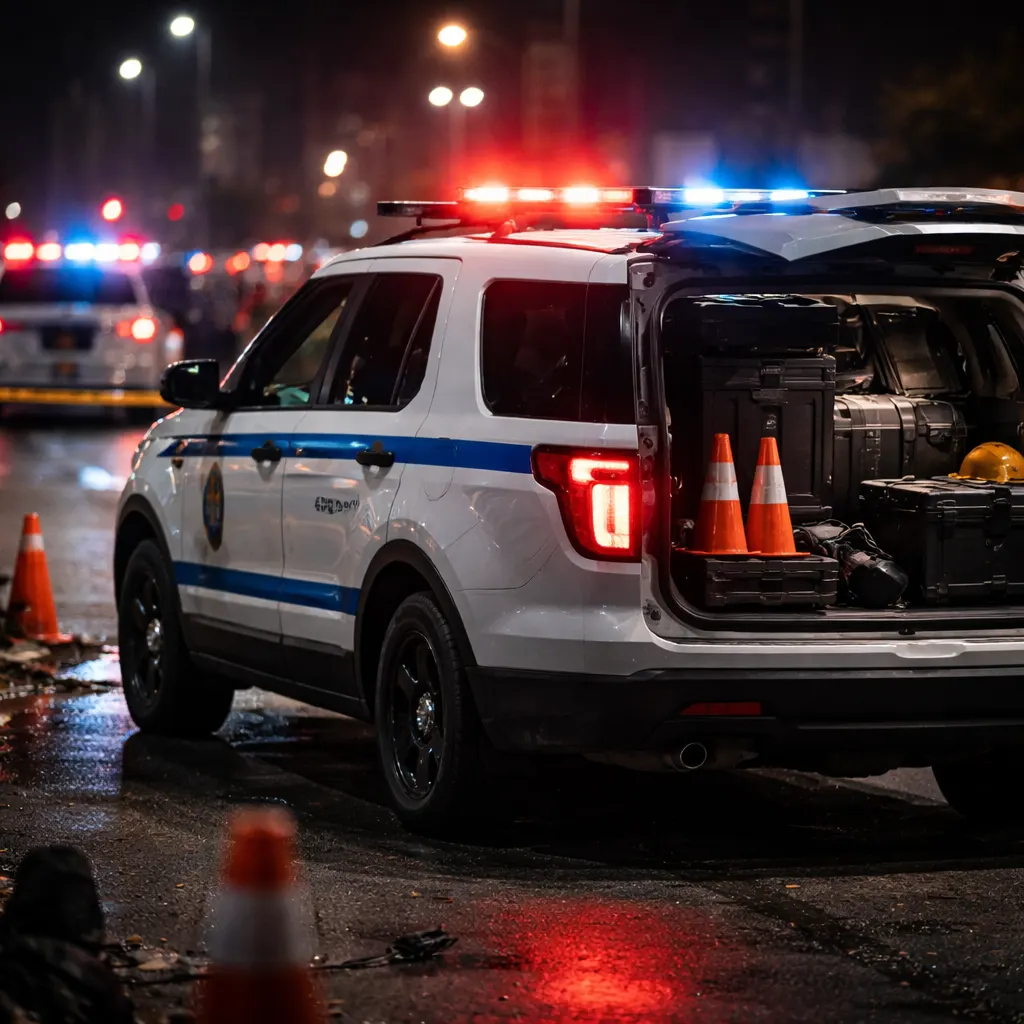
The NYPD's specialized team responsible for investigating serious traffic crashes is examining even fewer collisions this year, handling just 179 cases through early September and falling far behind comparable units in cities like Chicago, according to a new analysis published by Streetsblog. The Collision Investigation Squad's current workload puts officers on track to complete roughly eight cases per detective annually—half the rate documented in 2013. The review underscores longstanding concerns about the unit's limited capacity to identify critical street safety problems despite New York's Vision Zero goals.
The squad's 179 investigations through Sept. 9 represent a pace that will likely fall short of last year's total, which itself dropped 21 percent from the previous year. The unit typically examines around 225 fatal crashes and several dozen of the roughly 3,000 "critical" injury crashes that occur annually. By comparison, Chicago's police department—about one-third the size of the NYPD—assigns 53 officers to its crash investigation unit, 22 more than New York deploys. In 2024, Chicago investigators handled 3,733 collisions: 144 fatal, 461 serious, 2,624 minor injury crashes, and 504 involving only property damage. Meanwhile, New York's squad completed just 263 investigations in 2025, down from 335 the year before. Chicago officers also work faster, averaging roughly 80 hours per fatal crash investigation—a pace that would allow New York detectives to handle about 23 cases yearly instead of eight.
Street safety advocates voiced alarm at the squad's limited output. "Roughly eight [investigations] per detective per year is appalling, and cries out for explanation," said Charles Komanoff, former head of Transportation Alternatives. Ben Furnas, the group's current executive director, added that the NYPD needs to investigate more crashes to fulfill its role in the city's Vision Zero ambitions. An unnamed NYPD spokesperson defended the comparison, calling it "disingenuous" because the departments "police two different cities under different circumstances," but declined to answer specific questions about staffing or performance.
The squad's constraints stem from decades of resource decisions. In 2013, then-Comptroller John Liu proposed expanding the unit from 19 officers to 177—a 900-percent increase that would have cost just $12 million against the NYPD's $4.4-billion budget—to investigate all serious injury and fatal crashes. Then-Commissioner Ray Kelly increased staffing only to 26 officers. By 2015, the unit was investigating just 1 percent of serious and fatal crashes, and staffing had actually fallen by two officers. In 2019, the City Council offered $2 million to hire 15 more detectives, but then-Commissioner James O'Neill turned down the funding. Even when investigations are completed—typically within six months—the detailed reports rarely become public, accessible to victims' families only through public records requests that can take an additional six to nine months.
Advocates argue that publishing the unit's estimated 4,000 completed reports would reveal crucial data about who and what causes crashes that kill and seriously injure New Yorkers. Komanoff noted this would be "a treasure trove of data" showing how streets should be redesigned and which violations should be enforcement priorities. If NYPD investigators matched Chicago's speed and the squad had equivalent staffing, they could examine every fatal crash plus thousands of other serious collisions—potentially unlocking the safety insights that remain locked in unpublished case files.