
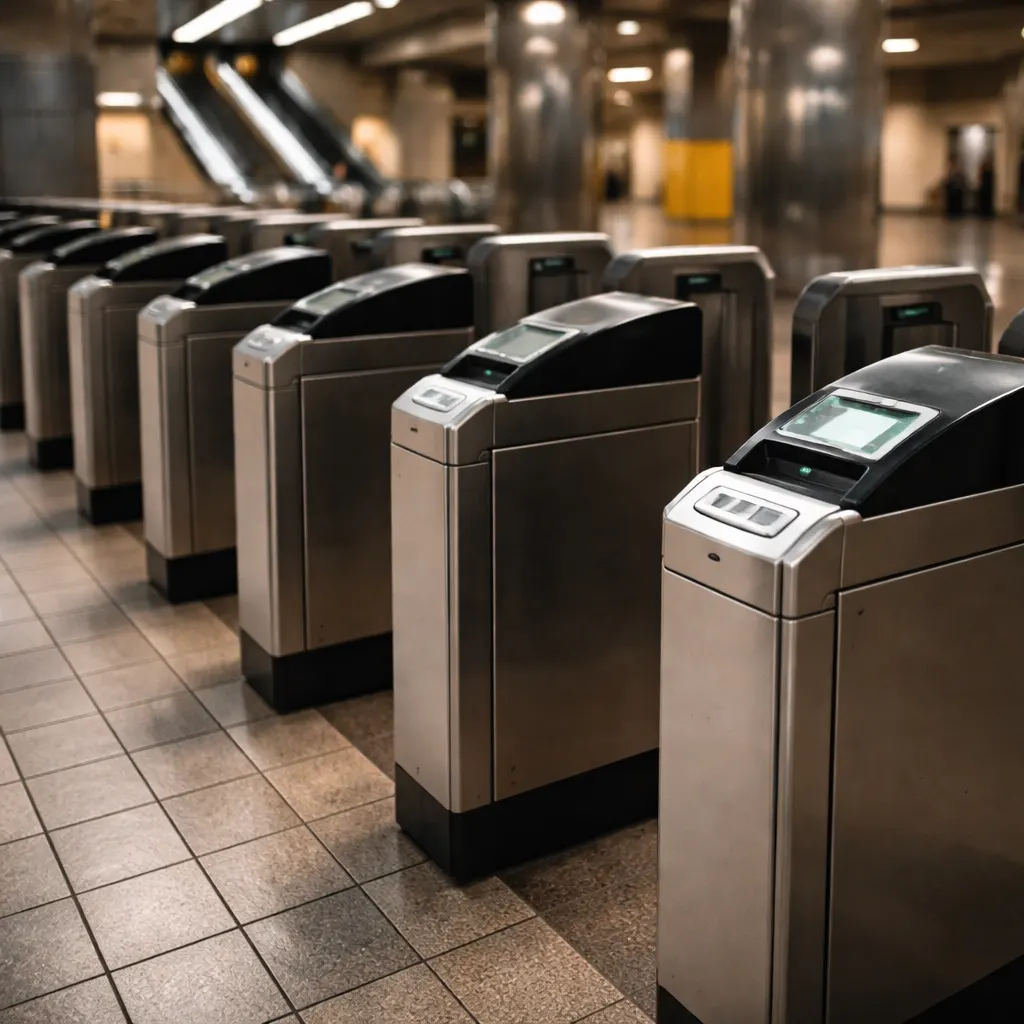
Sound Transit's board has approved an $87 million pilot program to install fare gates at 14 light rail stations, according to a new report from the Washington Policy Center. The agency hopes the gates will generate over $30 million annually in additional revenue, though that won't make a significant dent in Sound Transit's $34.5 billion budget shortfall. The report argues the costly fix stems from an "altogether too optimistic" decision in the mid-1990s to build stations without turnstiles and rely on the honor system for fare payment.
When Sound Transit resumed fare collection in 2023 after suspending it during COVID, the agency discovered that "non-revenue boardings" had reached 44% in 2024, though that figure includes students allowed to ride free. The farebox recovery rate, which stood at 30% in 2019, plunged during the pandemic and hit just 11% in 2024. That's far below the 40% target assumed in the original 1996 Sound Move Plan presented to voters, prompting Sound Transit to lower its goal to 22%. Meanwhile, operating costs have surged: hourly costs for light rail jumped more than 39% between 2019 and 2024 to over $650 per vehicle service hour, with further increases expected. The original plan was shaped by data from Community Transit and Metro Transit in the 1990s suggesting fare evasion was only a few percent, or 5% or less.
The report notes the pilot project covers only 14 of the system's 39 stations, meaning passengers traveling between stations without fare gates in areas like Rainier Valley, Mountlake Terrace, or Tukwila could still easily avoid payment. Installing gates at the remaining stations would add millions more to the cost. The report also points out that even doubling the regular fare from $3 to $6 might not achieve the 22% recovery target because higher fares would suppress demand, which has never reached the levels Sound Transit originally projected. Some non-paying customers may simply shift to riding Metro buses, where fare evasion is common and compliance is difficult to enforce.
Three factors make reaching even the reduced 22% target difficult, according to the report. While increased ridership should help, costs are rising faster. As light rail extensions are built, total operating costs will climb, but Sound Transit's own forecasts show the new lines are expected to attract far fewer riders than the central part of the system already in operation. That means costs will likely outpace ridership growth, further reducing the farebox recovery ratio. The report questions whether it makes sense to spend over $150 billion building light rail lines where fares cover only about a fifth of operating costs, calling it "not what the voters were told they would get when the proposal was on the ballot." The board focused narrowly on fare evasion and operational issues with gates but ignored the bigger question of whether such a costly system with poor operating economics is worth building at all.