
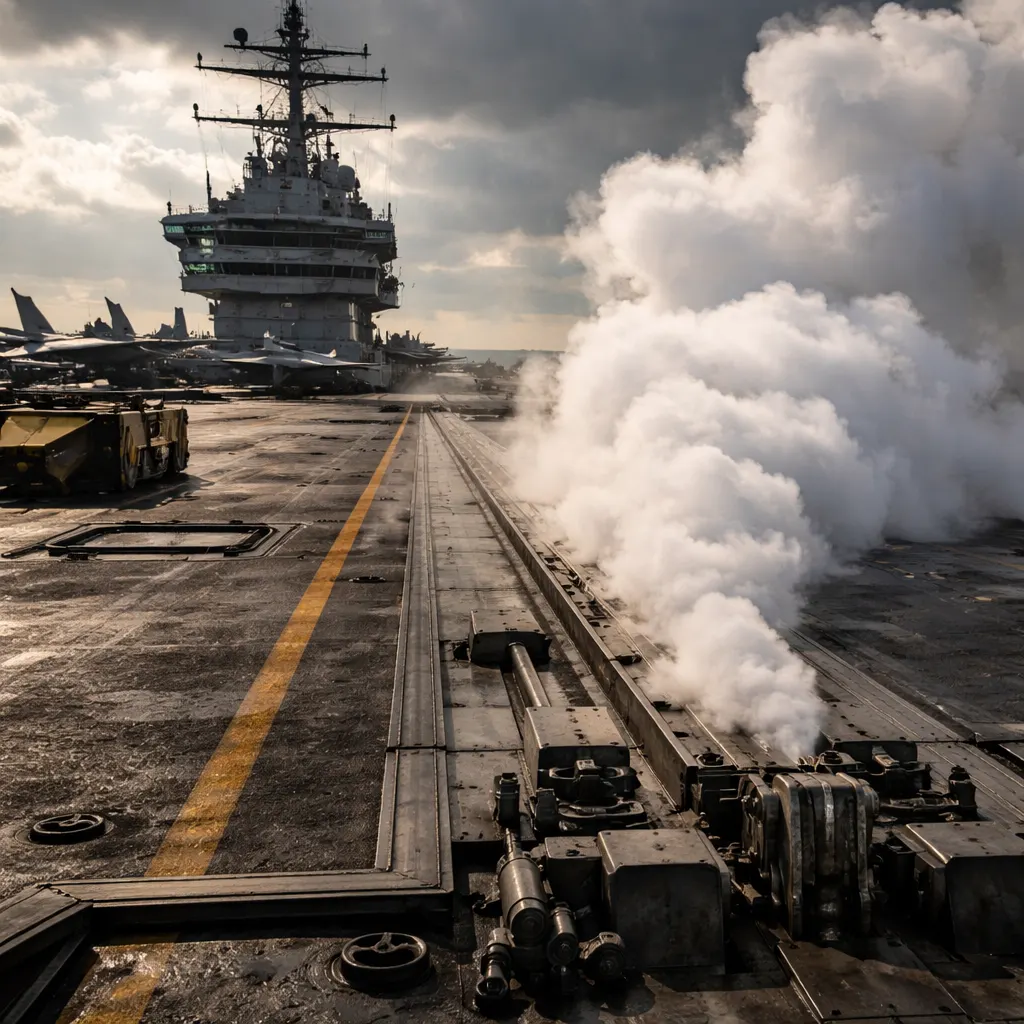
President Trump's executive order directing the Navy to return to steam-powered aircraft catapults on its carriers could shrink the fleet to nine ships during the next decade and delay construction into the late 2030s, according to an analysis published by the Hudson Institute on August 13. The order requires the USS Doris Miller, already under construction with electromagnetic catapults, to be redesigned with steam systems — a change the analysis warns will worsen a readiness crisis already at its lowest point in decades. The author, Bryan Clark, argues the shift away from electromagnetic technology contradicts the administration's own focus on warfighting capability and will leave the Navy with fewer resources to maintain a stretched force.
The redesign is estimated to cost billions of dollars and push the Miller's launch date into the late 2030s, according to the Hudson Institute analysis — and only if the Navy can persuade a manufacturer to resume building steam catapults after nearly three decades without production. The fleet will drop to 10 carriers next year when the USS Nimitz retires and the USS John F. Kennedy isn't ready for deployment. Continued construction and redesign delays for the Miller would reduce the force to nine carriers over the following decade. After six months of war against Iran, the Pentagon has stretched two carrier deployments beyond 260 days, and their replacements will likely face the same extensions, creating a maintenance backlog at government repair yards that will take years to clear.
The report states that electromagnetic catapults offer fewer moving parts, higher reliability, lower costs, and greater speeds compared with steam power — the same reasons rail lines abandoned steam for electric propulsion during the 20th century. During its 11-month deployment that ended in May, the longest for a carrier since Vietnam, the USS Gerald R. Ford launched more than 11,000 aircraft using electromagnetic catapults, surpassing what steam-equipped carriers could accomplish, the analysis notes. The Ford's crew is roughly 500 sailors smaller than earlier carriers, largely because its all-electric design outside the engine room eliminates the need for steam-powered cooking equipment, water purification, and the accompanying valves, pressure regulators, and piping that create massive maintenance demands.
The personnel savings translate directly into cost advantages that matter as the Navy confronts depleted operating funds and likely retention declines following the Iran conflict. Steam catapults require about 10 additional sailors per catapult compared with electromagnetic systems — with four catapults on a modern carrier, that's a significant staffing difference. People represent the most expensive element of operating a ship, and with hundreds fewer sailors plus easier-to-maintain electrical equipment, the Ford costs roughly $100 million less annually than older carriers, according to the Hudson Institute — equivalent to the price of almost 100 Tomahawk cruise missiles. The analysis points out that China and France, the only other nations with catapult-equipped carriers, have both adopted electromagnetic technology, while the Trump administration's emphasis on artificial intelligence and autonomous systems stands at odds with returning to 19th-century steam power.
The report recommends the Navy maintain its course with electromagnetic catapults to preserve carrier fleet strength and deliver greater firepower, using the operational savings to replenish the fleet's weapons stockpiles. Budget uncertainty combined with an overworked, shrinking carrier force could leave the Navy with only one carrier deployed overseas for months at a time during each of the next few years, as the best sailors leave for better opportunities. The bottom line: reverting to steam technology will make a bad readiness situation worse, costing billions while producing fewer capable ships exactly when the fleet can least afford it.