
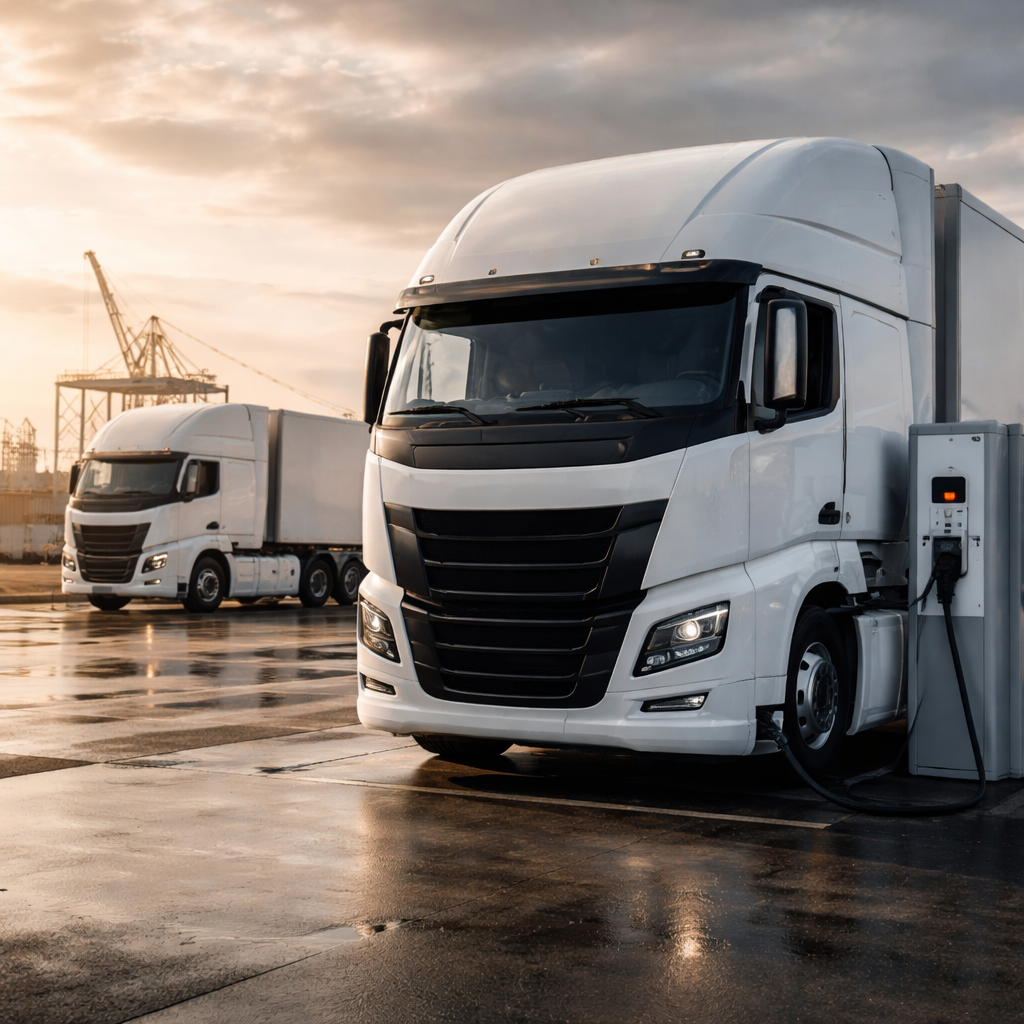
Electric truck sales doubled globally in 2025 to exceed 400,000 vehicles, capturing 9% of all truck sales worldwide, according to the International Energy Agency's Global EV Outlook 2026 released this month. The report reveals that electric heavy freight trucks saw the most dramatic growth, with sales nearly tripling year-on-year from around 84,000 in 2024 to 230,000 in 2025. Battery electric powertrains dominated the market, representing 97% of all electric truck sales globally, as manufacturers and fleet operators prioritized them over plug-in hybrids for their cost competitiveness.
China accounted for more than 90% of global electric truck sales in 2025, with over 400,000 vehicles sold—more than double the previous year's figure. Electric trucks reached a 25% share of all truck sales in China, driven by operational cost advantages and declining battery costs. The electric heavy freight truck share hit 28% of total heavy truck sales in the country, up from 13% in 2024, and surged to around 50% in December 2025 as fleet operators rushed to take advantage of a scrappage scheme offering up to USD 20,000 for replacing older diesel trucks. Europe saw electric truck sales increase 40% year-on-year to nearly 17,000 vehicles, capturing 3% of the regional market, while North American sales grew 25% to 20,000 units despite policy setbacks in the United States.
The report finds that battery electric heavy freight trucks in China have already reached total cost of ownership parity with diesel trucks in certain cases after five years of ownership. China's Stage 4 heavy-duty vehicle fuel consumption standards, which came into effect in July 2025, require a 12-16% improvement compared to Stage 3, reinforcing the policy push. The IEA notes that electric truck deployments in China have been "mainly concentrated in certain applications," particularly trucks used on short, predictable routes related to ports, mining areas, and steel production, where battery-swapping operations are expanding—swap-capable trucks accounted for around 15% of China's electric truck sales in 2025.
The report attributes global growth to a combination of policy measures and technological progress, but highlights significant regional disparities. In Europe, EU heavy-duty vehicle CO2 standards targeting a 15% emissions reduction compared to 2019 came into force in 2025, while Germany approved EUR 1.6 billion in funding for electric truck charging infrastructure. In contrast, California revoked its Advanced Clean Trucks regulation and the US Environmental Protection Agency repealed all greenhouse gas emission standards for medium- and heavy-duty vehicles. The IEA emphasizes that purchase prices for electric trucks remain two to three times higher than diesel equivalents, creating barriers especially for smaller fleet operators. According to the agency, relaxing weight limits by two tonnes could help battery electric trucks in India reach total cost of ownership parity with diesel alternatives two to three years sooner by addressing payload limitations from large batteries.
The outlook for electric trucks depends heavily on continued policy support and infrastructure development, the report concludes. Average self-declared driving ranges for battery electric heavy freight truck models reached 310 km in 2025—a 5% increase since 2020—with several manufacturers announcing models capable of 600-800 km range in 2026, meeting the daily needs of many long-haul drivers. However, the number of available battery electric heavy-duty vehicle models increased by only six globally in 2025, the lowest annual increase since 2018, as more than 130 models were discontinued worldwide amid start-up bankruptcies and market consolidation. The IEA notes that purchase subsidies, concessional finance, government-backed credit, and CO2-based road tolls can help accelerate adoption in emerging markets where electric trucks face steeper financial barriers despite favorable long-term economics.