
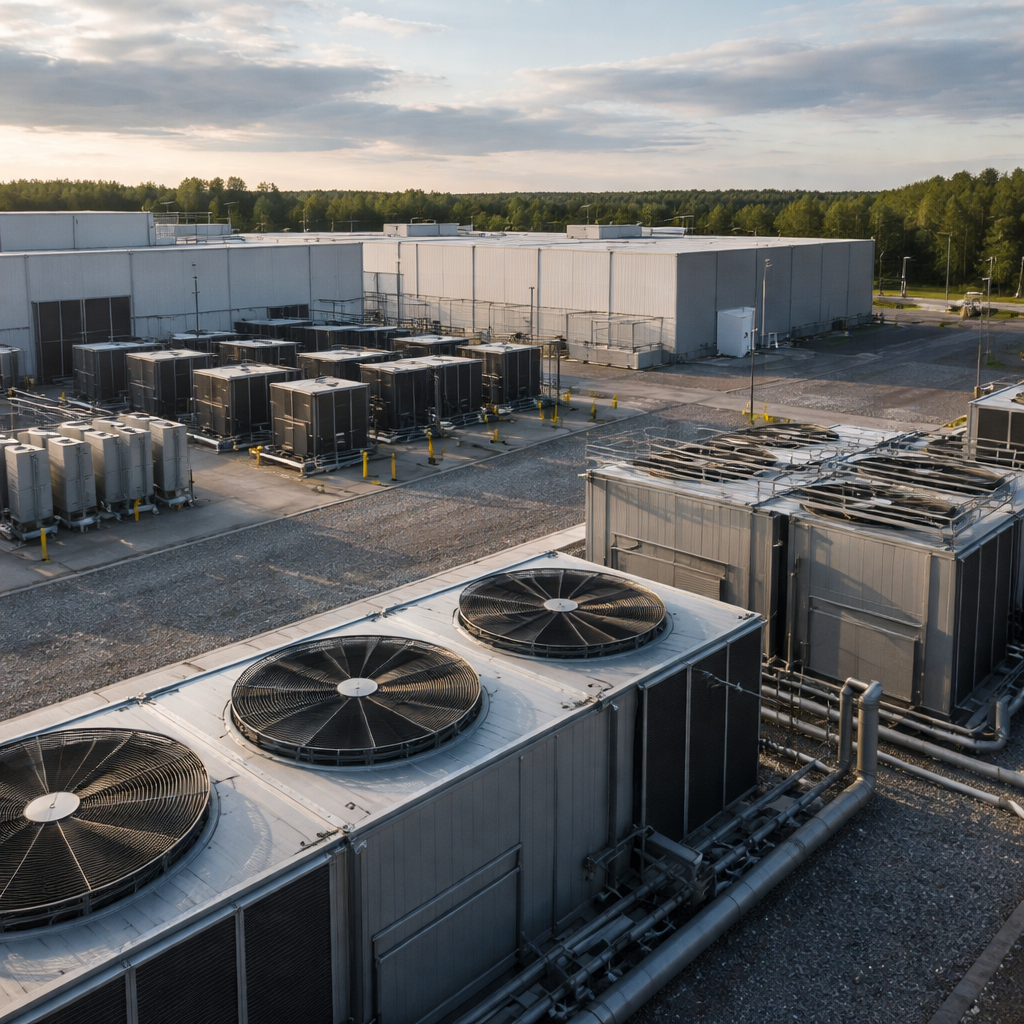
Noise pollution from data centers represents the most concerning negative impact for Michigan communities, while the state's water and power resources can handle substantial development, according to a new report published June 16, 2026 by the Citizens Research Council of Michigan. The report evaluates policy controversies around hyperscale data center development and concludes that while economic benefits are modest, many concerns about these facilities have been overstated. The analysis recommends case-by-case evaluation of data center proposals, with large hyperscale facilities requiring more scrutiny than smaller operations.
The report finds that data centers create their primary economic activity during the construction phase, with limited long-term job creation. Local host communities can benefit substantially from property tax revenue and community benefit agreements, but attracting data centers isn't an effective strategy for long-term economic development. Smaller data centers are nearly indistinguishable from office buildings and provide valuable services to local businesses and cloud service users, while large hyperscale facilities demand careful attention for potential negative impacts including power demand, water use, and noise.
The report states that Michigan's water resources and power grid appear capable of accommodating substantial data center development under current policies, despite concerns about unsustainable development. The authors write that protecting nearby residents from harmful impacts of data center noise is feasible but requires particular attention from local permitting agencies. The report emphasizes that many smaller, more typical data centers operate without significant community disruption.
The analysis matters because Michigan faces growing pressure to attract tech infrastructure investment while balancing community concerns about environmental and quality-of-life impacts. The report's finding that noise pollution stands out as the primary legitimate concern gives local governments a clear focus for regulation, rather than blanket opposition to all data center development. By separating hyperscale facilities that need heavy scrutiny from routine smaller operations, the framework helps communities make more informed decisions. The conclusion that water and electricity infrastructure can handle growth addresses two frequently cited objections, shifting attention to the issue that genuinely requires stronger local oversight.
The report recommends that data center development proposals be evaluated on a case-by-case basis, with communities focusing regulatory attention on noise mitigation for nearby residents rather than trying to block development outright. Local governments shouldn't view data centers as economic development wins but can leverage property tax revenue and negotiate community benefit agreements to offset impacts. The bottom line: Michigan can accommodate data center growth without crisis, but only if local permitting agencies take noise pollution seriously.