
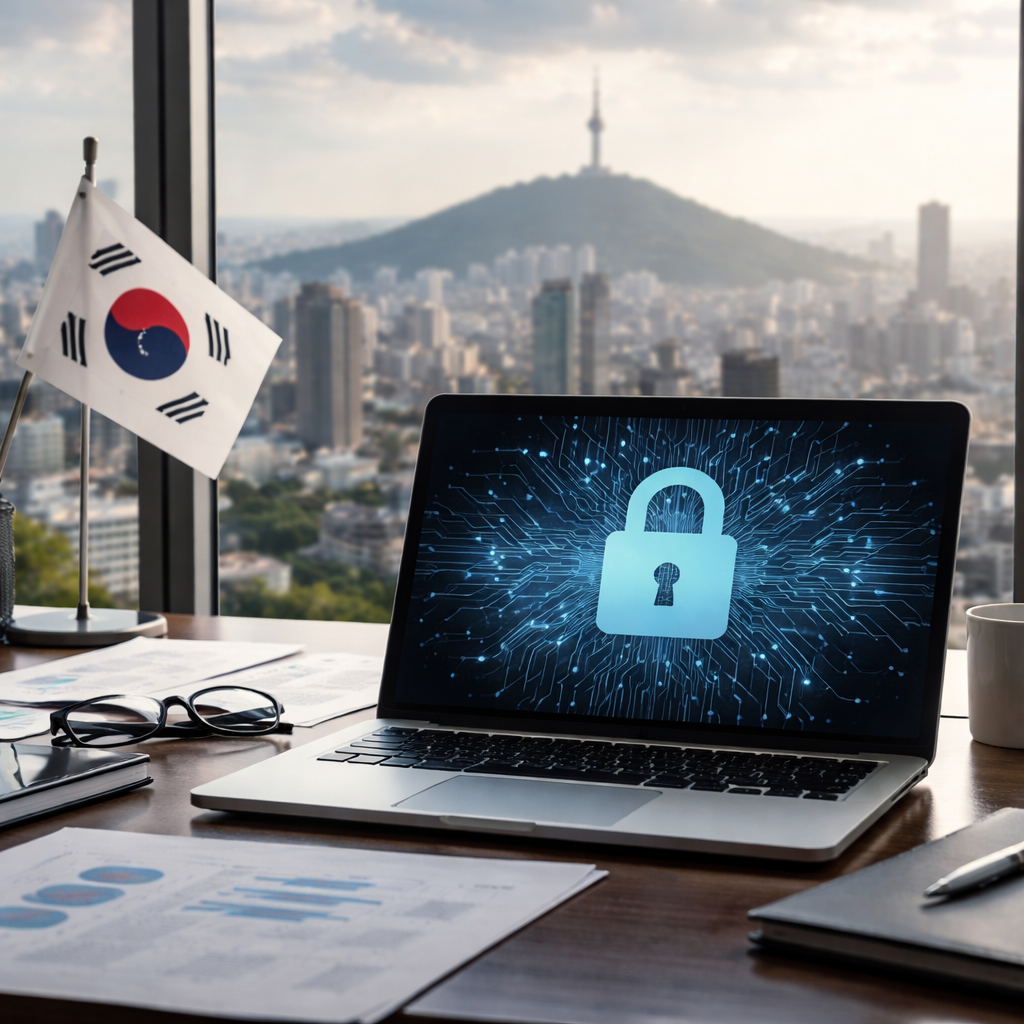
Following South Korea's June 3 local elections and a new U.S. executive order on AI and cybersecurity, the Information Technology and Innovation Foundation (ITIF) released a statement calling on Korean policymakers to develop a comprehensive national AI cybersecurity strategy. The statement, issued by Sejin Kim, associate director of ITIF's Center for Korean Innovation and Competitiveness, warns that South Korea risks falling behind if it treats AI safety as another layer of pre-market regulation rather than building a coordinated security framework across government and industry.
The statement highlights that Korea's inclusion in Anthropic's Project Glasswing, alongside leading firms such as Samsung and SK, demonstrates the country's opportunity to participate in the allied AI-security ecosystem. This partnership positions South Korea as a potential key player in international efforts to secure AI systems against emerging threats.
According to the ITIF statement, "Advanced AI acts as a threat multiplier, making it significantly easier to exploit existing cybersecurity vulnerabilities, but the answer is not to put frontier AI behind a government permission slip." The report argues that a voluntary, risk-focused framework can help strengthen national security while preserving the speed of AI innovation. Kim states that as AI models become better at finding software vulnerabilities, the policy response should focus on resilience, information sharing, and trusted deployment across critical infrastructure.
The timing of ITIF's statement reflects a critical policy window. With local elections concluded, Korean policymakers face a choice between two regulatory paths: treating AI safety as a gatekeeping function that requires government approval before deployment, or building a collaborative security infrastructure. The statement draws lessons from President Trump's executive order, which ITIF says "gets the central tradeoff right" by recognizing that slowing AI development in the name of security can itself become a national vulnerability. As AI systems grow more capable of identifying weaknesses in software and networks, the statement argues that Korea's advantage lies not in restricting development but in weaving together central agencies, local governments, cloud and telecom providers, chipmakers, and critical-infrastructure operators into a unified defensive posture.
ITIF recommends that Korean policymakers avoid turning AI safety into another layer of pre-market regulation and instead build a national AI cybersecurity agenda that connects multiple stakeholders across the technology ecosystem. The statement positions Korea's participation in projects like Glasswing as proof that the country can lead in the AI security space if it chooses coordination over restriction. For a nation with major chipmakers and telecom providers already embedded in global AI supply chains, the message is clear: the post-election period offers a rare chance to set a forward-looking security strategy that protects critical systems without choking off the innovation that makes them valuable.