
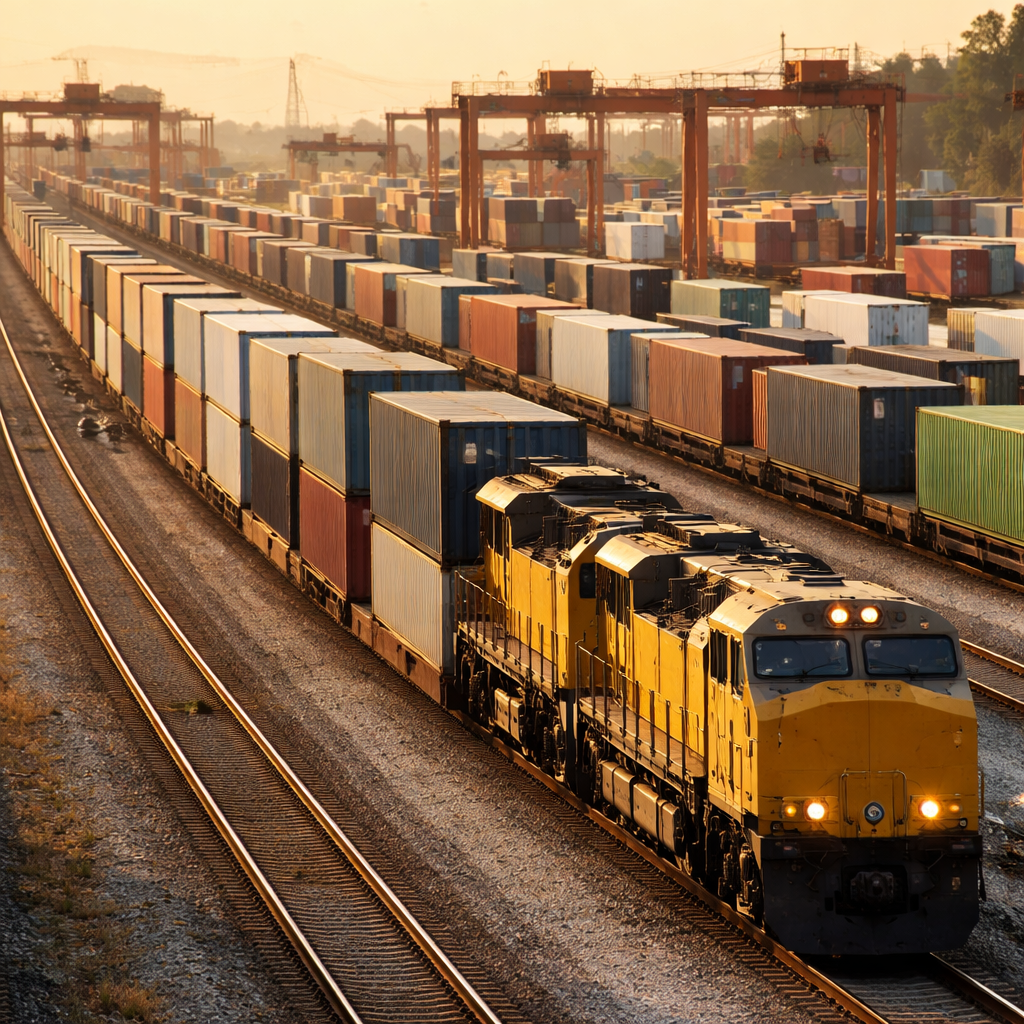
U.S. railroads hit a milestone in mid-June as intermodal freight volumes pulled decisively ahead of traditional carload shipments, capping what the industry is calling a banner week at the year's halfway point. For the week ending June 13, 2026, intermodal volume jumped 10.9% year-over-year to 289,447 containers and trailers, while commodity carloads grew just 2.8% to 230,959 units, according to data reported by FreightWaves on June 17, 2026. Total weekly rail traffic climbed 7.2% to 520,406 units, nearly tripling the growth rate seen in the first half of the year.
The data breakdown shows sharp contrasts across freight categories. Among the 10 commodity groups tracked, six posted gains, led by grain shipments up 21.7% from the prior year. Metallic ores and metals climbed 19.2%, while chemical shipments—which had been riding steady industrial growth—slipped 1.1%. Forest products fell 1.6%, continuing what the report describes as "up-and-down performance." At the halfway mark of 2026, cumulative U.S. rail volume stood at 11,619,121 carloads and intermodal units, up 2.9% year-over-year, with carloads at 5,215,944 (up 3.2%) and intermodal units at 6,403,177 (up 2.7%). Across North America, nine reporting railroads in the U.S., Canada, and Mexico moved 717,236 total units for the week, up 5.6%, with intermodal leading at 9.3% growth compared to 1.7% for carloads.
The report attributes the intermodal surge to two main drivers: rising domestic truckload rates and an early wave of trans-Pacific imports. Rising truckload rates, the report states, "have seen railroads pick up substantial volume in domestic intermodal." On the international side, global fuel cost increases stemming from effects of the Iran war, combined with expectations of price hikes by Asian manufacturers, are spurring importers to frontload shipments across the Pacific. Some analysts cited in the coverage have linked the 19.2% jump in metallic ores and metals to breakout growth in data center construction, though the report does not elaborate further on that connection.
The widening gap between intermodal and carload growth reflects a structural shift in how freight moves across the country. Railroads are capitalizing on trucking's capacity crunch, offering a cheaper alternative as over-the-road rates climb. At the same time, importers racing to beat potential tariff increases and price hikes are flooding ports with containers, feeding directly into rail intermodal networks. The grain boom—up more than a fifth year-over-year—suggests strong agricultural exports or domestic demand, while the metals surge points to infrastructure and tech buildouts that require heavy materials. Chemical shipments losing momentum, even slightly, may signal a cooling in certain industrial segments despite broader economic strength. If truckload rates stay elevated and import volumes hold, intermodal's lead over carload could widen further through the second half of 2026.