
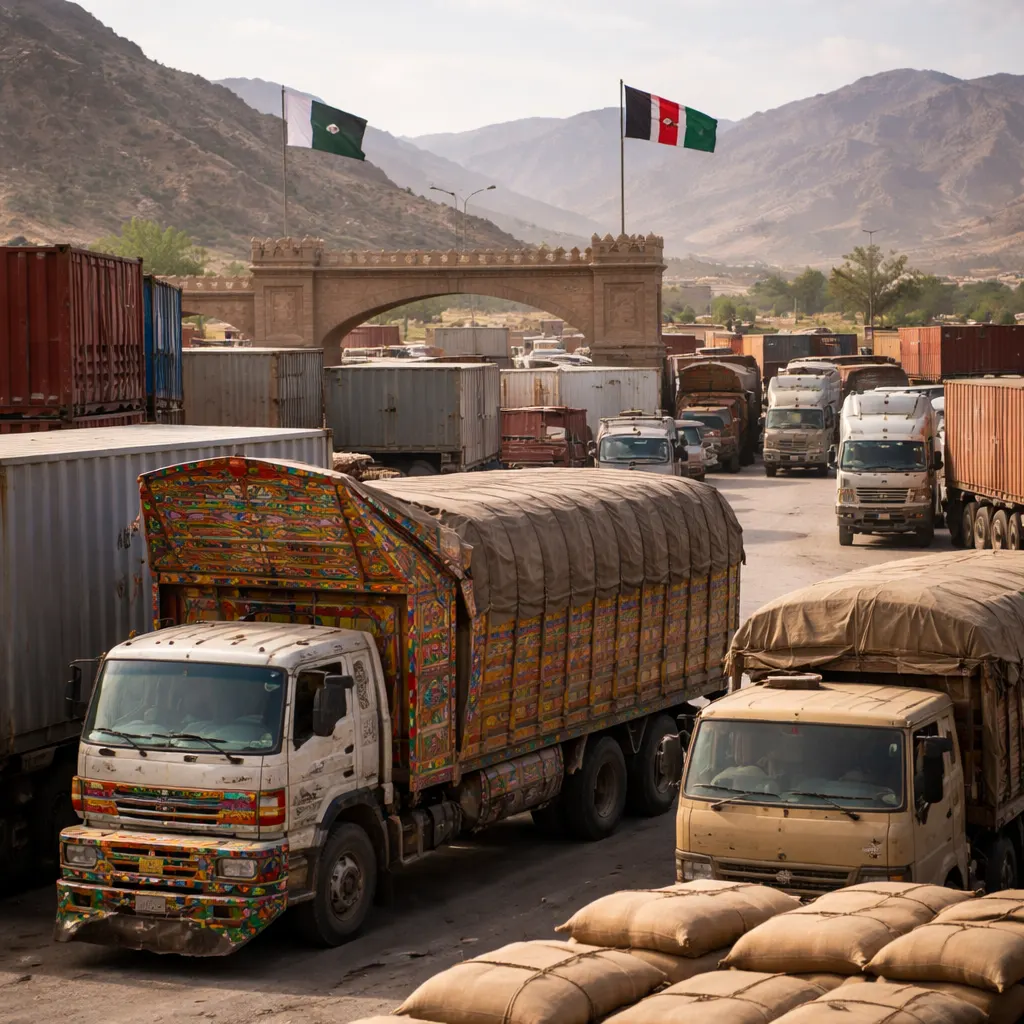
Countries across Central Asia are abandoning long-held plans to use Iran as their primary gateway to ocean ports, according to an interview with Ken Moriyasu, a senior fellow at the Hudson Institute, published following his recent return from the region. Governments that once saw Iran as offering the shortest path to warm-water ports are now focusing their trade strategies on routes through Afghanistan and Pakistan instead. The shift marks a fundamental rethinking of regional connectivity as tensions between the United States and Iran continue to disrupt security around the Strait of Hormuz.
Central Asian officials who expressed optimism about an Iran corridor as recently as March have grown skeptical that stability will return to the country anytime soon, Moriyasu reports. Ambassadors from the region discussed possibilities for a pro-business Iranian administration earlier this year, but those conversations have given way to concrete planning around Afghanistan as a transit route to Pakistani ports. Even the China-Pakistan Economic Corridor, which hasn't advanced as quickly as originally envisioned, is now seen as more achievable than waiting for regime change in Iran or for conditions that would convince Israel to halt military operations there. Kazakhstan faces particularly urgent pressure after drone strikes, likely tied to Ukraine's campaign against Russian infrastructure, disrupted the pipeline that normally carries roughly 80 percent of the country's oil exports through the Black Sea to global markets.
Despite Afghanistan's ongoing instability under Taliban rule since 2021, Central Asian nations are showing real enthusiasm to engage more closely with Kabul, according to Moriyasu. Water disputes complicate the relationship—Afghanistan is constructing a canal that draws from river systems originating in Tajikistan and Kyrgyzstan—but the strategic advantages of stable ties outweigh the tensions. Pakistan's geography makes it uniquely valuable as both a continental and maritime nation with direct access to Central Asia and major ports at Karachi and Gwadar, unlike India, which remains separated from the region by the Himalayas and Pakistani territory. Pakistan is leveraging closer engagement with the Trump administration to extract greater commitment from China to the economic corridor project, Moriyasu observes, noting that Chinese support for Pakistan's Iran mediation efforts strengthened dramatically between May and July as Islamabad's relationship with Washington deepened.
The Iran conflict is pushing Central Asia toward greater dependence on China despite regional concerns about replacing Russian dominance with Chinese influence, the interview finds. Kazakhstan's disrupted Black Sea pipeline leaves two alternatives: the Middle Corridor through the Caspian Sea to Azerbaijan, or the existing pipeline to China. Limited tanker capacity across the Caspian makes the Chinese route the quickest solution unless the United States and Japan invest in infrastructure that would expand shipments between Kazakhstan and Azerbaijan. Moriyasu argues that Iran is losing Central Asia through its own actions even as US policy contributes by making the Iran-based trade corridor far less competitive with the China-Pakistan option. For Tehran, losing Central Asian trade partnerships could prove the biggest strategic setback since sanctions were imposed, with attacks around the Indian-backed Chabahar port further undermining Iran's ability to offer a viable alternative to Pakistani routes.