
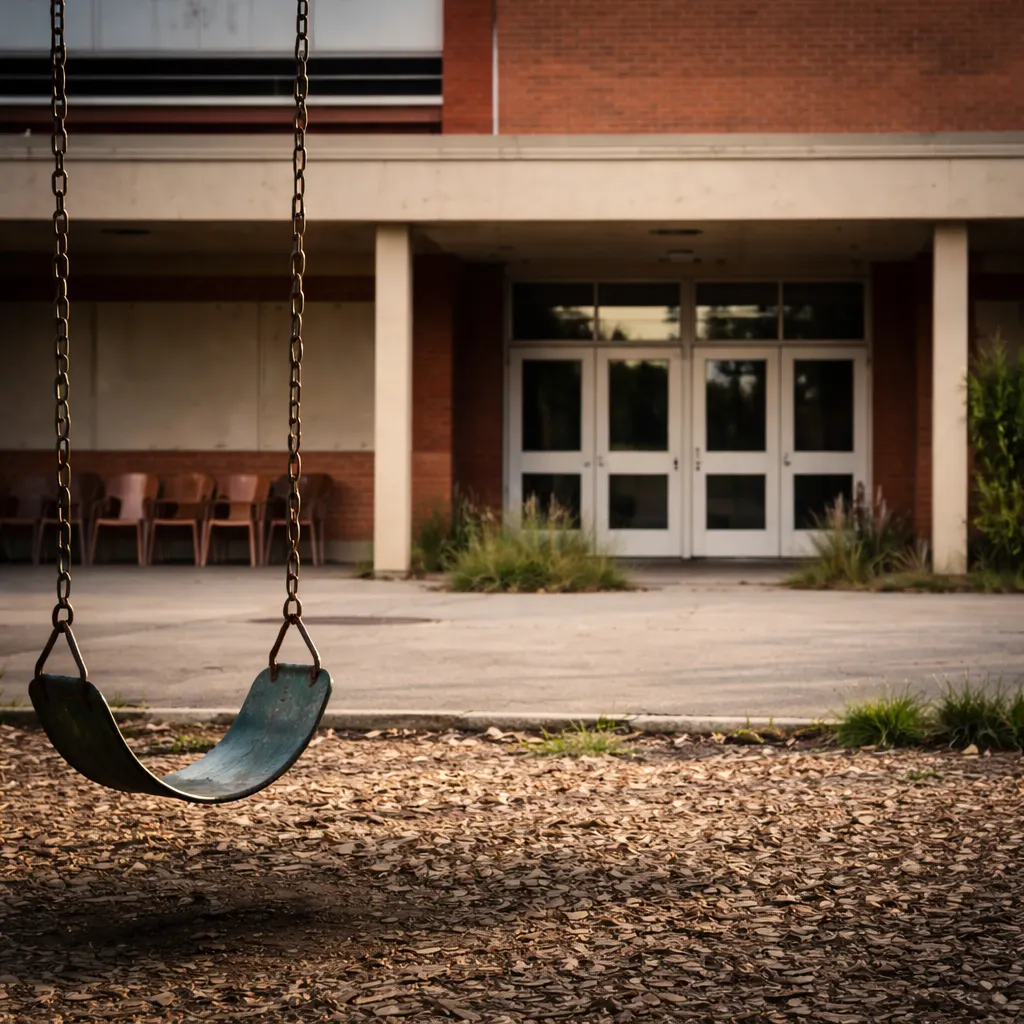
At least 14 school districts across eight states have announced plans to close schools in 2026, according to a new report from Reason Foundation's education newsletter published this month. The closures come as public school enrollment nationwide has fallen by 2.8%, or 1.4 million students, between 2019 and 2024, based on data from the National Center for Education Statistics. The report finds that declining birth rates, changing migration patterns, and increased competition from other educational options have driven students away from traditional public schools.
The enrollment losses have hit nearly every state, with only 10 states seeing increases from 2019 to 2024. Federal forecasts project public schools will lose another 1.3 million students by 2031. Among the districts closing schools this year, Cleveland Metropolitan School District plans the most dramatic reduction—shuttering 29 schools during the 2026-27 school year, a 29% cut districtwide. Houston Independent School District, taken over by the state in 2023, has closed 12 schools this year, a 4.4% reduction expected to save between $14 million and $20 million while avoiding $400 million in needed facility upgrades. Texas' Fort Bend ISD closed seven schools—an 8% reduction—to save $5.7 million annually, even though its enrollment dropped just 0.4% between 2019 and 2025.
Some of the nation's largest districts face severe budget crises but haven't closed schools despite major enrollment declines. Los Angeles Unified School District lost almost 71,000 students, or 16%, by fall 2024 compared to 2019, and faces a projected $1.5 billion budget deficit in fiscal year 2027, yet continues hiring more staff and hasn't closed any schools since losses began. Chicago Public Schools has shed roughly 39,000 students since 2019, an 11% decline, and faces a projected $732 million budget shortfall in 2027—but the district imposed a moratorium on school closures from 2024 through the 2027-28 school year. CPS Superintendent Macquline King warned families in an email that the district might not secure financing to pay employees in September, which "would effectively shut down the district just as staff and students are set to return."
The report explains that many districts delayed closures by using temporary federal relief funds and COVID-19-related state protections to fill budget gaps. After Elementary and Secondary School Emergency Relief funds expired in 2024, Cleveland forecast a "2-year negative cash balance of $168 million," though the district absorbed the cost. This tactic helps explain why national closure rates for traditional public schools between 2014 and 2024 reached their lowest point since the pandemic started, according to a 2025 study from the IZA Institute of Labor and Economics. Cleveland's situation illustrates another problem: 45% of the district's enrollment losses had occurred by 2021, meaning many school closures came years too late.
The report recommends that districts facing inevitable closures should adopt open enrollment policies to strengthen families' confidence in public schools. Students affected by Fort Bend's closures receive guaranteed open enrollment, allowing them to select a new public school within the district. Utah recently passed a law giving students affected by school closures three months to transfer to any public school with available seats. Florida's Broward County Public Schools, the nation's sixth-largest district, projects an 11% enrollment decline between the 2026-27 and 2030-31 school years—totaling nearly 28,000 students—and has already eliminated 700 unfilled positions and 300 jobs to address a $90 million budget deficit. The report's bottom line: as enrollment trends force more closures, giving students greater choice in selecting public schools can help rebuild family support for the public system.