
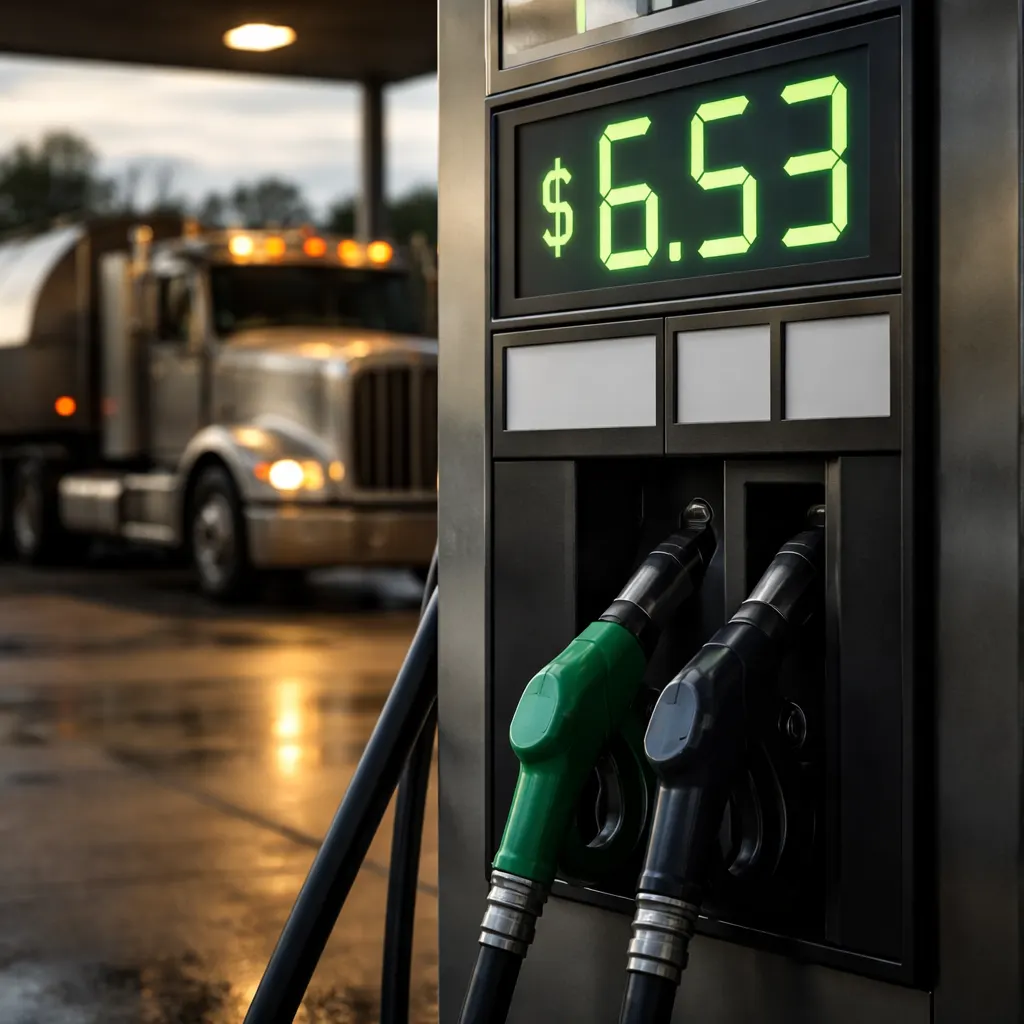
National highway diesel prices jumped to $6.53 per gallon as of September 21, according to weekly fuel data from the U.S. Energy Information Administration reported by DTN. Congressional leaders are now weighing a range of fuel cost relief measures—from halting diesel exports to direct subsidies for farmers—while balancing domestic economic pressures against support for military operations in Iran. Agriculture Secretary Brooke Rollins acknowledged the burden on producers but said preventing Iran from obtaining nuclear weapons must come first.
The Midwest bore the steepest costs, with diesel averaging $6.68 per gallon, up 43 cents in a single week. The Lower Atlantic region—covering West Virginia, Virginia, North Carolina, South Carolina, Georgia, and Florida—recorded the nation's lowest prices at $6.14 per gallon. All reported figures reflect pre-tax values. The national price climbed 24 cents week-over-week, driven by what Rollins called "a direct result of clearly the Iranian conflict." U.S. refineries operated at 96.8% capacity during the week ending September 11, limiting their ability to rapidly increase diesel output. The EIA projects diesel inventories will drop below 100 million barrels this month and stay under the five-year low through most of 2027.
Republican lawmakers facing November midterm elections have proposed multiple interventions. Rep. Ashley Hinson of Iowa floated suspending the gas tax, pausing diesel exports, expanding E15 availability, reinstating the $1-per-gallon biodiesel tax credit, and establishing a diesel relief program for farmers and truckers. Sen. Chuck Grassley, also of Iowa, backed an embargo on diesel exports, arguing that "Big Oil" shouldn't profit equally from domestic and foreign sales while "killing farmers' income." Sen. Roger Marshall of Kansas, in a letter to President Trump, requested targeted fuel relief for producers who locked in planting and financing decisions months before the price spike and now face unplanned costs during the diesel-heavy harvest period. Rollins said Monday to "expect an announcement very soon on some potential actions."
The EIA attributes sustained high prices to a global diesel shortage, with international production running below last year's levels and encouraging continued U.S. exports. Improved crude flows from the Middle East could eventually lift refinery output in Asia and ease diesel margins over time, but tight supplies are expected to persist. California offers one potential demand outlet: Governor Gavin Newsom signed legislation last week allowing retailers to sell E15 using existing E10 infrastructure, opening the nation's priciest fuel market to Midwest ethanol. Karen Ross, California's food and agriculture secretary, said fuel costs feed directly into per-crop production expenses, especially for perishable goods where farmers are "price takers." She compared California's biofuel adoption challenge to Nebraska's learning curve in the early 2000s, noting that aggressive fossil fuel phase-outs need realistic timelines even as the state prioritizes transportation electrification.
The collision of harvest timing, refinery constraints, and geopolitical conflict has left agricultural producers absorbing costs they didn't budget for. With inventories set to remain historically low into next year and exports continuing to drain domestic supply, relief options hinge on whether policymakers prioritize short-term economic pain over strategic military objectives. The administration's promised announcement will clarify whether farmers get direct aid, export restrictions, or a longer wait for global diesel markets to rebalance.