
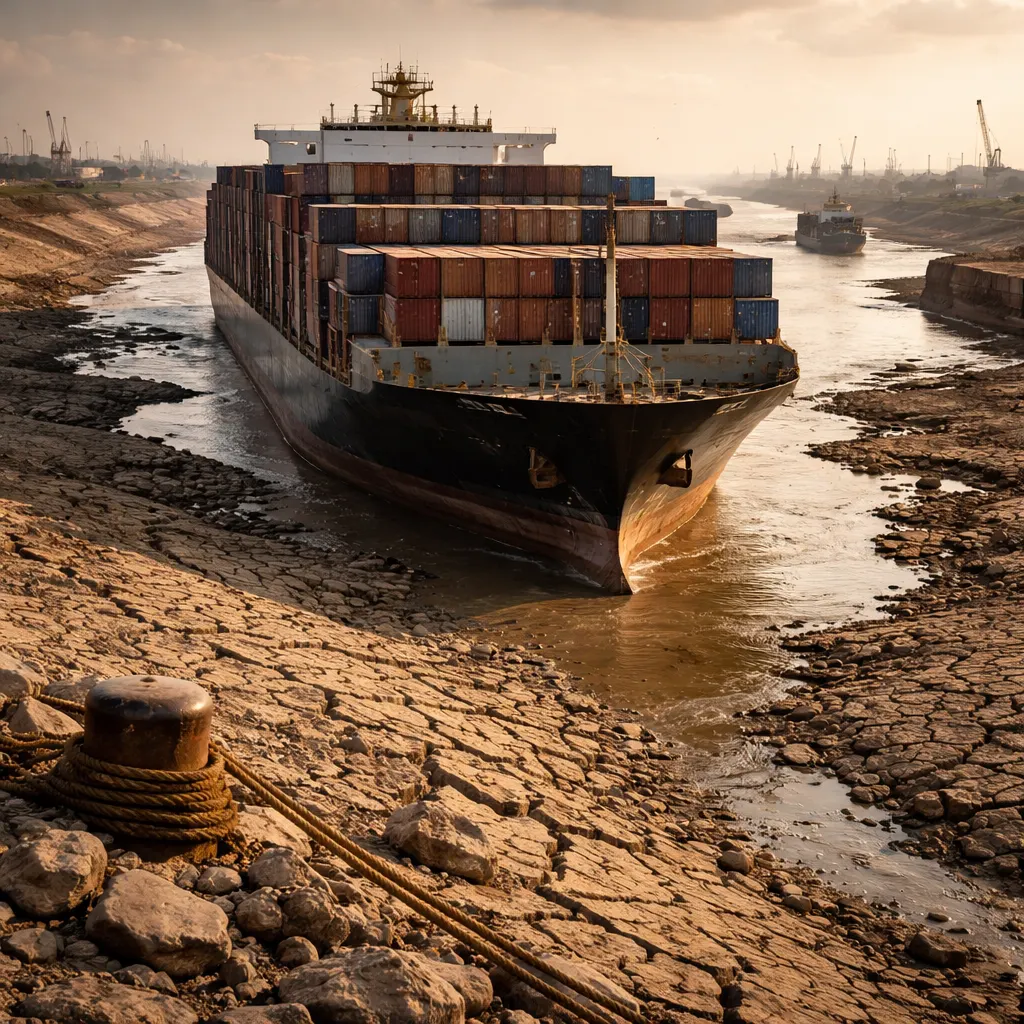
Severe droughts are choking several of the world's most critical shipping routes, layering new strain on energy markets already disrupted by the closure of the Strait of Hormuz, according to data released by Wood Mackenzie's VesselTracker. El Niño-driven drought conditions are limiting operations at the Panama Canal and have pushed water levels to their lowest point when compared to both 2025 and the five-year average, the report finds. The dual squeeze is hitting Pacific basin buyers particularly hard, with roughly 20% of global LNG supply already removed by the Hormuz closure and canal constraints now adding a second bottleneck.
Daily transits through the Panama Canal dropped from roughly 325 per day in early May to as low as 271 by late May before climbing back to around 308 per day through June, according to Wood Mackenzie VesselTracker ship data. Rainfall shortages have forced authorities to impose draft restrictions that cut effective vessel carrying capacity, with LNG, LPG, and refined products facing the most direct exposure. When draft limits apply, carriers must either load below full capacity, fight for transit slots, or reroute via the Cape of Good Hope, tacking on roughly 10 to 15 days to voyage times. Europe's Rhine River also felt the pressure of drought this month. Water levels at Kaub, the Rhine's critical chokepoint for barge navigation in western Germany, fell to just 15 centimeters on 11 August, down from 30 centimeters on 28 July—the lowest level on record. Most barges were running at around 25% of their cargo capacity as of 12 August, Wood Mackenzie data shows. Freight rates surged in response: the cost of transporting cargo from Rotterdam to Cologne hit €80 per metric tonne in the week ending 7 August, up from €17 per metric tonne in mid-June, while rates to Frankfurt jumped to €150 per metric tonne from €29 per metric tonne over the same stretch.
"Monitoring El Niño-driven disruptions to canal operations and Gulf Coast logistics will be critical for staying ahead of further commodity flow dislocations through Q3 and Q4 2026," said Ian Solis, data associate for Wood Mackenzie. The canal links US Gulf Coast export terminals to Pacific basin demand centers, and the pattern signals a tightening corridor rather than one returning to normal, the report states. Asian LNG markets are navigating the downstream effects of the Strait of Hormuz closure at a moment when the market is already under stress, and the Panama Canal drought adds a second constraint, squeezing Pacific buyers from two directions at once. Among energy commodities, LNG is the most sensitive given narrow arbitrage margins, followed by LPG and product flows where even modest freight increases can shut trading windows.
The result is higher tonne-mile demand, tighter vessel availability, and elevated freight costs, even when underlying supply and demand fundamentals haven't changed, the report explains. The combination of reduced barge capacity and elevated freight costs risks pressuring margins for inland refiners if conditions persist through August and September, historically the driest months for the Rhine basin. Wood Mackenzie's VesselTracker recorded an improvement in Rhine conditions last week following rainfall across the basin. But with many regions—particularly the Pacific—facing energy crunches, disruptions like these could further worsen already extremely tight markets, Solis warned.