
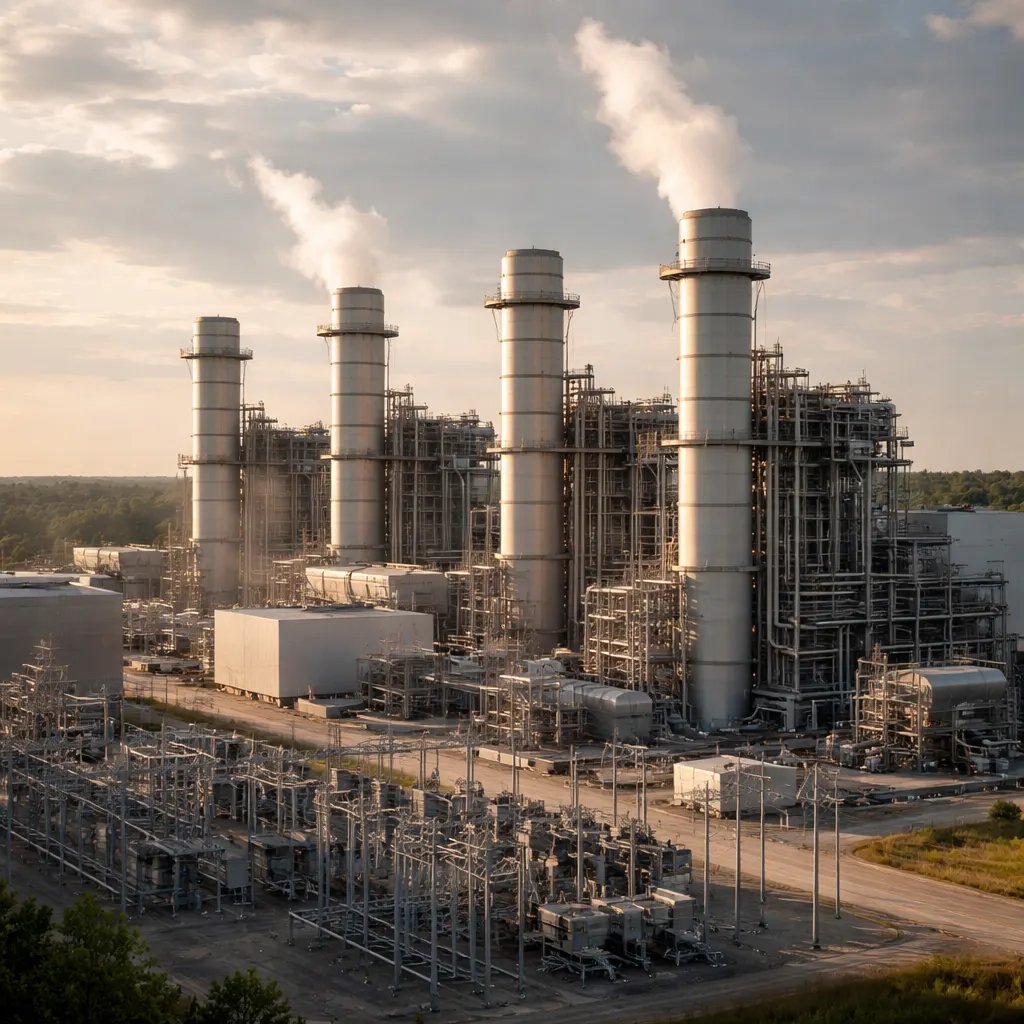
The Federal Energy Regulatory Commission on July 2, 2026, rejected a waiver request for Advanced Power Services' roughly $2 billion gas-fired Chestnut Run power plant project in Carroll County, Ohio. The decision blocks the Boston-based developer from modifying its project within PJM Interconnection's fast-track Reliability Resource Initiative, which was designed for shovel-ready projects that can meet near-term grid reliability needs. FERC ruled that granting the waiver would harm other developers by delaying the review of competing generator interconnection requests across PJM's queue.
Advanced Power had asked to reduce the project's maximum output by 55 MW to 1.245 GW and lower its capacity interconnection rights after hitting an equipment supply hurdle when it couldn't acquire the turbines it had planned to use. The company, owned by ArcLight Capital Partners, said it could deploy alternate turbines, but that would require changing the plant's configuration. PJM's RRI process bars changes to a project's size and capacity interconnection rights. There are 41 projects totaling 7.9 GW in nameplate capacity remaining in the RRI process, down from the 51 projects initially included. The projects are being reviewed in PJM's transition cycle 2, the final transition phase of the grid operator's interconnection reform process that's set to wrap up early next year with interconnection agreements.
FERC said that "studies resulting from the equipment changes would introduce substantial delays to Transition Cycle #2 and have a ripple effect on the remainder of PJM's [interconnection study] cycle schedule." The commission agreed with PJM that allowing Advanced Power to reconfigure its project could lead to interconnection review delays. One of FERC's criteria for approving waivers from commission-approved rules is that the waivers don't harm third parties, a threshold the agency determined this request failed to meet. PJM spokesman Jeffrey Shields told Utility Dive that transition cycle 2 has a decision point on July 8, when some project developers may opt to withdraw their projects from the process.
The decision highlights the tension between accommodating real-world equipment constraints and maintaining queue discipline as PJM works through its reformed interconnection process. After clearing its backlog of interconnection requests, PJM in April started reviewing the first cycle under its reformed queue process, which includes 811 generating projects totaling about 220 GW. The commission's ruling prioritizes process integrity over individual project flexibility, sending a signal that developers in fast-track review pathways must come prepared with locked-in equipment specifications or risk losing their spot. For Advanced Power, the denial means either securing the originally planned turbines, withdrawing from the RRI process, or potentially reapplying through PJM's standard interconnection queue, which would mean years of additional delays in an already congested system.