
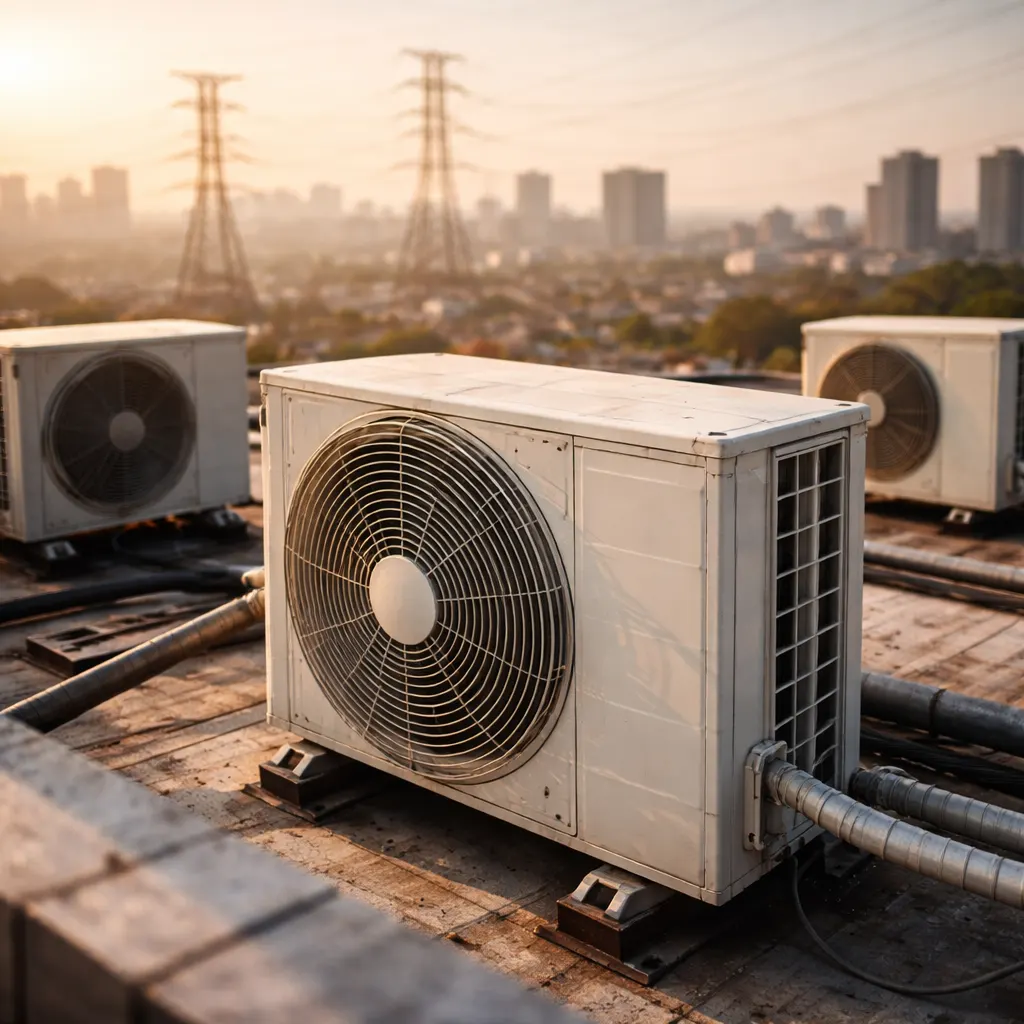
Global electricity demand for space cooling has grown by 50% since 2015, rising to around 2,900 terawatt-hours — more than the entire European Union's total electricity consumption, according to a commentary published July 10, 2026 by the International Energy Agency. The report comes as meteorologists warn that El Niño could drive extreme heat events through 2027, pushing air conditioner sales to record highs while several Asian governments implement emergency cooling restrictions to protect stressed power grids.
Annual air conditioner shipments now stand 25% higher than five years ago, reaching 200 million units in 2024 amid exceptional heatwaves. That year alone, AC shipments grew by roughly 10% in India, the Middle East, the United States and Europe, while surging by 40% or more in Latin America and Africa. Since 2015, cooling has accounted for 14% of global electricity demand growth, hitting 25% in the Middle East and North Africa region. In 2025, cooling contributed 1,400 gigawatts of peak electricity demand across markets — equivalent to the total installed power generation capacity of the United States. Cooling degree days were 25% higher in China and Europe in 2024 than in 2020, and nearly 50% higher in Japan and Korea. China remains the world's largest AC manufacturing base, producing around 170 million units annually and exporting about 60 million, with maximum capacity near 300 million units. Worldwide, around 40% of the population has access to air conditioning, while more than 80% experiences cooling needs during at least part of the year. Nearly 90% of households in Japan and the United States own an air conditioner, but ownership rates remain substantially lower in Southeast Asia and India despite high cooling needs.
The report finds that rising cooling demand is taking place "in the context of a global energy crisis that disrupted around 20% of the world's seaborne oil and gas trade." Since March 2026, eight countries have introduced energy conservation measures related to cooling, with Bangladesh, Cambodia, Malaysia, the Philippines, Singapore and Sri Lanka setting minimum AC temperatures in offices ranging from 24°C to 26°C. The authors note that under today's policy settings, cooling demand is set to grow by 1,600 terawatt-hours by 2035 — roughly equivalent to the total annual electricity demand of Japan and Korea combined. In a sensitivity analysis assuming a strong El Niño event in 2026-27 with similar weather events every three years thereafter, cooling demand accelerates further, adding around 700 terawatt-hours to electricity demand by 2035, with more than 60% driven by accelerated air conditioner adoption.
The concentration of cooling demand during peak hours creates acute challenges for power systems. Although cooling represents around 10% of annual electricity consumption, it accounts for 30% of peak electricity demand because usage concentrates in limited months and specific hours. Heat waves intensify this strain by increasing both the utilization of existing air conditioners and stimulating new equipment purchases, creating structural effects that persist over time. The most efficient AC models available today can be up to four times as efficient as the least efficient models, and more than twice as efficient as the average unit sold. The average AC unit sold globally in 2024 was around 20% more efficient than a decade before, driven by cost-competitive high-efficiency models and tighter regulations now in place in over 100 countries. Japan's Top Runner Programme remains world-leading, while India has updated AC efficiency requirements every two to four years since 2009. Despite rapid progress, minimum performance requirements for ACs sold in India are still only about half of those sold in Japan.
The report emphasizes that comprehensive policy responses can deliver both short-term relief and durable results. Building design choices such as shape, orientation, insulation and thermal mass can significantly reduce heat gain and affect cooling needs for generations, with over 60 countries already including cooling-related provisions in building energy codes. Passive cooling techniques like shading and ventilation can further decrease indoor temperatures, and an AC set at 26°C combined with a fan can provide the same thermal comfort as an AC alone set at 24°C while reducing energy use by around 25%. The authors conclude that reinforcing efficiency measures alongside forward-looking policies in building and urban design can reduce heat stress, improve energy system resilience to future shocks, and expand access to essential cooling — a critical need as falling unit prices and elevated inventories lower barriers to AC adoption and the number of households purchasing their first unit reaches new highs in the years ahead.