
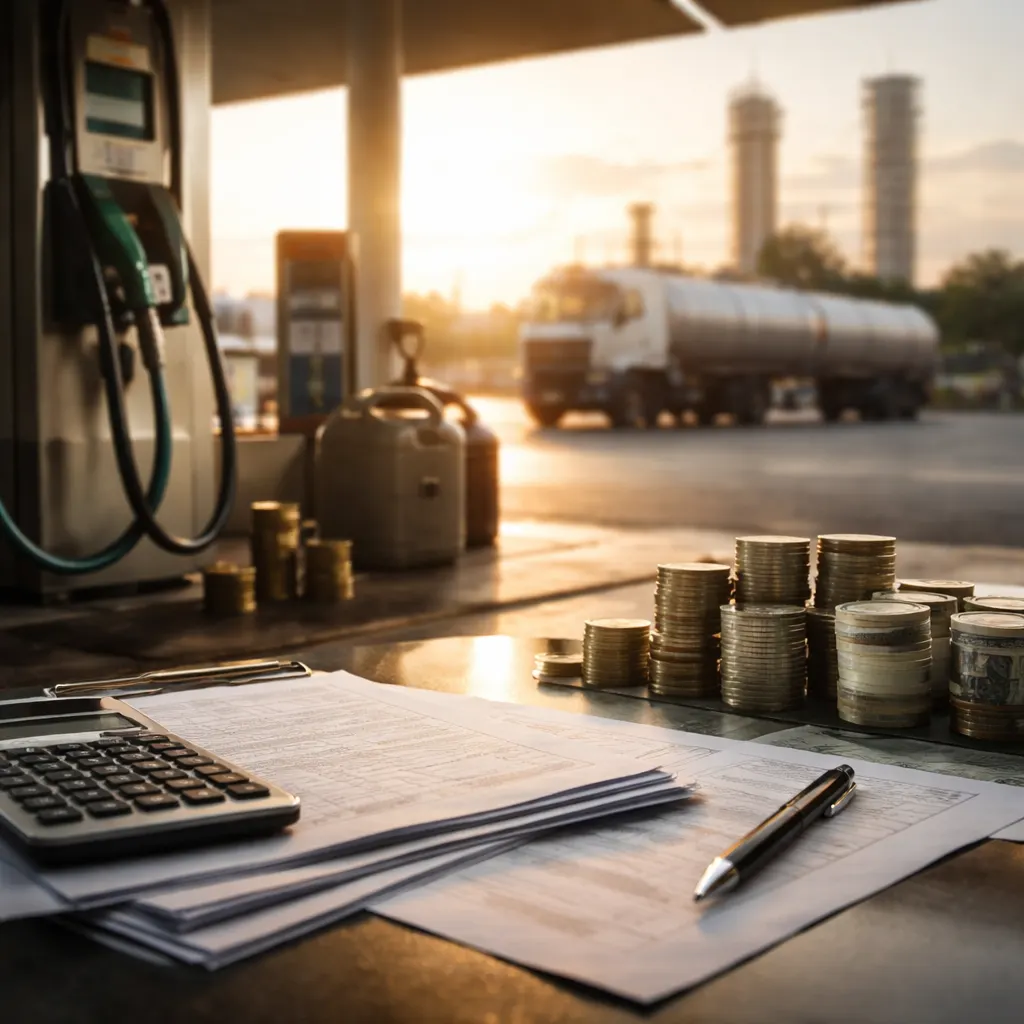
Poland's lower house of parliament has passed legislation imposing a 60 percent tax on windfall profits in the fuel sector, one of the highest rates in the European Union, according to a new report from the Tax Foundation. The measure, which now awaits Senate and presidential approval, would apply from March through December 2026 to businesses engaged in producing or trading liquid fuels, including importers. The report warns that while the tax is designed to raise revenue quickly, it carries substantial long-term economic risks that may outweigh its short-term fiscal benefits.
The tax would target the portion of fuel sales revenues exceeding a company's average sales margin from 2025, increased by 20 percent. Government estimates project the measure will raise around PLN 4 billion, or approximately EUR 930 million, in additional revenue. The levy is intended to help finance earlier consumer protection measures, most notably a reduction in the VAT rate on fuel from 21 percent to 8 percent in response to rising fuel prices triggered by Middle East conflicts. At 60 percent, the rate would tie for the highest windfall profits tax across the EU, down from an originally proposed 70 percent.
The report finds that despite being framed as a tax on excess profits, the measure "relies heavily on revenues and sales margins rather than on a company's actual profitability," potentially affecting firms that aren't generating unusually high returns. The authors note that using a single year's profit margins as the benchmark for determining excess profits "may not provide a representative picture of a firm's normal profitability, particularly in an industry characterized by cyclical fluctuations, high capital expenditures, and long investment horizons." According to the Tax Foundation, the legislation's retroactive application to profits earned as early as March 2026—while still being debated—"weakens legal certainty and sends an unfavorable signal to investors who value stable and predictable tax rules."
The report explains that the tax's design creates multiple economic distortions beyond its immediate fiscal impact. By increasing the tax burden on fuel companies, it lowers expected returns and creates regulatory uncertainty that may discourage long-term investment projects. The measure could particularly hinder Poland's green transition, since EU policies expect energy and fuel companies to finance a significant share of investments in cleaner energy sources and low-carbon technologies. Market reaction has already reflected these concerns—legislative work on the tax was accompanied by declining share prices for many Polish companies, signaling investor worries about profitability and regulatory risk. The report also cautions that international experience shows "temporary" taxes often become permanent fixtures once introduced, a pattern Poland has seen before with other tax measures. The authors argue that instead of ad hoc sector-specific levies, policymakers should focus on building a coherent tax system that supports investment and long-term growth.
Rather than pursuing one-off windfall taxes, the report recommends Poland establish stable tax rules that encourage businesses to invest, innovate, and take risks. The authors conclude that stable policy generates higher tax revenues through stronger economic performance than through temporary fiscal measures. International experience suggests windfall profit taxes are often less fiscally effective than initially expected, making the economic costs potentially substantial and long-lasting compared to the limited revenue gains.