
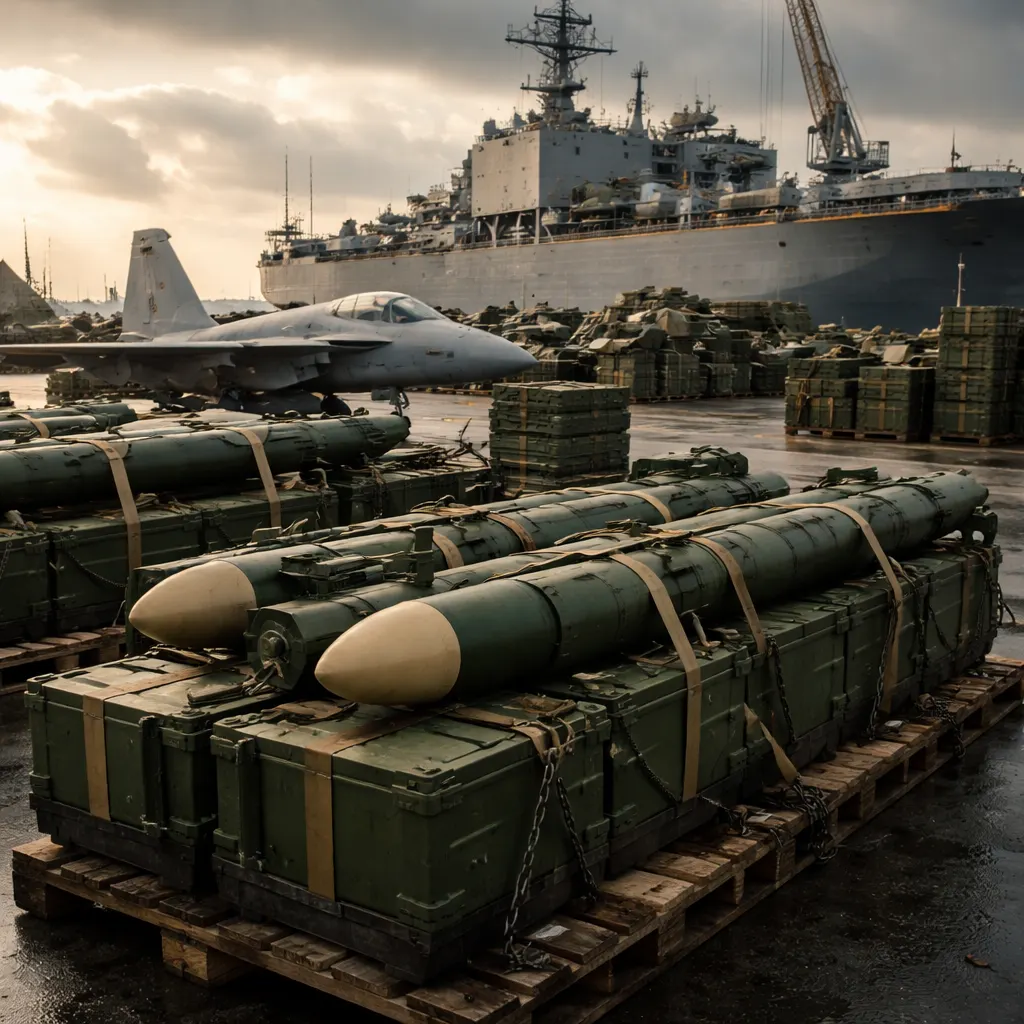
Taiwan's arms backlog from the United States has ballooned to an estimated $29.7 billion, even as average deliveries over the past decade have stayed between $4 billion and $5 billion per year, according to a new report published by the Hudson Institute. The analysis, authored by Jason Hsu and Mark Montgomery, finds that for more than a decade, Taiwan's defense planning has lived with a structural contradiction: Washington regularly signals political support by approving arms sales, yet the actual delivery of those systems often arrives years later. The report warns that these delays aren't just logistical headaches—they threaten the credibility of the U.S.-Taiwan defense relationship and could embolden Chinese military planners.
The backlog comprises numerous procurement cases shaped by four recurring constraints, the report explains. First, industrial capacity bottlenecks prevent quick scaling of specialized manufacturing lines, especially as wars in Ukraine and Iran have strained the U.S. defense industrial base. Second, program complexity means large platforms require years to assemble, test, and integrate, involving hundreds of components and extensive training pipelines. Third, bureaucratic procedures slow the process as U.S. arms sales move through multiple stages: technology release reviews, policy approvals, congressional notifications, contracting, and production. Finally, buyer-side factors also play a role—changes in Taiwan's requirements, delays in funding approvals, or gaps in training infrastructure can slow deliveries or reduce readiness once systems arrive.
The authors write that "the dominant narrative on both sides of the Pacific is the most corrosive, transforming defense procurement into a credibility test for both governments." In Taiwan, it fuels skepticism about the value of defense spending, allowing opposition politicians to argue that the government is wasting money on weapons that never arrive. In Washington, political infighting over defense spending risks being read as a lack of commitment. The report finds that delays can appear as an opportunity for Beijing: "If Chinese planners believe Taiwan cannot rearm quickly, they may perceive a window to intensify coercion or test the limits of deterrence."
The report argues that delivery delays amplify political tension by providing a simple and emotionally powerful grievance: Taiwan paid for weapons but hasn't received them. This dynamic turns military strategy debates into partisan identity markers rather than strategic discussions, weakening the continuity necessary for long-term deterrence. Taiwan's defense strategy increasingly emphasizes denying China a quick military victory through survivable command systems, dispersed forces, and sufficient munitions stockpiles—but if key weapons are delayed, Taiwan risks having systems approved on paper but unavailable when needed. Even when equipment arrives, insufficient training or integration can limit its operational impact, the authors note.
To break the cycle, the report recommends Washington treat weapons production for Taiwan as a top manufacturing priority, with Congress providing sustained funding and long-term demand signals for industry. The authors call for a dedicated interagency "Taiwan fast lane" to accelerate case processing and streamline repeat purchases. Taiwan, meanwhile, should prioritize capabilities that can be fielded quickly—mobile missile systems, sea mines, drones, resilient communications networks, and munitions stockpiles—rather than crowding out investments with large platforms alone. The bottom line: "Deterrence in the Taiwan Strait depends on what can actually be produced, delivered, trained, and deployed within the relevant timeframe," not just symbolic approvals.