
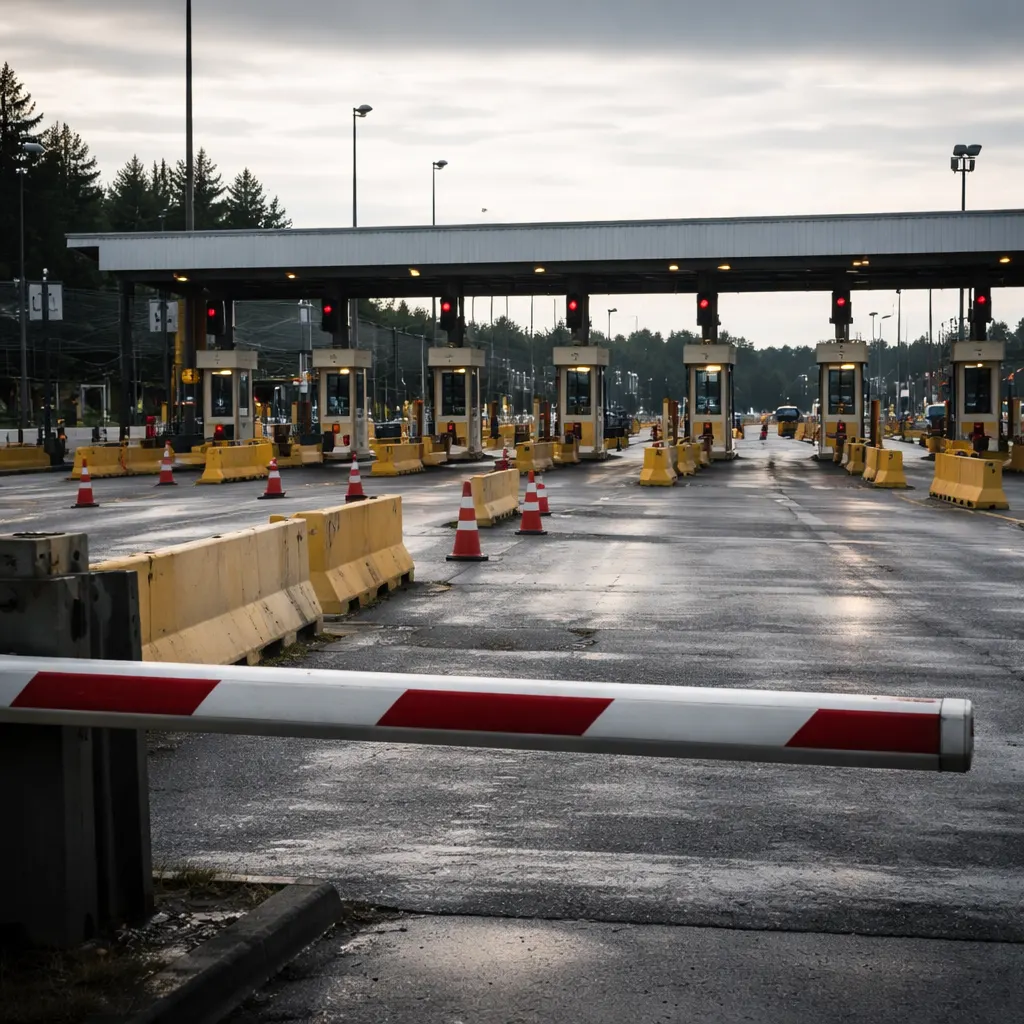
People made 65.4% fewer land border crossings into the US from Canada in 2025 than in 1996, according to data from the Department of Transportation analyzed by USAFacts. Crossings peaked at 105.7 million people in 1996 and fell to just 36.6 million in 2025, making it the fourth-lowest year in three decades outside of the COVID-19 pandemic period. The decline spans nearly all modes of transportation, with only train passengers bucking the trend.
The drop has been steep across most types of travel. Personal vehicle crossings — which account for an average of 94.9% of all border crossings since 1996 — fell from 101.1 million to 35.1 million, a 65.3% decrease. Bus passengers saw the sharpest percentage decline at 77.1%, while pedestrian crossings dropped 49.2%. Train passengers were the lone exception, increasing 40.0% since 1996. Crossings hit their lowest point in 2021 at just 6.5 million people — roughly one-sixteenth of the 1996 peak — before three consecutive years of recovery brought the total to 46.4 million in 2024. The 2025 figure represents a reversal of that rebound.
The report identifies two major events that disrupted border travel patterns. After the 9/11 terrorist attacks, crossings declined as the US tripled border agents and implemented new security measures under the USA Patriot Act, leading to longer travel times. By 2002, crossings had dropped 20.8% from 2000 levels, falling from 102.8 million to 87.2 million. The Bureau of Transportation Statistics attributes the persistent decline through 2009 to both the heightened security and economic conditions in the US and Canada. During the COVID-19 pandemic, the US restricted entry at many crossings to essential travel and freight, causing steep drops across all passenger modes — though truck traffic, more likely to qualify as essential, fell just 8.2% in 2020, the smallest decrease of any category.
A 2022 survey by the International Trade Administration offers insight into why Canadians make the journey. Three-quarters (75.2%) of Canadian visitors who entered over land and stayed overnight came for vacation — whether for general leisure, shopping, special events, cruises, or other recreational activities. Another 19.3% were visiting friends or relatives, while the remaining 5.4% traveled for business, conventions, education, or medical treatment. The report notes that while some travel changes can be linked to specific events, it's often difficult to identify causes behind longer-term trends given the wide variety of reasons people travel.
The data suggests a fundamental shift in cross-border movement that extends well beyond temporary disruptions. Even as pandemic restrictions lifted and crossings recovered somewhat in 2023 and 2024, the 2025 total remained nearly two-thirds below the 1996 peak. With no comparable data on outbound border crossings available, the full picture of US-Canada travel patterns remains incomplete — but the southbound decline is clear and sustained.