
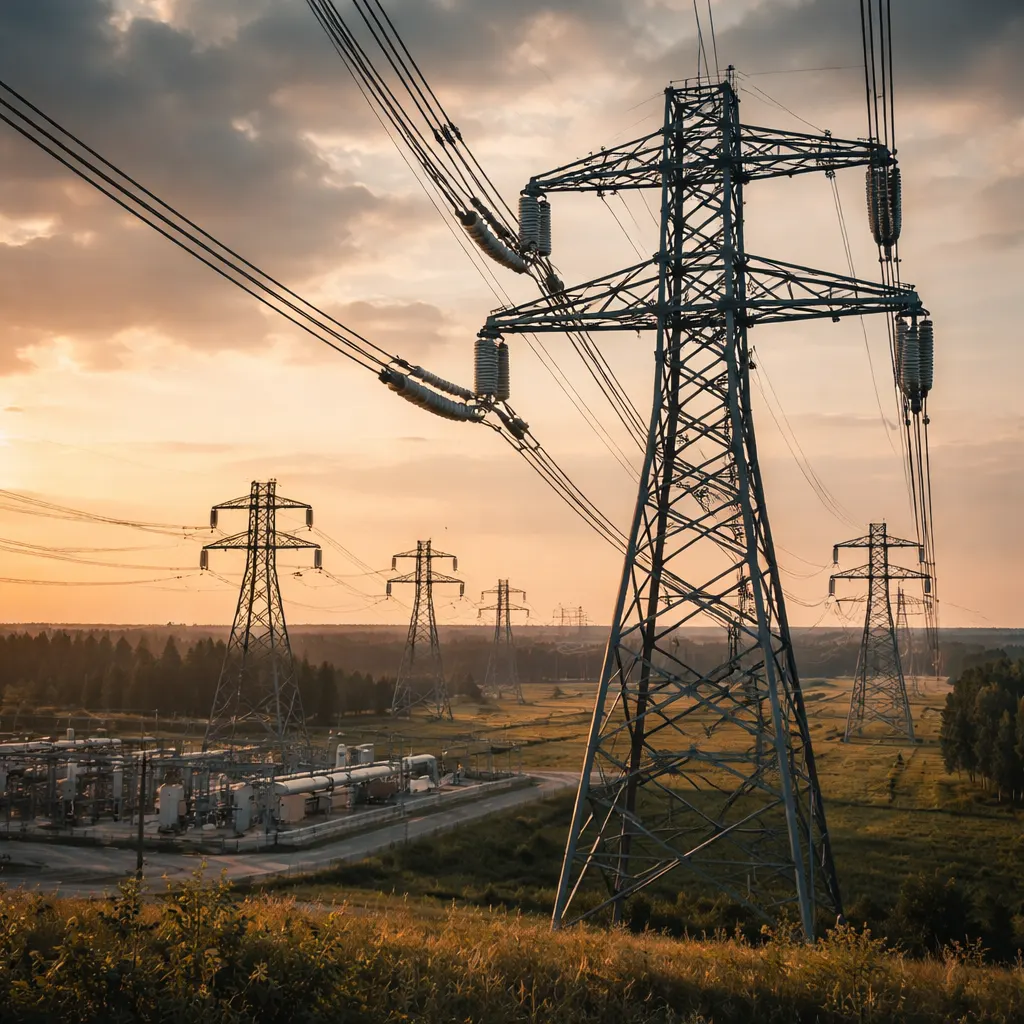
Cross-interconnection transmission projects using high-voltage direct current (HVDC) technology deliver more than a 4-to-1 value-to-cost ratio, according to a new explainer published by the Niskanen Center on June 24, 2026. The report argues that HVDC transmission lines—widely deployed in Asia and Europe but rarely used in the United States—can dramatically lower electricity costs by connecting the country's fragmented grids and moving cheap power from where it's plentiful to where it's expensive. Yet institutional barriers and limited planning structures continue to block the buildout of the very transmission types that offer the greatest consumer savings.
The findings draw heavily from a 2025 Lawrence Berkeley National Laboratory (LBNL) study that compared the affordability benefits of different transmission types based on actual 2012–2022 electricity prices. The analysis found that all cross-interconnection projects exceeded a 4:1 value-to-cost ratio, while interregional lines had a median ratio of 1.6:1, with every project exceeding 1:1. In contrast, within-region links—the most common high-voltage transmission lines currently built—had the weakest affordability performance: four of 11 projects fell below 1:1, and the remaining seven only modestly exceeded break-even. Over the past 30 years, 90 percent of U.S. transmission lines were built solely for reliability needs rather than economic efficiency, with about 50 percent of spending contained within a single utility's service area. The report notes that five states produce over 70 percent of U.S. natural gas, the strongest wind resources sit in the Great Plains, and solar irradiance peaks in the Southwest—yet these fuel resources lie distant from major population centers.
The report emphasizes that HVDC is uniquely suited—and sometimes the only option—for three scenarios: connecting the nation's three asynchronous grids (the Eastern Interconnection, Western Interconnection, and ERCOT in Texas), enabling point-to-point high-capacity transfers between grid operators within a single interconnection, and making connections impractical with AC transmission, such as long underground or submarine routes and very long distances typically beyond 350 miles. "Siloed grids trap excess energy that could otherwise be used, raising consumer costs," the authors write, adding that transmission lines could bridge these silos and lower electricity prices. Recent winter storms illustrate the cost of inadequate transmission: during 2026's Winter Storm Fern, the Midcontinent Independent System Operator (MISO) could have saved nearly $37 million with sufficient capacity to access cheaper interregional power from the Southwest Power Pool, while a 1-gigawatt cross-interconnection link between ERCOT and the Tennessee Valley Authority during 2022's Winter Storm Elliott would have delivered about $95 million in value.
The report explains that HVDC functions like an express lane on a highway, allowing grid operators to control precisely where power enters their grid and avoiding the "spillover" problem that plagues AC transmission in densely networked regions like the Eastern Interconnection. When AC power flows increase on major transmission lines, they spill onto smaller state and local lines, complicating grid control—much like interstate traffic being rerouted onto local roads. HVDC converter stations solve this by converting AC power to DC and back to AC at the receiving grid, keeping flows on an exact point-to-point path. This technical advantage makes HVDC especially valuable for cross-interconnection and interregional ties, yet these project types have no transmission planning structures in place to drive them forward, according to the report. The authors argue that reducing barriers to HVDC buildout could unlock some of the largest opportunities to lower electricity costs and note that expanded HVDC capacity would support U.S. leadership in artificial intelligence and help restore the domestic strategic manufacturing base.
The report concludes that "due to technical hurdles and institutional barriers, the grid is siloed into many regions and consumers foot the bill for more expensive watts," with HVDC wires offering a way to efficiently connect these regions in ways AC wires technically or practically cannot. The analogy to the Interstate Highway System, built from 1956 to 1992, frames the challenge: just as highways reduced transportation costs by connecting previously isolated regions, HVDC transmission could bridge today's fragmented electrical grid and deliver substantial consumer savings. The biggest barrier isn't technology—it's planning structures that don't exist for the very project types that would deliver the most value.