
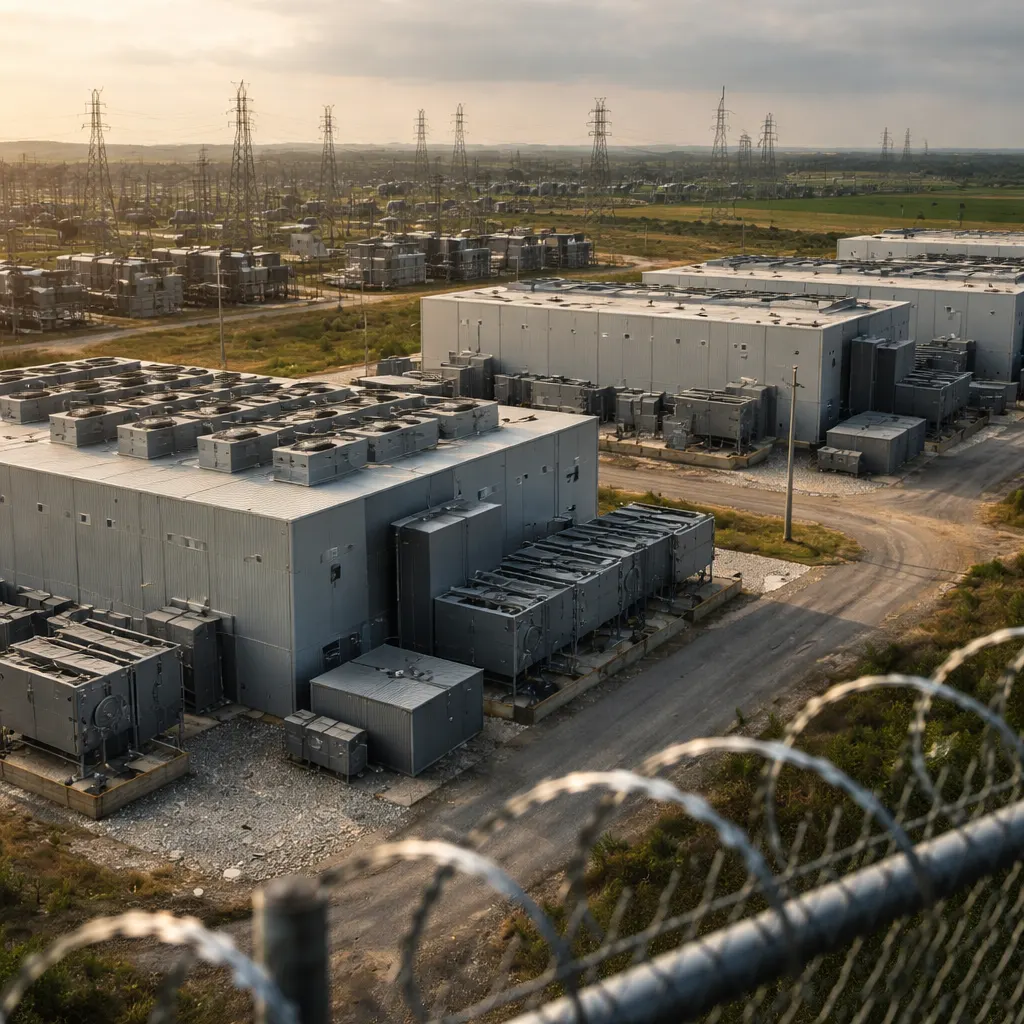
Texas Governor Greg Abbott has ordered an audit of all data centers seeking connection to the state's electric grid, freezing new approvals as interconnection requests have reached roughly 474 gigawatts — more than five times the state's record peak electricity demand. The pause, announced in a Monday letter to the Electric Reliability Council of Texas and state regulators, comes as data centers account for approximately 90% of new power requests. In response, ERCOT has delayed its Batch Zero transmission planning study, which covers the first group of projects navigating the state's new large load interconnection process.
The governor's audit will examine three core areas for each data center proposal. First, whether facilities are generating their own electricity or relying on the ERCOT grid, including projected yearly and peak consumption figures and any efforts to build or obtain on-site generation. Second, whether data centers are supplying and recycling their own water rather than tapping resources needed by surrounding communities, with questions about projected annual and peak water use and anticipated supply sources. Third, an analysis of which projects are self-funded versus those depending on state or local tax incentives, grants, abatements, or other public financial support. ERCOT sent a market notice Monday delaying the Batch Zero process and announcing plans to request a good-cause exemption to the timeline from the Public Utility Commission of Texas at its Aug. 20 meeting.
According to Abbott's letter, the scale of Texas data center development "could endanger the reliability and stability of the Texas electric grid." The governor stated that any data center project failing to comply with the verification and audit process to protect grid reliability and resilience must be denied. Dan Diorio, executive vice president of state policy and government affairs for the Data Center Coalition, said the industry hopes the audits "will help separate those who are responsible water and energy stewards from those who are not," urging PUCT and ERCOT to move swiftly to distinguish speculative projects from serious investors. Law firm Troutman Pepper Locke called the pause a "delay of indeterminate duration" and advised power generation and data center developers to reassess project timelines and consider whether the suspension impacts project viability.
The Texas moratorium reflects broader challenges utilities and grid operators face in evaluating data center load forecasts inflated by speculative ventures. ERCOT published a preliminary forecast in May showing peak demand could more than quadruple by 2032, driven by data centers and other large customers, though the grid operator cautioned the projection might be overestimated. The pause follows New York's July decision to halt new data center approvals for up to a year while creating new development rules. Virginia currently leads the nation in data center development, with Texas in second place, though conventional thinking has long held that Texas would claim the top spot. Industry representatives maintain that outcome remains possible if Abbott's audit can showcase responsible operators without unnecessary delays, ensuring Texas continues as the national leader in economic development.