
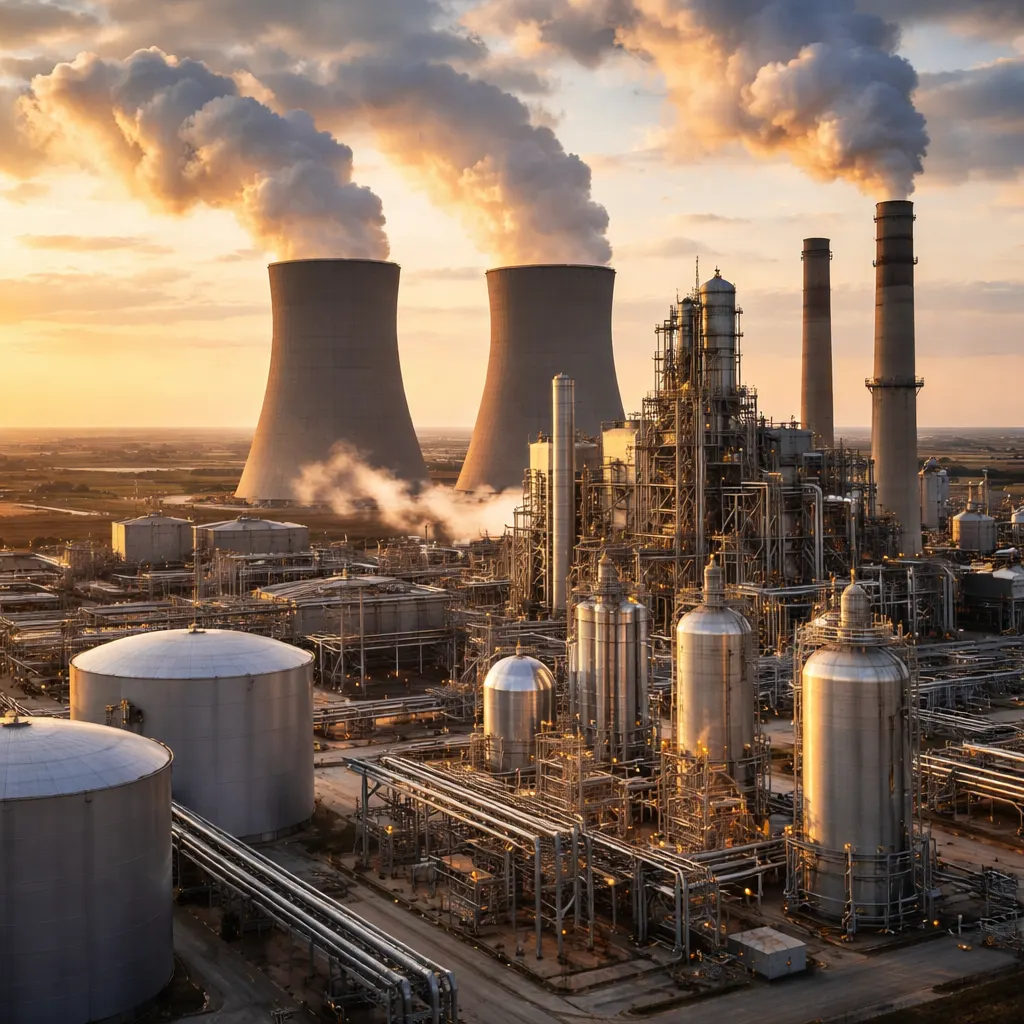
Iowa's industrial sector emitted 21,158 thousand metric tons of carbon dioxide in 2024, virtually unchanged from the previous year, according to new data from the U.S. Energy Information Administration. The figures cap a six-decade transformation in how the state's factories and plants power themselves, with natural gas now accounting for more than three-fifths of industrial emissions while coal has fallen to less than one-fifth.
The data reveals a dramatic fuel switch over the past 64 years. Natural gas emissions surged from 2,302 thousand metric tons in 1960 to 13,119 in 2024—a nearly six-fold increase that now represents 62% of Iowa's industrial carbon footprint. Coal emissions, meanwhile, dropped from 4,890 thousand metric tons in 1960 to 3,735 in 2024, falling from 40% of the total to just 17.7%. Petroleum-based emissions declined more modestly, from 5,032 thousand metric tons in 1960 to 4,304 in 2024. The state's industrial emissions peaked at 21,834 thousand metric tons in 2019, dipped to 19,661 during the pandemic year of 2021, then rebounded to hover around 21,100-21,200 metric tons from 2022 through 2024.
The report tracks emissions from fossil fuel consumption in Iowa's industrial facilities, including combined-heat-and-power plants and industrial electricity-only generators. According to the EIA documentation, the data excludes renewable energy and biofuels, focusing solely on carbon dioxide released when coal, natural gas, and petroleum products are burned. The figures don't account for interstate electricity flows, meaning they represent emissions where fossil fuels are burned in Iowa, even if the resulting power is sold to customers in other states.
The sharp rise in natural gas use—which more than quintupled between 1960 and 2024—reflects broader trends in American industry as facilities shift away from dirtier coal. Natural gas emits less CO2 per unit of energy than coal, though the Iowa data shows total emissions have still climbed over time as industrial activity expanded. The state's industrial emissions in 2024 stood 73% higher than their low point of 10,276 thousand metric tons in 1983, driven largely by the natural gas surge that began in earnest during the 1970s and accelerated after 2000. Coal's decline has been more recent and uneven—emissions actually rose from 2,997 thousand metric tons in 1971 to 6,674 in 2011 before falling back below 4,000 in the 2010s.
The plateauing of emissions since 2022 suggests Iowa's industrial sector has reached a new equilibrium after recovering from pandemic-era disruptions. The report notes that changes in data sources and estimation methods may affect year-to-year comparisons, but the long-term fuel-switching trend is unmistakable. With natural gas now firmly entrenched as Iowa's dominant industrial fuel and coal use stabilized at less than 4,000 thousand metric tons annually, the state's industrial carbon footprint appears locked in near current levels unless major new efficiency gains or renewable energy adoption takes hold.