
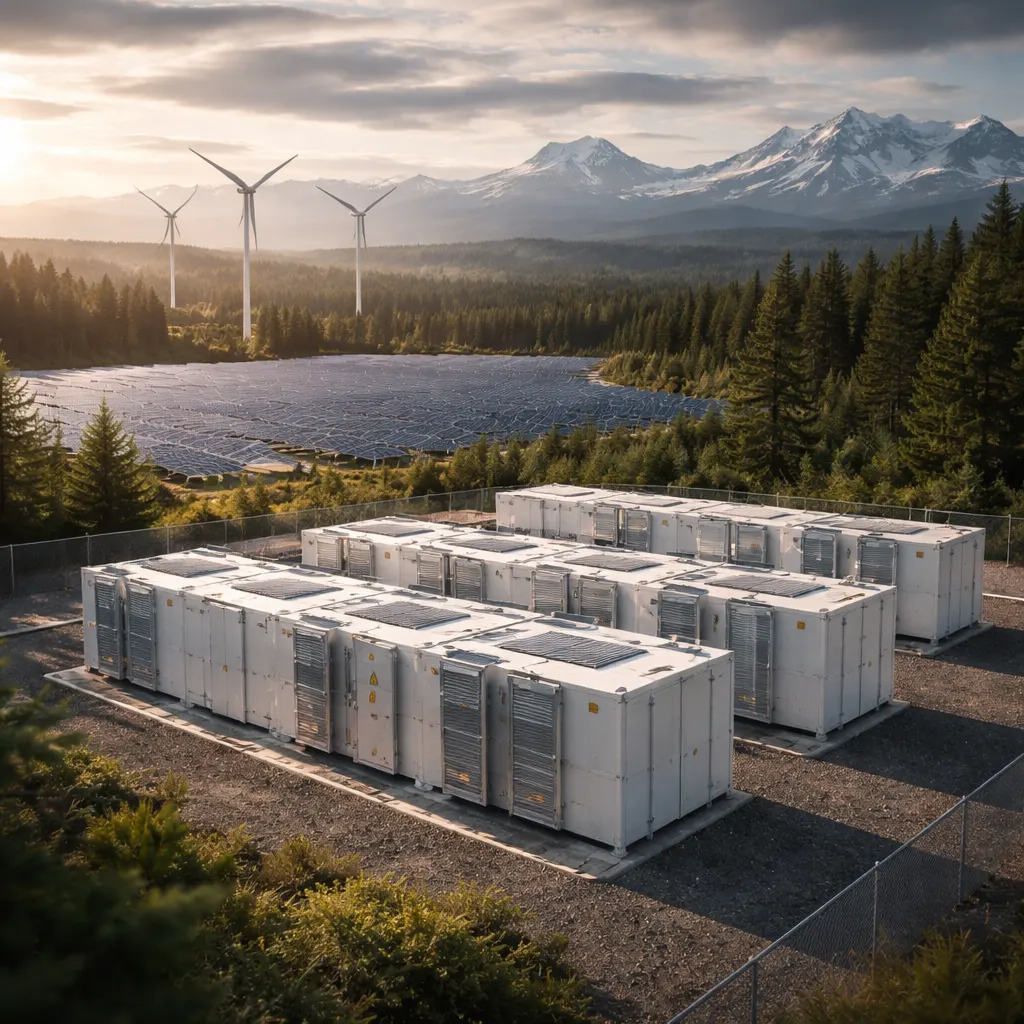
The Pacific Northwest must add roughly 11 gigawatts of new electricity generation and more than 5 gigawatts of energy storage by 2032 to meet surging demand, according to a draft regional power plan published August 12, 2026, by the Northwest Power and Conservation Council. The proposal calls for building 9 GW of renewable energy, 2.1 GW of natural gas capacity, and 5.2 GW of storage across Oregon, Washington, Idaho, and Montana. The council estimates the portfolio would require $2.3 billion in fixed spending by 2032.
Regional electricity consumption is projected to jump by roughly 50% over the next six years and could nearly double over the plan's 20-year outlook, the council said. Data centers are expected to drive near-term demand growth, while transportation, buildings, and industrial facilities will add to consumption over the longer term. The plan assumes no new gas plants in Oregon and limited new gas development in Washington due to state-level restrictions. While modeling shows most of the approximately 2,100 MW of new gas capacity being constructed in Idaho and Montana, the final recommendation doesn't assign state-by-state targets, leaving siting decisions to utilities. The $2.3 billion fixed cost in 2032 equals about 0.15% of the four-state region's $1.46 trillion gross domestic product in 2025.
The proposal was designed to identify the lowest-cost mix of resources capable of meeting future needs across a wide range of possible outcomes, according to Jennifer Light, the council's power division director. "If the loads came in only on the low end, it would be a bit overbuilt. If it came in only on the high end, it wouldn't be fully adequate," Light said in a media briefing. The council's planning process was tested against variability in load growth, extreme weather, resource and transmission availability, and operations of the Columbia Basin hydrosystem. The draft also proposes energy-efficiency standards for new data centers and calls for working with data center operators on flexible electricity consumption, including demand response and use of backup generation.
The Ninth Power Plan hinges on the Bonneville Power Administration, the federal agency that markets power from the Columbia River dam system. BPA is legally required to acquire resources consistent with the council's strategy, and the draft plan anticipates Bonneville may need to buy new generating capacity, not just energy efficiency. The council urges the agency to favor renewables for energy needs and weigh batteries against new gas plants for capacity as regional electricity demand surges. The strategy assumes some transmission infrastructure from the Western Transmission Expansion Coalition's planning efforts gets built, which Light said the council will track as part of its midterm assessments. The Northwest Power and Conservation Council will hold public hearings in Oregon, Washington, Idaho, and Montana in September and October before targeting final adoption by the end of 2026 or early 2027.