
Saudi Arabia rerouted nearly all its crude exports through a pipeline to the Red Sea after the Strait of Hormuz closed in late February, reaching a peak of roughly 4.07 million barrels per day in March. By June, those volumes had dropped to approximately 2.39 million barrels per day — a 41% fall from the March high, according to vessel tracking and cargo data published by Wood Mackenzie. The report highlights how what initially appeared to be a viable workaround for blocked Gulf exports has proven unsustainable, with total Saudi shipments down 66% from January levels across both coastlines.
From January to June 2026, crude shipments from the Middle East Gulf collapsed 82%, falling from an average of 18.8 million barrels per day across 370 cargoes to around 3.4 million barrels per day across just 71 cargoes, Wood Mackenzie's tracking data shows. The Strait of Hormuz handled approximately 11.4 million barrels per day of crude capacity in January and February, averaging 6.3 large crude carrier movements daily. After US-Israel strikes on Iran on February 28, traffic through the strait effectively stopped. By early July, large crude carrier movements had partially rebounded to roughly 4.4 vessels per day — still 30% below pre-conflict levels — while Suezmax outbound passages remained at zero, transit vessel counts were down 97% from normal, and freight rates ran about three times higher than before the conflict. Iraq, which shipped 3.77 million barrels per day in January, recorded zero exports by June. Kuwait dropped from 1.19 million barrels per day to zero starting in April. Qatar, at 0.72 million barrels per day in January, also hit zero from April onward. All three nations rely entirely on the Strait of Hormuz for seaborne crude access and lack any pipeline alternative. The UAE kept a reduced position of about 0.56 million barrels per day in June, representing 68.6% of all non-Saudi Gulf exports during June and July.
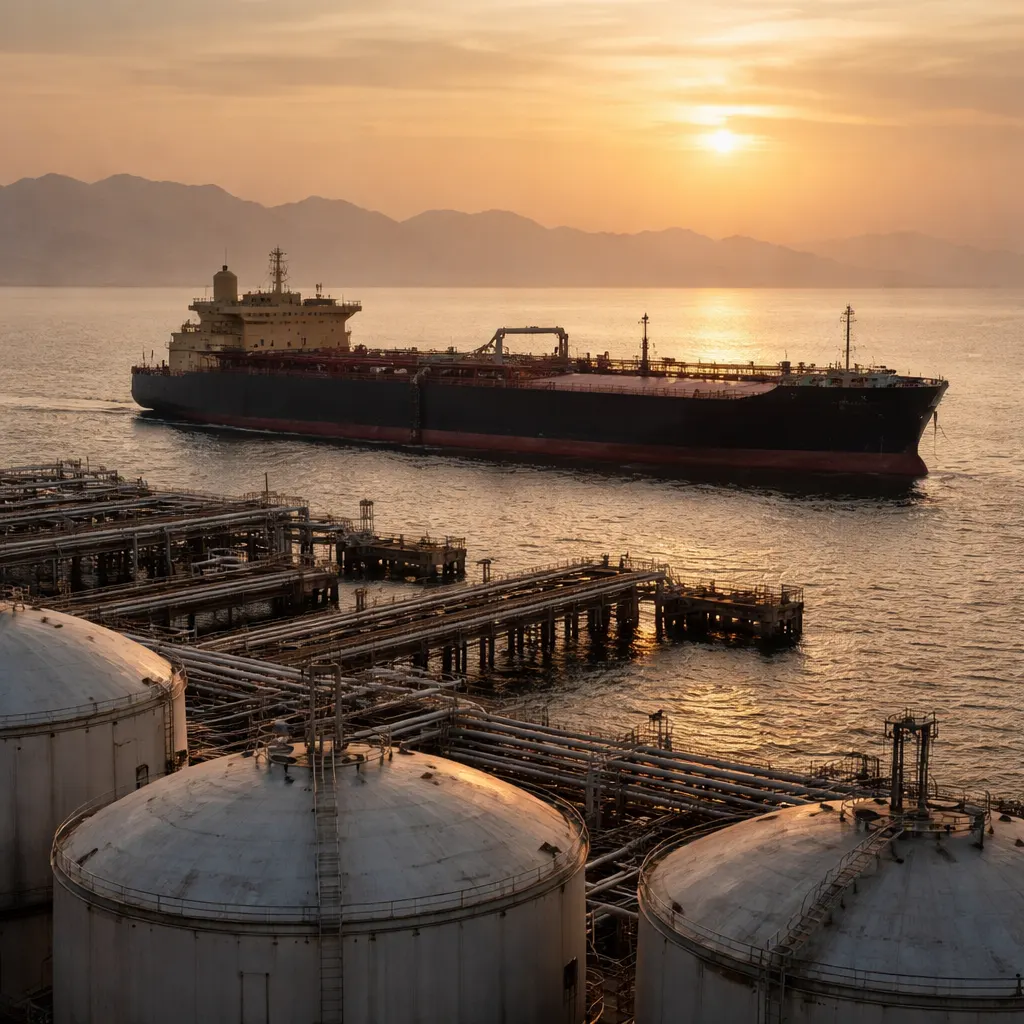
Saudi Arabia responded by shifting crude shipments through its East-West Petroline to Yanbu, its Red Sea terminal. In March, 86.7% of Saudi crude originated from Yanbu, totaling 121.9 million barrels across 77 cargoes at an average of roughly 4.07 million barrels per day. That share climbed to 93.6% in April, 94.3% in May, and 98.6% in June, with only one cargo of around one million barrels leaving the Gulf at Ju'aymah that month. Despite this near-total shift to Yanbu, volumes declined steadily from the March peak, falling to about 2.39 million barrels per day by June — a 66% drop from Saudi Arabia's January total export level of approximately 7.96 million barrels per day across both Gulf and Red Sea terminals. The destination pattern for Saudi Red Sea crude in June and July shows a pronounced tilt toward South and East Asian buyers: 11 cargoes went to Ain Sukhna in Egypt for onward pipeline transport, five to Malacca, four to Karachi, three each to New Mangalore and Sikka in India, and two each to Ulsan and Yeosu in South Korea and Yokkaichi in Japan. No direct crude deliveries to Europe from Saudi Red Sea terminals were recorded during this window.
According to Ian Solis, data analyst for Wood Mackenzie, "For months, the market treated Yanbu as the answer to Hormuz risk." He warns that Yanbu has its own chokepoint: "If Bab al-Mandeb comes under sustained disruption from a declared Houthi naval blockade, Asia stands to lose a major crude supply artery." The report's analysis suggests what seemed like diversification was in fact a swap from one strategic bottleneck to another. Refined product movements from the region have continued at lower levels, with Wood Mackenzie's tracking recording 171 Middle East Gulf-origin product cargoes in June and July, including jet fuel shipments to Pembroke in the United Kingdom and Le Havre in France, and ultra-low sulfur diesel to Constanța in Romania. Four product cargoes loaded at Jubail on Saudi Arabia's Gulf coast in early July, signaling that limited commercial passage remains open for smaller vessels. The outlook remains fragile: with Asian markets heavily dependent on the Red Sea route and the Bab al-Mandeb strait vulnerable to further disruption, the risk of a second supply shock looms large for buyers who've already absorbed an 82% cut in Gulf crude availability.