
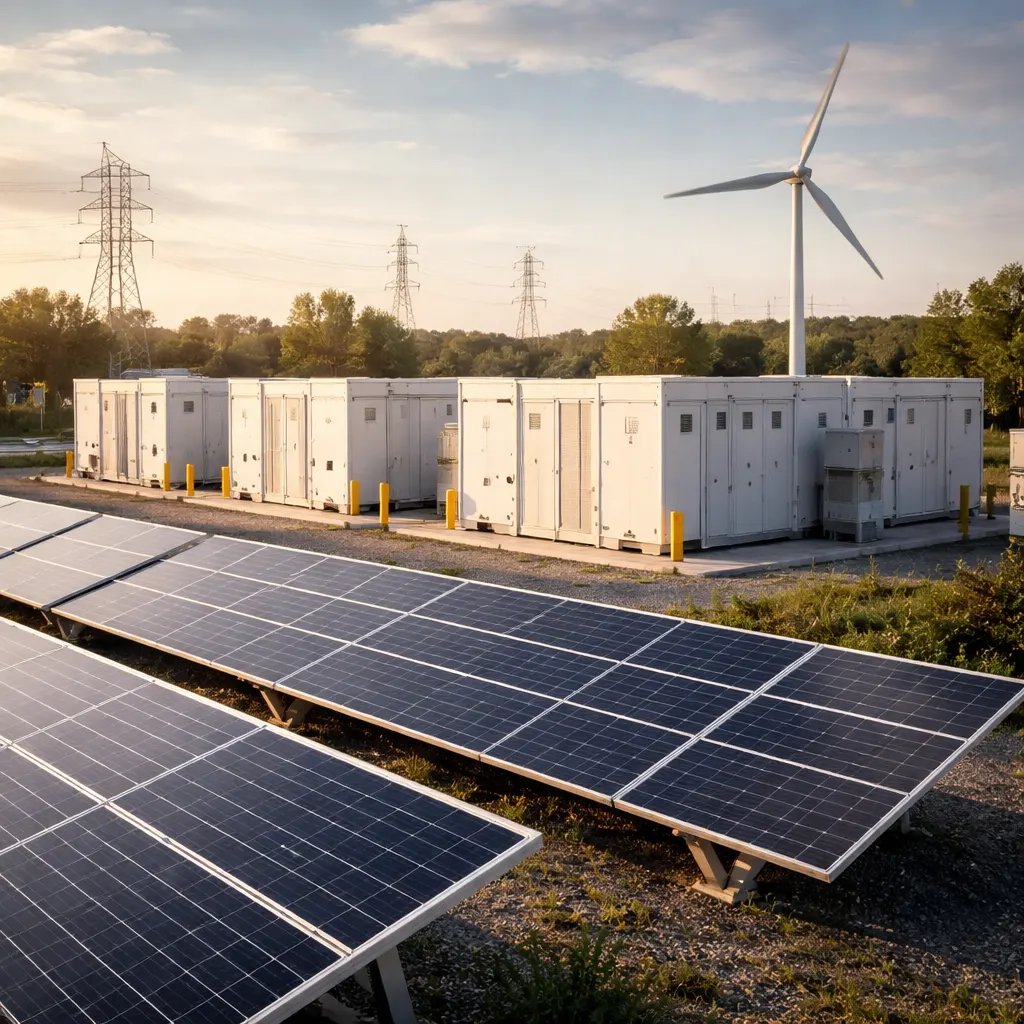
Sen. Peter Welch, D-Vt., introduced legislation Wednesday to accelerate microgrid adoption with a $200 million Department of Energy pilot program and $500 million in state grants, according to an Aug. 4, 2026, report from Utility Dive. The STRONG GRID Act—Supporting Transformative Resilience, Operations, and Next-Generation Grid Innovation Deployment—would make microgrids and distributed energy resources eligible for funding under state energy program grants and create state-run grid resilience programs to support their rollout. Electrical manufacturers, state energy officials, and grid equipment distributors have backed the measure, saying it could advance national discussions around grid modernization.
The legislation directs DOE to establish a $200 million competitive grant pilot program within one year to fund projects demonstrating microgrid capabilities, including providing ancillary grid services and managing supply and demand, aggregating distributed energy resources into virtual power plants, facilitating load transfers to relieve transmission congestion, and managing voltage instability or collapses. The bill would appropriate $500 million for state energy program grants covering microgrid needs assessments or feasibility studies, design and engineering work including technical assistance solicitation, construction of microgrids and their energy resources such as generation assets and energy storage, and implementation of advanced cybersecurity systems.
The U.S. electric grid "is under more pressure now than at any point in our history, and extreme weather events are exacerbating that strain," Welch said in a July 29 statement. Microgrids can "help keep essential services online and reduce the economic impact of natural disasters," he added. GridWise Alliance CEO Karen Wayland said the legislation offers "a faster path to microgrid deployment in areas at high risk where extending or hardening traditional infrastructure can take years." Peter Ferrell, senior director of government relations at the National Association of Electrical Manufacturers, told Utility Dive that while microgrids aren't new technology, "they're new to a lot of policymakers and states."
Over the past four to five years, much of the national electricity conversation has centered on the "macro grid," culminating in current debates about how to connect growing numbers of large loads like data centers quickly, according to Ferrell. As those discussions highlight challenges around reliability, "microgrids have become a little more front and center," he said. NEMA's support for the legislation extends beyond the bill's specifics—it's aimed at broadening state and regulatory understanding of the technology and its ability to strengthen the electric grid. Microgrids can provide options for grid modernization on constrained systems while also freeing up capacity to serve loads of all sizes, from electric vehicle chargers to data centers and manufacturers. In May, NEMA forecast annual U.S. electricity consumption will grow more than 55% by 2050.
Ferrell said microgrids are "a tool to help provide more options to get those customers onto the grid in a responsible, reliable way." As grid operators issue resource adequacy warnings and utilities revise demand forecasts upward at an unprecedented pace, tapping into local resources is becoming an increasingly important way to protect communities from reliability risks, according to Wayland. The legislation represents a bet that microgrids can simultaneously address two mounting pressures: extreme weather threatening essential services and surging electricity demand outpacing traditional infrastructure expansion.