
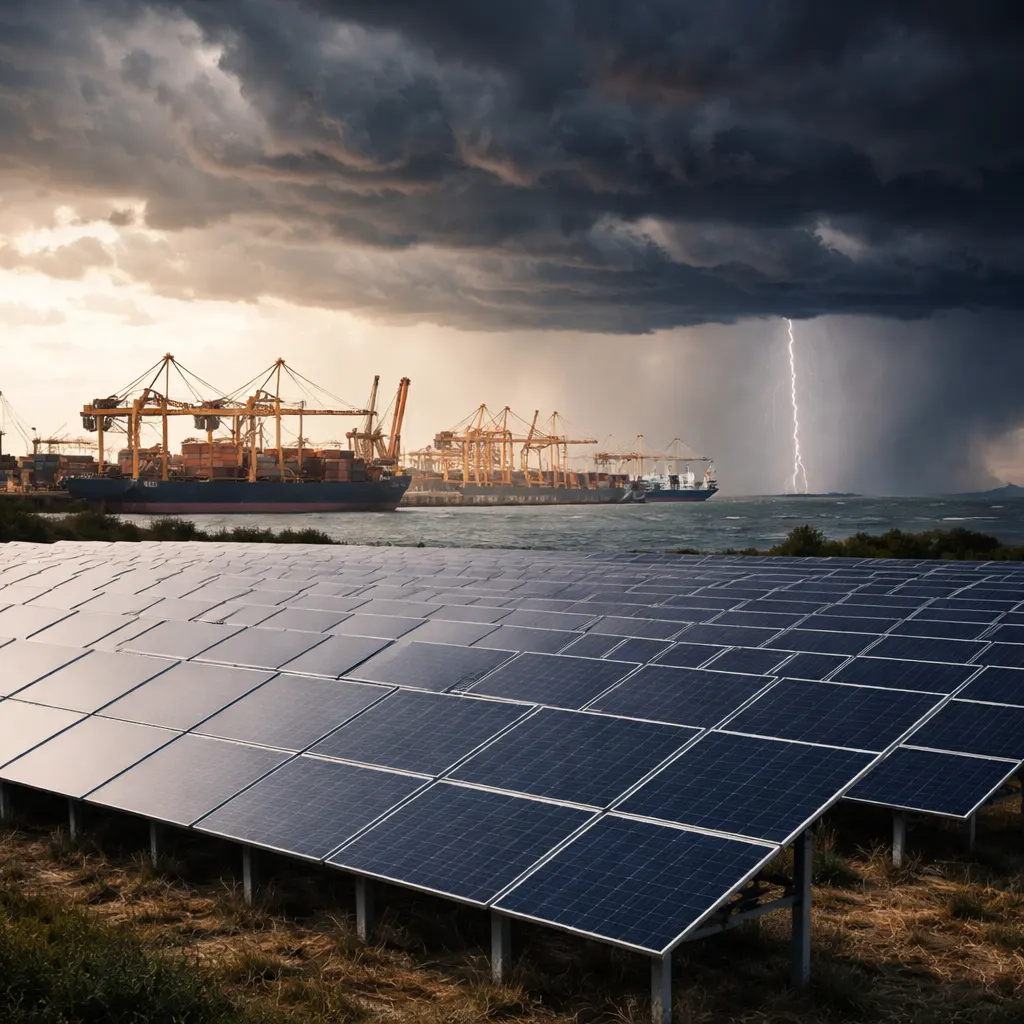
The US National Oceanographic and Atmospheric Administration has forecast an 81% chance of a "very strong" El Niño in the last quarter of this year, according to a new analysis from Wood Mackenzie. If it materializes, it would rank among the largest El Niño events in the historical record, which goes back to 1950. The weather system carries wide-ranging implications for energy markets, from renewable power generation to international shipping routes and natural gas demand.
The 2023-2024 El Niño reduced wind output in the central US and solar output in California, while causing steep falls in hydro generation in China and India, the report says. That winter became the warmest on record for the Lower 48 states. The severe drought driven in part by the El Niño forced the Panama Canal Authority to cut the maximum allowable draft in the canal's Neopanamax locks from about 15 metres to below 14 metres for most of the second half of 2023 and the first half of 2024. At times, it dropped as low as 13.26 metres. Those restrictions forced LNG carriers heading for Asia to go round the Cape of Good Hope or eastwards via the Suez Canal, adding two or three weeks to their journey times.
Wood Mackenzie's research manager Eldon Lopes expects warmer-than-normal weather in the Southern Hemisphere summer and a mild winter in the northern US and Canada, but cooler conditions across the southern tier of the US and Mexico in the Northern Hemisphere winter and spring. The report finds that while conditions are bullish for solar output in the US east of the Rockies, in Iberia, and in the Middle East in autumn, "El Niño is generally bearish for most of the world over the next three seasons." Scientists have suggested that the stronger the El Niño, the greater the impact on solar generation—if the current event is as strong as forecasted, the hit to solar output in the south and west of the US could be the largest yet seen.
The analysis explains that El Niño conditions emerge when trade winds that blow from east to west in the Pacific slacken off, and warm water surges eastwards towards South America. This vast system can affect weather from India to Europe, though its strongest impacts are generally felt in the Americas. Eugene Kim, Wood Mackenzie's research director for American gas, notes that a strong El Niño could mean a mild winter for 2026-2027 in the northern US and possibly Europe, which would be important for gas demand. The report warns that as energy systems evolve with greater reliance on weather-dependent renewable generation, events like El Niño become increasingly significant. Energy companies will need to stay alert to the impacts as the weather system strengthens over the coming months.