
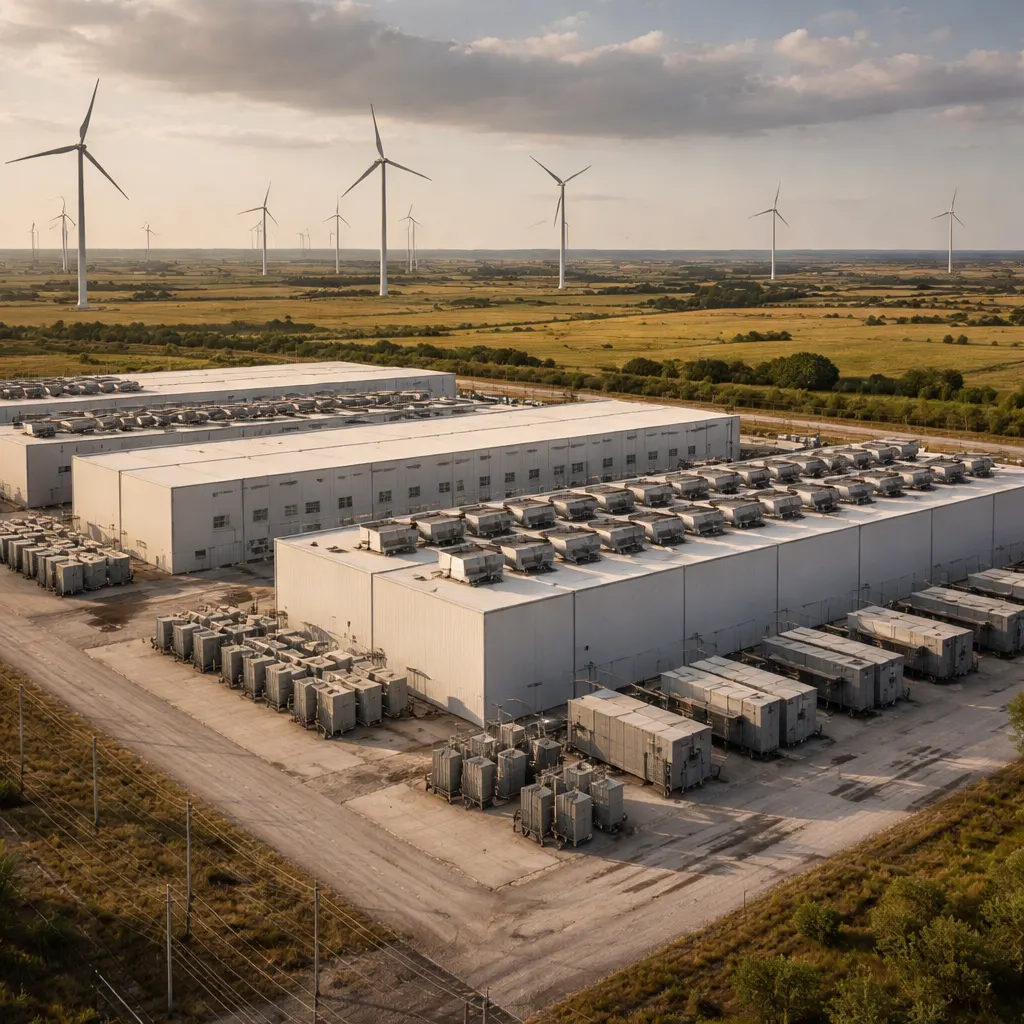
The Public Utility Commission of Texas has approved a net metering arrangement for a 260-MW artificial intelligence data center co-located with a wind farm of roughly the same capacity, according to a July 24, 2026 order that could set the standard for similar projects across the state. The decision mandates that the data center must be able to shut down its entire load within 30 minutes during grid emergencies, using physical breaker disconnection if needed. It also bars the facility from receiving payment for participating in demand response programs connected to the arrangement.
The data center represents the second facility planned for the site, bringing total load to about 525 MW—nearly double the wind farm's 265.5-MW generation capacity. The developer had contended that this second data center shouldn't face the same curtailment rules as the first facility because combined demand exceeds what the wind resource can produce, but commissioners rejected that reasoning. The project's owner, Crusoe, and Ensign, the large load customer planning to run the site, had maintained that forcing the entire installation offline was excessive and that extra curtailment wasn't necessary following earlier reliability conditions placed on the co-located wind project.
The July 23 order states that ERCOT, the grid operator, should give 60 minutes' advance notice "when practicable," though it allows the operator to voluntarily agree to a quicker 10-minute response time. The ruling treats the capacity to rapidly shut down as a reliability requirement for operating behind generation, distinguishing mandatory emergency curtailment from voluntary grid services by blocking the project from compensation for load reductions during crises. Commissioners largely followed the administrative law judge's recommendation, including revisions from Chairman Thomas Gleeson, and determined that letting the second load stay online while the first is curtailed would undermine the aim of keeping generation capacity available to the grid during emergencies.
The proceeding marks one of the first major applications of Texas' SB 6, legislation enacted last year that created new rules for large loads in ERCOT territory, including granting the grid operator authority to disconnect data centers during grid emergencies. Chris Talley, co-founder of GridTracker, wrote in a LinkedIn post that the order isn't a "death blow" to co-location in ERCOT but clarified to Utility Dive that "this architecture now essentially requires full backup capacity"—meaning resources capable of carrying the load off-grid for a meaningful stretch, not just riding through brief interruptions. He pointed to a pending co-location application from Amazon and Vistra to construct a data center campus beside the Comanche Peak nuclear plant, southwest of Fort Worth, as a case to monitor closely. The case also drew filings from the Texas Competitive Power Advocates and natural gas producer BKV, which contended the proposed framework could discourage future co-location ventures, though PUCT staff argued those parties lacked standing and the commission's final order didn't address their concerns.