
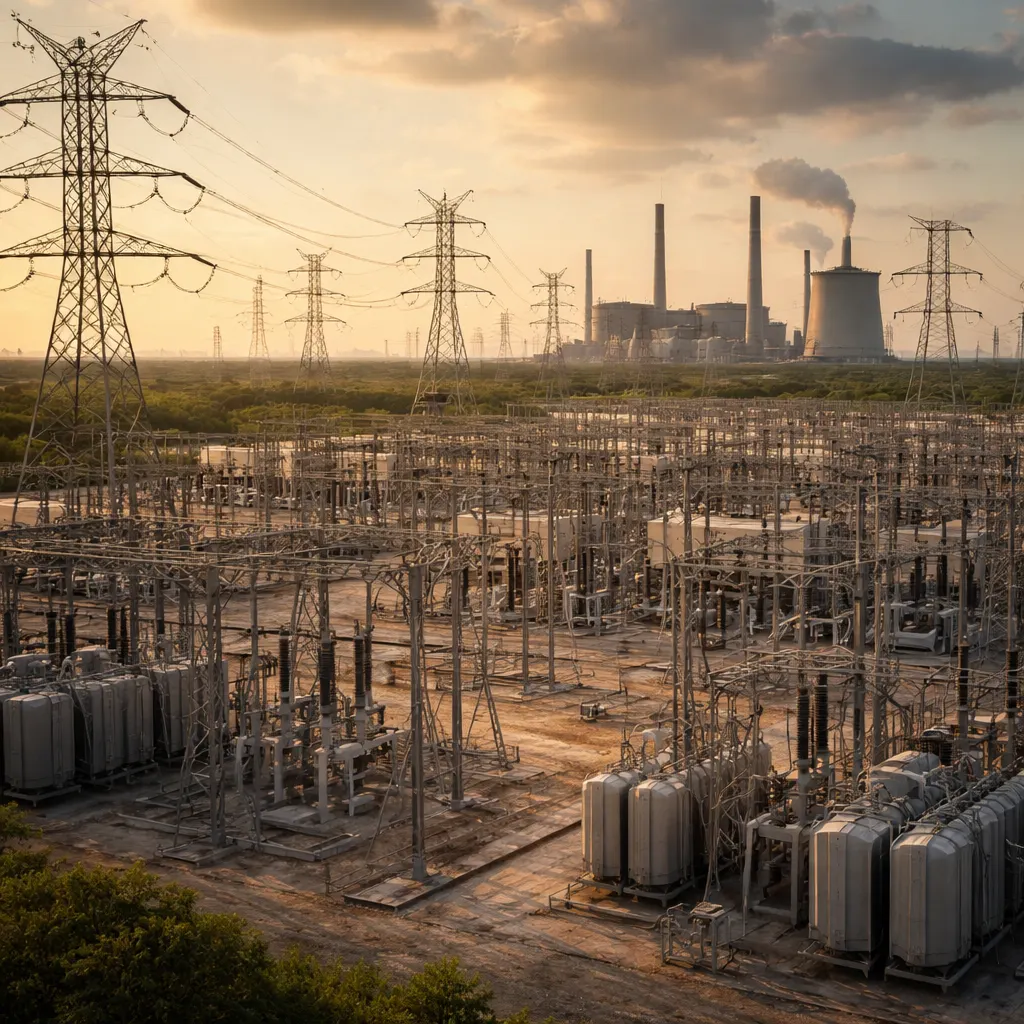
Peak electricity demand in the Electric Reliability Council of Texas territory could reach 120 GW by 2030, representing growth of more than 30% above the new unofficial all-time peak set on July 22, according to a market report from Ascend Analytics provided to Utility Dive. The projection falls notably below ERCOT's own forecasts due to supply chain constraints that the firm says will prevent enough new power generation from coming online to serve proposed large loads. The report cites gas turbine shortages, multi-year development timelines, and interconnection bottlenecks as the key limiting factors.
ERCOT's large-load queue has grown by more than 200 GW since 2024, driven largely by data centers, manufacturing, cryptocurrency, and industrial oil and gas development, according to the report. The grid operator said in April that the total 2030 load reported by transmission service providers, based on contracts and officer letters, was 208 GW, while ERCOT's adjusted load forecast put it at 138 GW. Ascend's estimate of 120 GW assumes delays and a 55.4% success rate for proposed loads. The firm expects reserve margins will remain healthy through 2026 before tightening as load growth outpaces supply additions.
"Even though that appetite is enormous, if it can't get met, it's not coming online," Brent Nelson, senior managing director of market intelligence at Ascend, told Utility Dive. Robert LaFaso, Ascend's director of market intelligence, said "the ability of the grid to add new generation is much, much smaller than the demand of queued large-load facilities." Both executives identified generation availability as the primary constraint, with the report citing the limited number of tier-one gas turbine manufacturers as a key factor contributing to project attrition among Texas Energy Fund applicants. The firm also identifies engineering, procurement and construction capacity, high-voltage equipment, and permitting as growing bottlenecks to building new generation.
The report warns that ERCOT's energy-only market design, which relies on scarcity pricing to incentivize new generation, may no longer provide enough revenue certainty to finance the dispatchable generation needed to meet future demand. Ascend says persistent gaps between forward markets and actual outcomes weaken the market signals used to guide investment decisions. For storage projects, the challenge is squarely financial—lenders increasingly require contracted revenues rather than relying on merchant market returns after projects failed to meet revenue expectations in recent years. The report says a changing generation mix could make scarcity revenues more weather- and outage-dependent, adding volatility for generators and complicating financing.
That mismatch is prompting discussion of potential market reforms, including concepts such as a "bring-your-own-new-generation" requirement for large loads, which Nelson said could help align new demand with new supply but might undermine the economics of existing merchant generators. The report identifies September as an emerging risk period due to reduced solar output from earlier sunsets and lower evening wind generation than in August. Ascend expects wholesale prices to rise in the near term as demand grows before stabilizing over the longer term as additional renewable generation comes online, with natural gas plants still expected to set prices during evening ramping periods when solar output declines.