
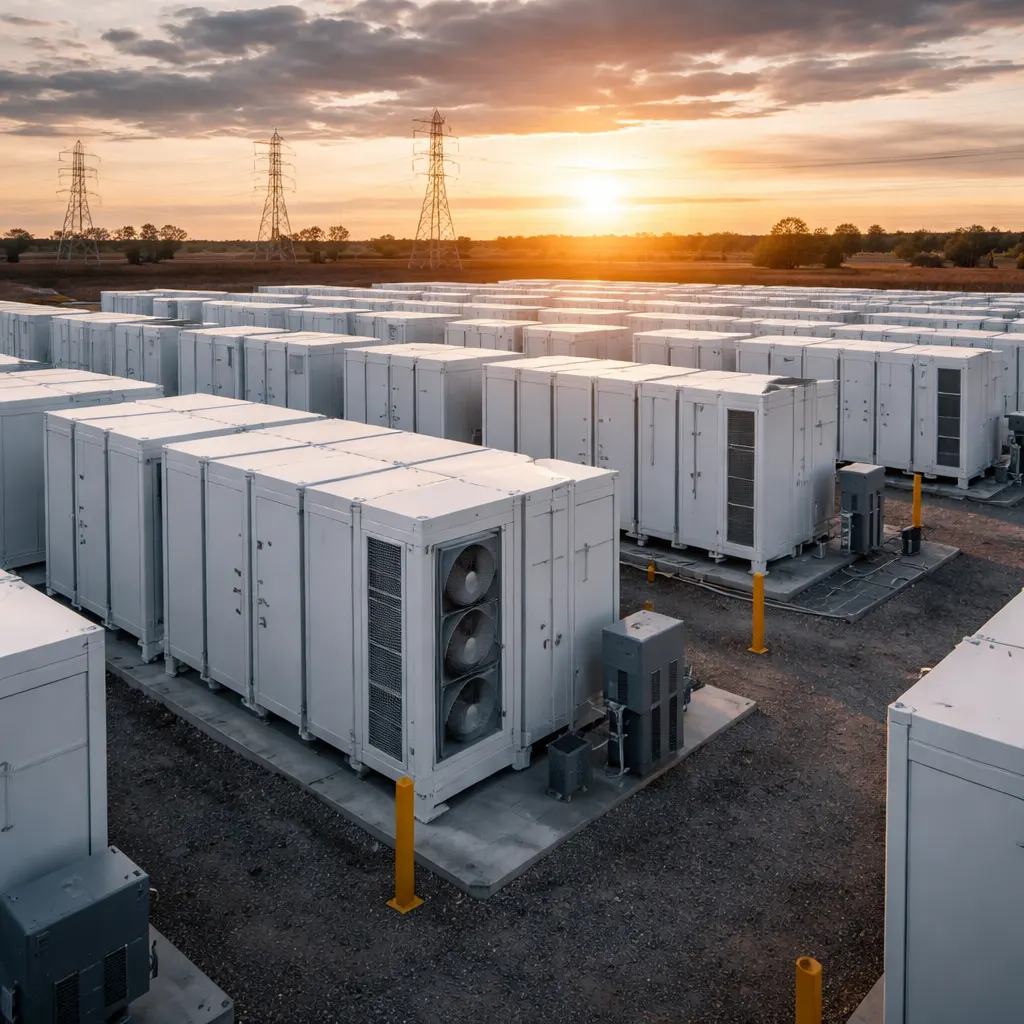
The United States installed a record 18.9 gigawatt-hours of battery energy storage systems in the second quarter of 2026, even as total power capacity fell 7% from the same period last year, according to the latest U.S. Energy Storage Monitor report released by the American Clean Power Association and Wood Mackenzie. The surge in energy capacity—up 17% year-over-year—was driven by a nationwide shift toward longer-lasting storage systems, with the average duration climbing from 2.8 hours to 3.5 hours.
Utility-scale projects accounted for the bulk of installations, delivering 4.7 gigawatts and 17.6 gigawatt-hours in the second quarter, an 8% drop in megawatt terms compared to the prior year as major markets reach saturation. The residential sector posted its fourth-largest quarter on record with 676 megawatts installed, up 3% year-over-year but down 15% from the first quarter. The Community, Commercial and Industrial sector installed 48 megawatts, falling 2% annually after California's record first quarter tied to a net metering deadline. California, Texas, Puerto Rico, Arizona, and Illinois together captured 88% of residential storage capacity in the quarter, though all five states saw quarter-over-quarter declines. Utility-scale battery system prices dropped 2% year-over-year to $916 per kilowatt, while the national residential solar-plus-storage attachment rate rose to 46%, up from 41% a year earlier.
"Battery storage is one of the most important tools we have to meet growing electricity demand," said John Hensley, Senior Vice President of Markets and Policy Analysis at American Clean Power, noting that storage strengthens reliability and can be deployed quickly. The report highlights that resource adequacy requirements are pushing the industry toward longer-duration systems, with California projects designed to meet state targets and Texas utility-contracted assets contributing to the trend. According to Wood Mackenzie analyst Allison Feeney, data center expansion is strengthening the outlook across all segments, as storage offers needed capacity faster and more affordably than gas-fired generation alone.
The report projects annual U.S. energy storage installations will grow more than 50% in megawatt terms over the next five years, reaching a cumulative 207 gigawatts and 715 gigawatt-hours by 2031. Utility-scale storage is forecast to expand at an 8% average annual rate through 2031, fueled by data center demand and grid-connection bottlenecks that position storage as a faster path to power. The Community, Commercial and Industrial sector is expected to grow 27% between 2026 and 2031 as deployment spreads beyond California into Maryland and Texas, while the residential market—projected to contract 4% in 2026 amid tax credit elimination and third-party-ownership challenges—is forecast to rebound with 9% average annual growth from 2027 onward. Supply chain dynamics, including potential trade restrictions, may cause near-term stagnation in 2026 and 2027, but the report notes that slowing electric vehicle demand has freed up idle cell capacity, accelerating domestic manufacturing just as trade policy makes it most valuable.
The report concludes that virtual power plants are emerging as a key enabler of load growth, unlocking new participation pathways for distributed storage and broadening the value proposition beyond customer-centric benefits. With a strong project pipeline and continued technology improvements, the outlook for storage remains exceptionally strong despite near-term headwinds. Growth is forecast to resume in 2028, scaling at 11% annually through 2031 as domestic cell production ramps up and storage competes across more regions and use cases.